


Synthetic wigs can look surprisingly natural—or obviously “wiggy”—and the difference often starts with the fiber. This guide explains what is synthetic hair made of, what “heat-friendly” really means, and how the material changes shine, tangling, and care.
Synthetic hair is made from what?
Synthetic hair is made from man-made polymer fibers formed into very fine filaments. Those filaments are textured, colored, and finished to imitate the look and movement of hair.
Brands often label this broadly as “synthetic fiber,” but the same fiber families show up across many wigs.
The common fiber families (overview)
Modacrylic fibers are widely used because they hold a set style well and stay stable over time.
Polyester-based fibers are also common, especially in newer “heat-friendly” lines. The grade and finish heavily influence softness and shine.
Acrylic fibers and blended formulas appear in some products to balance feel, durability, and cost.
You may also see trade names like Kanekalon or Toyokalon—they’re still synthetic fibers, and the overall finishing matters just as much as the name.
“So what?” — why the material matters
Fiber type helps you predict the wig’s real-life behavior: heat limits, how fast it tangles at the nape, and how shiny it looks under indoor lighting.
It also determines what products work best. Synthetic hair usually needs light, synthetic-specific sprays (detangling, anti-static), not heavy oils designed for human hair.
Is synthetic hair basically “plastic”?
Synthetic hair is polymer-based, which is related to plastics, but manufactured as hair-like filaments. Differences in polymer type, filament thickness, and finishing are why one synthetic wig can feel silky and another can feel stiff.

Heat-friendly synthetic vs regular synthetic
“Heat-friendly” is a feature, not a free pass. The fiber is more heat-tolerant, but it still has limits.
Regular synthetic (pre-styled, low heat tolerance)
Regular synthetic wigs are designed to keep a fixed style with minimal effort. They’re great if you want a consistent look without heat tools.
High temperatures can permanently warp the fibers, so avoid heat unless the brand clearly states a safe temperature range.
Heat-friendly synthetic (aka heat resistant / heat friendly)
Heat-friendly synthetic hair is made from formulations that tolerate controlled heat—often polyester-based thermoplastic blends. With the right technique, you can smooth, reshape, or refresh sections.
Too much heat (or repeated passes) can cause frizz, flatten texture, or melt the fiber. Always follow the brand’s heat guidance first.
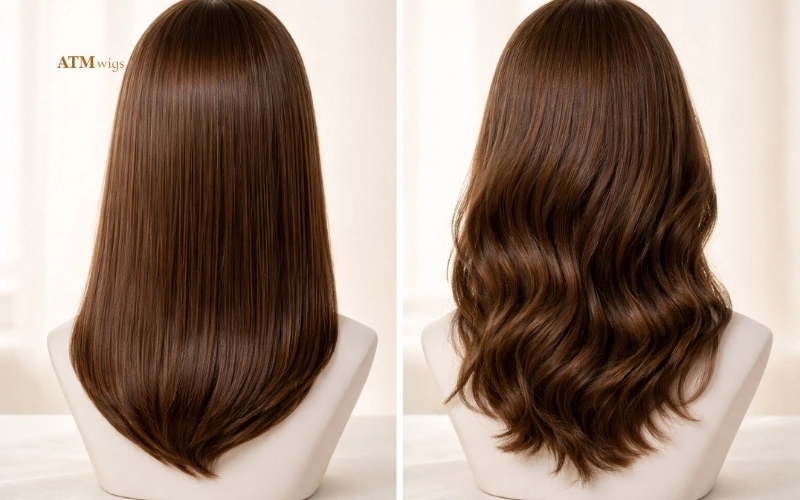
Why synthetic hair can look shiny (how to make it look more “real”)
Shine is one of the biggest “tell” signs, but it’s also one of the easiest issues to understand.
Why shine happens
Synthetic filaments can be smooth and uniform, so they reflect light evenly. That reads as shining under flash photos and bright overhead bulbs.
Some smoothing finishes can add slip but may also increase gloss depending on the color.
What higher-quality synthetic does differently
Better synthetic hair often uses a more matte finish and a mix of filament thickness to soften that mirror-like reflection. Good texturizing also improves movement.
Practical ways to reduce shine (safe, realistic)
Avoid ultra-flat styling and add light texture (soft waves, gentle separation). That alone can make synthetic hair look more natural.

Read next: How to Make a Synthetic Wig Look Real.
Why do synthetic tangle more easily
If your wig knots near the collar, friction is usually the cause—not “bad luck.”
The friction zones that cause tangling
The nape and underside rub against collars, scarves, coats, seat backs, and bag straps. Longer lengths have more contact, so they tangle faster.
Fiber and finish effects
Static in dry air can make strands cling, turning small snags into knots. Coatings may reduce friction early on but wear down with daily rubbing and washing.
What helps most (principles)
Detangle gently from ends upward, use a light anti-static mist, and store the wig to avoid crushing and rubbing.

Read next: How to Keep Synthetic Hair From Tangling.
Is synthetic hair safe to wear?
For most people, synthetic wigs are safe and comfortable. When discomfort happens, fit and hygiene are often the biggest factors.
General safety overview (everyday wear)
Most irritation comes from heat buildup, sweat, cap friction, or product residue—not the fiber itself. A breathable cap and a secure (not tight) fit reduce problems fast.
Odor out of the box (why it happens and what to do)
A “new wig smell” can come from packaging and finishing agents. Airing out overnight often helps.
If needed, do one gentle wash with a synthetic-friendly shampoo and let it air dry fully.
Avoid DIY “burn tests” to identify fibers—it’s unsafe and not reliable for wigs.
Sensitivity & itching — common causes
Fragranced sprays, heavy buildup, and rubbing at the hairline are common triggers. A wig cap liner can reduce friction and absorb sweat.

How material affects washing & products
Synthetic fibers don’t behave like human hair, so using the wrong products can increase friction and tangling.
Washing basics by fiber type
Use cool to lukewarm water, soak, and minimal agitation. Avoid rough towel rubbing—pat dry instead.
Heat-friendly synthetic can be extra sensitive to friction, so keep detangling gently and controlled.
Product selection (keep it simple)
Choose a shampoo labeled for synthetic wigs, plus a light detangling spray or anti-static mist. Skip heavy oils and thick conditioners meant for human hair.
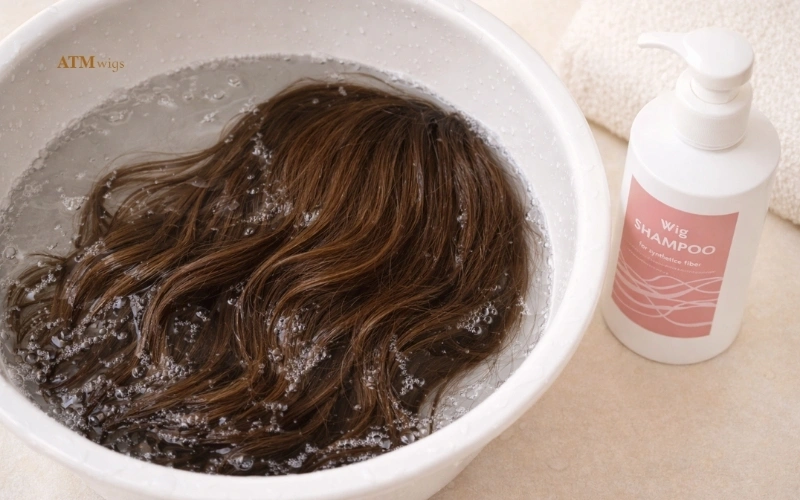
Read next: How to Wash a Synthetic Wig and Synthetic Wig Care Guide.
Quick checklist: choosing better synthetic wigs
Use this to compare options beyond the label.
Labeling checklist (what to look for)
If it’s heat-friendly, the brand should state a heat limit or clear heat instructions. Specific care guidance is a strong quality signal.
Feel & realism checklist
Check the shine under normal indoor lighting, not just studio photos. Feel the ends—excess roughness often predicts tangling.
Density & comfort checklist
Choose a density you can comfortably wear daily. Cap breathability, smooth seams, and a stable fit matter as much as fiber type for all-day comfort.
A natural-looking part and hairline can dramatically improve realism, even on synthetic fibers.

FAQs about what is synthetic hair made of
Is synthetic hair made of plastic?
It’s made from polymer fibers related to plastics but manufactured as hair-like filaments with finishes that change softness, shine, and movement.
What are synthetic wigs made of most commonly?
Most use modacrylic, polyester-based fibers, acrylic, or blends, usually labeled simply as “synthetic fiber.”
What is heat-friendly synthetic hair made of?
Often, polyester-based thermoplastic blends are designed to tolerate controlled heat. Always follow the brand’s heat limit.
Why does synthetic hair look shiny?
Smooth, uniform filaments reflect light evenly. Matte finishing and better texturizing can reduce shine.
Why does synthetic hair tangle so easily at the nape?
Friction from collars plus static creates snags and knots. Gentle detangling, anti-static mist, and better storage help.
Is synthetic hair safe to wear every day?
For most users, yes. Comfort depends on cap fit, breathability, scalp hygiene, and avoiding heavy product buildup.
Can you curl or straighten synthetic hair?
Regular synthetic usually shouldn’t be heat-styled. Heat-friendly synthetic can be styled with controlled heat and careful technique.
Can you dye synthetic hair?
Most synthetic fibers don’t take traditional hair dye well, and attempts can damage the fiber. It’s usually best to choose the right shade upfront.
What is Kanekalon hair?
It’s a commonly referenced name associated with certain synthetic fibers; in wigs, the feel and realism still depend on fiber grade and finishing.
How long do synthetic wigs last?
Lifespan depends on length, friction, and care. Occasional wear lasts longer; daily long styles need more maintenance.
Now you know what is synthetic hair made of and why that answer changes heat styling, shine, tangling, and care. To compare synthetic with premium human-hair options, explore ATM Wigs’ services or catalog and find the best match for your routine.

