


Synthetic wigs can look amazing, but friction, buildup, and daily wear can make them tangle, frizz, or lose shape. This guide shows how to fix synthetic wig issues step by step—safely, quickly, and with results you can actually see.
Identify the problem first (30-second check)
Before you “fix,” you need to know what you’re fixing. The synthetic fibers react differently to human hair, and the wrong technique can cause the fibers to roughen or melt.
1) Fiber type check (regular synthetic vs heat-friendly)
Always check the label or packaging first. If it says heat-friendly (sometimes “heat resistant”), you may be able to use low heat within a specific temperature range.
If it’s regular synthetic, treat it as heat-sensitive. That means no flat iron, curling iron, or hot blow-dry unless the brand explicitly confirms it’s safe.
2) Texture + style check (straight vs wavy vs curly)
Straight wigs will show signs of rough ends and shine. Curly wigs will show signs of puffy ends, clumping, and frizzing when you brush them the wrong way.
Knowing your texture helps you choose the right tools. A wide-tooth comb and fingers are usually safer for curls than a standard wig brush.
3) Severity check (light / medium / heavy)
Light issues are surface tangles, mild frizz, or shine. Medium issues include nape matting, flattened curl pattern, or stiffness from product buildup.
Heavy issues include melted fibers, extreme matting that feels like a “net,” or a cap that’s torn and shedding badly. Those may require professional repair or replacement.
4) Quick decision map (symptom → fix)
- Tangles + rough ends: detangle correctly, then smooth and protect
- Frizz + puffiness: smooth fibers, reset shape, avoid brushing errors
- Flat curls: refresh and restore curl pattern
- Helmet hair: refit cap, adjust parting, reduce bulk
- Too shiny: reduce shine safely
- Stiff + sticky feel: remove product buildup and reset
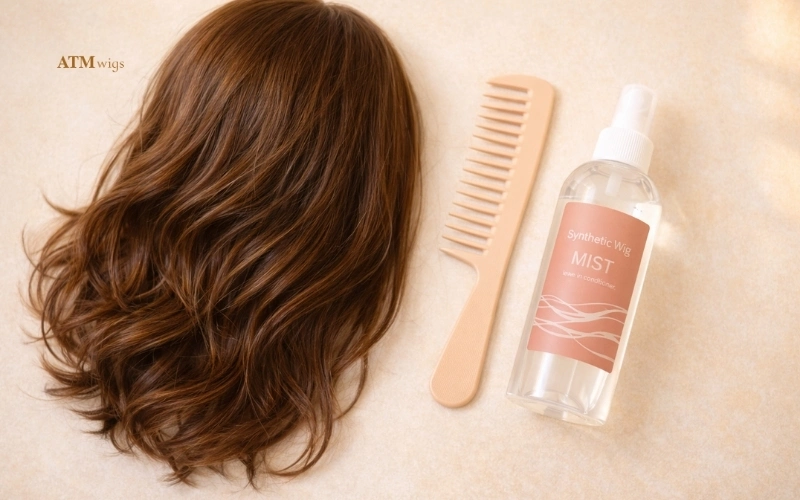
Fix tangling & rough ends (most common)
Most people search “how to fix a synthetic wig” because of tangling. The nape area mats fast due to friction from collars, scarves, seat belts, and bags.
Why it happens (and why it keeps coming back)
Synthetic fibers don’t “heal” like human hair. When fibers get abraded, they develop tiny rough points that grab onto each other.
Product buildup makes it worse. Sticky residue makes strands cling, creating tangles that appear again even after you detangle.
Step-by-step detangle method (safe, reliable)
- Place the wig on a stand or mannequin head. Secure it so it doesn’t slide.
- Lightly mist with water or a synthetic-wig detangling spray. Avoid soaking.
- Divide hair into small sections. Start with the bottom layer first.
- Hold the section above the knot and detangle from ends upward.
- Use a wide-tooth comb for wavy/curly textures. Use a wig brush mainly for straight wigs.
Move slowly. Pulling hard can stretch fibers, loosen wefts, and increase shedding.
Fix nape matting (the worst friction zone)
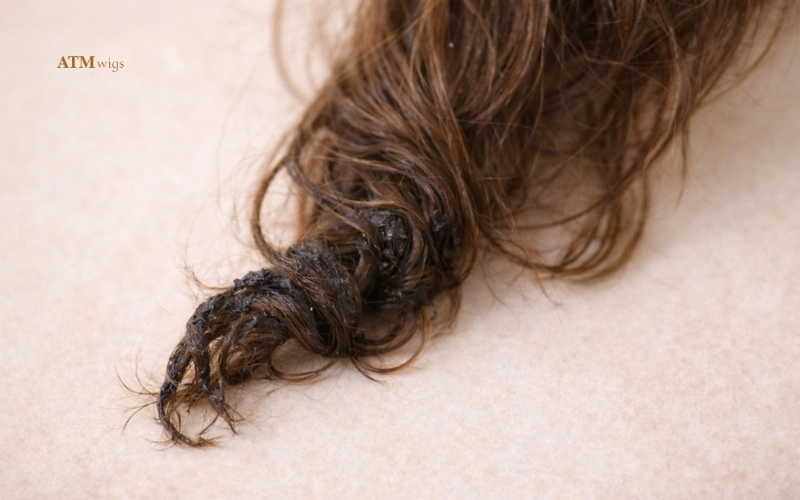
For nape matting, work in extra-small sections. Gently separate the “mat” with your fingers first, then comb.
If the fibers feel stiff and stuck, try gentle steam from a safe distance (never pressing the steamer onto the hair). Steam can relax kinks and help fibers lay smoother.
Repair rough ends (so it stops tangling)
Once detangled, focus on the ends. Mist lightly and smooth in the direction of the fibers using your hands.
If the ends are permanently fuzzy, a micro-trim can help. Trim very small amounts and keep the cut line soft, not blunt, so it still looks natural.

Fix frizz & “puffy” texture
The common causes of frizz in a synthetic wig include friction, brushing, and heat. Frizz can cause the wig to look larger than it should.
Frizz types (surface vs permanent damage)
Surface frizz shows up as flyaways and fuzziness. It can be found on the top and tips of the wig. It can be remedied by smoothing and re-shaping.
Permanent frizz often feels crunchy and looks uneven, sometimes from heat damage. If fibers look melted or kinked sharply, you may need to trim or restyle.
Smooth the fibers (without making them greasy)
Lightly mist the area. Then smooth the fibers with flat palms, moving downward.
Use minimal product. Heavy oils and thick serums can cause clumping and attract dirt, which leads to more tangling later.
Reset the form (so it looks “fresh” again)
For straight and wavy wigs, smoothing plus gentle reshaping usually works. Let the wig hang naturally on a stand while it dries.
For curly wigs, avoid brushing out curls. Use your fingers to separate and place curls where you want them.
Common mistakes that create more frizz
Brushing dry curls is a big one. Another is using too much spray, which creates residue that makes hair stick together.
Also avoid harsh heat sources. Even if a wig is heat-friendly, high temperatures can create long-term frizz and rough texture.

Fix curls that went flat / messy (curly wigs)
Curly synthetic wigs require a special technique. The idea is to revive curl patterns without turning the wig into a frizzy mess.
Refresh curls between wears (quick fix)
Spray lightly, then scrunch curls upwards with your hands. This will help revive shape without disturbing curl groups.
If curls are clumped together, gently separate with your fingers. Do not comb through the curl pattern unless you’re performing a complete overhaul.
Restore curl pattern (deep reset with rollers)
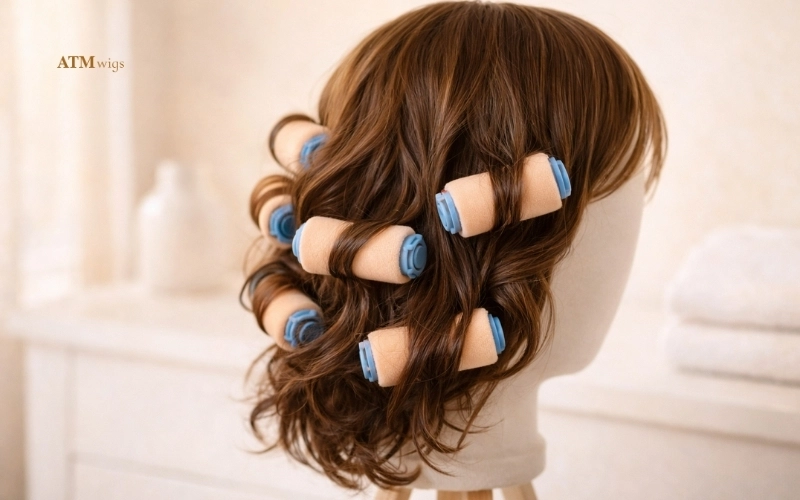
Apply foam rollers or flexi rollers on dampened hair. Section curls in a uniform pattern to create an even curl design.
Let the wig dry fully on a stand. If you remove rollers too soon, curls will fall flat and become messy again.
Define curls without frizz (finishing)
After removing the rollers, give the wig a light shake at the roots. Next, separate curls using your fingers only if necessary.
A light spray of lightweight wig mist can be beneficial, but use restraint to prevent build-up.
Fix shape, parting, and “helmet hair”
“Helmet hair” happens when the wig sits too high, too bulky at the top, or the parting looks stiff and unnatural.
Fix fit first (most helmet hair is a cap issue)
Adjust the internal straps so the wig sits snugly without sliding. If it’s too loose, the top can puff and shift.
A wig grip can help stabilize the cap and reduce bulk by keeping everything anchored.
Fix parting and top shape (small tweaks, big realism)
Change the part slightly to soften the look. A rigid middle part can emphasize “wiggy” shape on many synthetic styles.
For wigs with a defined parting space, gently reposition the top fibers with a light mist and let them set in place while drying.
Fix dents and flat spots from storage
Dents happen when a wig is folded or pressed in a bag. Light steam from a distance can release kinks.
After reshaping, store the wig on a stand or in a roomy satin bag to prevent new dents.

Fix shine (too plastic-looking)
Shine is one of the most common complaints with synthetic fiber. It’s not always “bad”—but too much shine reads as plastic under bright lighting.
Why do synthetic wigs look shiny
Synthetic fiber reflects light differently from human hair. In addition, some wigs come with a finished coating that can contribute to shine.
Safe ways to reduce shine
Dry shampoo is one of the easiest options. Spray lightly, let it sit, then gently shake or pat off excess.
Another option is to use a light dusting powder in areas where shine is most noticeable. This must be built up slowly to avoid a chalky appearance.
What not to do
Avoid heavy oils or glossy serums. They usually make synthetic wigs look shinier and attract dust.
Also avoid rough abrasion methods that scratch fibers, which can increase frizz and tangling.

Fix product buildup (spray/gel residue)
If your wig feels stiff, sticky, or tangles faster than usual, buildup is likely the root cause.
Signs of buildup
The wig feels heavy, curls clump, and detangling becomes harder. Shine may increase in patches, and the hair can look dull in others.
Clarify wash routine (safe reset)
Use cool to lukewarm water. Soak gently and rinse in the direction of the fibers.
Avoid scrubbing or twisting. Blot with a microfiber towel, then air dry on a stand.
If you don’t have wig shampoo
A gentle, diluted cleanser should be chosen. Avoid harsh sulfates when possible. It’s all about using a small amount and rinsing well.
Once dry, apply a light wig conditioning spray and detangle again from ends upward.
Product rules going forward
Use hairspray sparingly and choose formulas recommended for synthetic wigs when possible. Fewer products means less residue and longer-lasting softness.

When NOT to DIY + when to replace
Some damage is beyond a simple “fix,” especially if fibers have melted or the cap structure is failing.
Red flags you shouldn’t ignore
If fibers look fused, warped, or shortened from heat, they won’t return to normal. Extreme matting that won’t loosen can also indicate severe abrasion.
If your cap is torn, your wefts are lifting, or your shedding is extreme, it is not recommended to try to detangle your wig yourself.
When to seek professional help
A professional can repair cap issues, secure wefts, and restore shape more safely. This is worth it for higher-quality pieces or special styles.
When it’s smarter to replace
If you are spending a ton of time fixing your wig each time you use it, it might just be easier to replace your product with a better-fitting cap and better-quality fibers.
FAQs about how to fix synthetic wig
Can you fix a synthetic wig that is badly matted at the nape?
Yes, in many cases. Work in tiny sections, mist lightly, detangle from ends upward, and use gentle steam from a distance if needed.
How do I fix frizzy synthetic wig ends fast?
Lightly mist, smooth downward with your hands, and detangle gently. If ends are permanently fuzzy, a small trim can help.
Can I use a flat iron on a synthetic wig?
You can, but it must be a heat-friendly synthetic and within the recommended temperature range specified by the manufacturer. Most other synthetic wigs can melt if you apply direct heat.
How do I restore curls on a synthetic wig after washing?
You can roll your curls using rollers and/or flexi rods, but make sure your hair is a bit damp, and then let it completely dry. When you want to remove your rollers, instead of brushing your curls, use your fingers to detangle them.
Why does my synthetic wig tangle so quickly?
Friction (especially at the nape) and buildup are common causes. Reducing friction and limiting heavy products helps a lot.
How can I reduce shine on a synthetic wig?
Use dry shampoo or a small amount of translucent powder. Apply lightly and remove excess so it doesn’t look dusty.
How do I remove hairspray buildup from a synthetic wig?
Soaking your wig in cool to lukewarm water and a mild soap, and then air-drying it on a wig stand, can help.
When is a synthetic wig not fixable anymore?
When fibers are melted, severely abraded, or the cap/wefts are failing. At that point, repair or replacement is usually better.
Now you know how to fix synthetic wig problems like tangling, frizz, flat curls, shine, and buildup without damaging the fibers. If you’re ready to upgrade your selection or explore more natural-looking options, browse ATM Wigs’ catalog and services to find pieces designed for long-lasting wear and easy styling.

