


Learning how to wash a synthetic wig properly keeps it softer, smoother, and far less tangled. This guide walks you through the safest at-home routine—plus drying, detangling, and common mistakes—so your wig stays fresh and wearable longer.
Quick checklist before you wash
What you’ll need
You don’t need a salon setup, but using the right basics makes a huge difference.
- A clean sink or basin
- Cool to lukewarm water
- Shampoo made for synthetic wigs (or a wig-safe cleanser)
- Wide-tooth comb or a wig brush
- A clean towel (microfiber is a bonus)
- A wig stand or mannequin head for air-drying
- Optional: synthetic wig detangling spray or wig conditioning spray
What to avoid (so you don’t ruin the fibers)
Synthetic fibers behave differently from human hair, so “regular hair rules” don’t always apply.
Avoid hot water, aggressive rubbing, and wringing the wig like a towel. Skip heavy oils and creamy conditioners meant for natural hair, since they can leave residue and attract dirt.
Prep step that saves you from tangles
Detangle the right way (before water touches it)
Always detangle before washing, because wet synthetic fibers can tangle more easily.
Start at the ends and work your way up in small sections. Hold the hair above where you’re brushing so you don’t pull stress into the cap or wefts.
If your wig is curly or wavy, finger-detangle first. A wide-tooth comb is safer than a dense brush for textured styles.
Remove accessories and check the cap
Take off any removable clips or accessories before washing.
Do a quick scan for loose stitching, thinning areas, or heavy matting at the nape. That nape zone is the most common friction point, especially for daily wear.
If it’s a synthetic lace front wig
Be extra gentle around the hairline and lace.
Avoid scraping or tugging near knots, and don’t “scrub” the lace. Your goal is to lift sweat and buildup without disturbing the lace structure.

Step-by-step: how to wash a synthetic wig
Step 1 — Fill the basin correctly
Use cool to lukewarm water, never hot.
Add a small amount of synthetic wig shampoo and swish the water gently. You want a light, even cleanser bath—not a bubble party.
Step 2 — Soak, don’t scrub
Place the wig into the water and let it soak for a few minutes.
Gently swish it once or twice. Do not rub the hair between your hands, which can create frizz and tangles fast.
Step 3 — Clean the cap area (where buildup lives)
Most “wig smell” and itchiness comes from the inside of the cap.
With the wig still in the water, use your fingertips to lightly press along the cap. Focus on the forehead band, ear tabs, and nape area.
If the wig is lace front, keep this step gentle around the lace edge. Think “lift and rinse,” not “scrub and fight.”
Step 4 — Rinse thoroughly
Rinse under a gentle stream of cool water until it runs clear.
Keep the hair flowing downward in one direction as you rinse. This simple habit reduces knotting and helps the wig dry smoothly.
If the wig still feels slippery or sticky, it may have leftover product. Rinse a little longer rather than adding more cleanser.

Conditioner, softener, and “viral hacks” (what actually works)
Can you use conditioner on a synthetic wig?
Synthetic hair doesn’t “absorb” moisture like human hair, so traditional conditioner isn’t always helpful.
If you want softness, use a product labeled for synthetic wigs. These are typically lighter and designed to reduce friction instead of coating the fiber.
Detangling spray vs. rinse-out products
For many people, a synthetic wig spray is the most practical “conditioning” step.
Use it after the wig is clean and towel-blotted, or once it’s dry for daily refreshes. Apply lightly and focus on mid-lengths and ends where tangling happens.
Too much spray can cause buildup over time. If the wig starts feeling heavy, wash a bit sooner and use less product between washes.
The fabric softener myth (use caution)
Fabric softener is a popular internet suggestion, but it can leave residue and attract dirt.
If you’re trying to revive a wig that feels rough, a wig-safe detangler is a safer first option. Good technique—gentle washing, thorough rinsing, and proper air-drying—does more than hacks in the long run.
Drying a synthetic wig (this is where most damage happens)
Blot—don’t wring
Lift the wig from the water and let it drip for a moment.
Lay it on a towel and press to remove excess water. Do not twist, wring, or aggressively squeeze the hair.
Air-dry on a stand
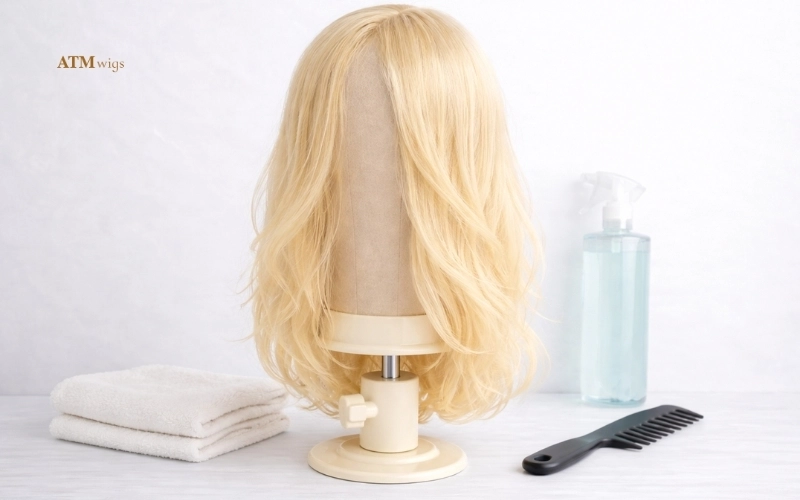
Place the wig on a stand or mannequin head and let it air-dry fully.
Keep it away from direct sunlight, radiators, or heaters. Heat can warp fibers and create permanent frizz or odd texture changes.
Can you blow-dry a synthetic wig?
In most cases, no—blow-drying is risky.
Even “heat-friendly” synthetic wigs can react badly to uncontrolled heat. If your wig is specifically heat-resistant, keep any heat use minimum and strictly low temperature.
When in doubt, choose air-drying. It’s the simplest way to protect the style and the fiber finish.
After-wash finishing: make it look fresh again
Detangle after it’s dry (or mostly dry)
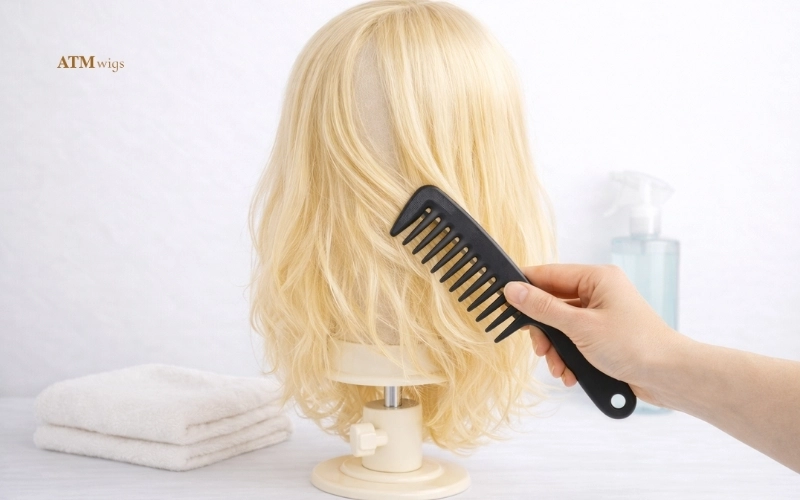
Wait until the wig is fully dry, or at least mostly dry, before combing.
Start at the ends and work upward again. This reduces snapping, fraying, and the “puffy” look that can happen after washing.
Fix common post-wash issues
If the wig looks a little frizzy at the ends, use a tiny amount of wig detangler. Then comb gently in small sections.
If it looks overly shiny, go light on sprays and avoid oily products. Shine often gets worse when fibers are coated with residue.
If static is the problem, reduce friction. A light anti-static wig spray and smoother storage (like a hair net or satin bag) can help.
Curly synthetic wigs: protect the curl pattern
Curly fibers tangle differently, so avoid brushing like you would with straight hair.
Use your fingers to separate curls and smooth with a bit of wig spray if needed. Let curls air-dry naturally and avoid stretching them while wet.
How often should you wash a synthetic wig?
A practical wear-count rule
A simple guideline: wash after several wears, sooner if you sweat a lot.
If you wear your wig daily, you’ll usually need to wash it more frequently than someone who wears it occasionally. The goal is to clean it before the buildup makes it tangle and look dull.
What changes in washing frequency
Heat, sweat, and styling products can shorten the time between washes. Smoke, strong cooking odors, or city pollution can also make a wig feel “dirty” faster. If the wig starts tangling unusually fast, that’s often a sign it’s time to wash.
Refresh between washes
You can extend the time between washes with light maintenance.
Gently detangle, wipe the inside cap area if needed, and use a small amount of wig spray. Avoid piling on products, because buildup creates more problems than it solves.
Storage tips that keep your wig clean longer
Daily storage
Store on a wig stand to keep airflow and shape.
If you don’t have a stand, use a hair net and lay it flat in a clean space. Keep it away from dust, humidity, and direct heat.
Travel storage
Use a hair net to keep fibers contained.
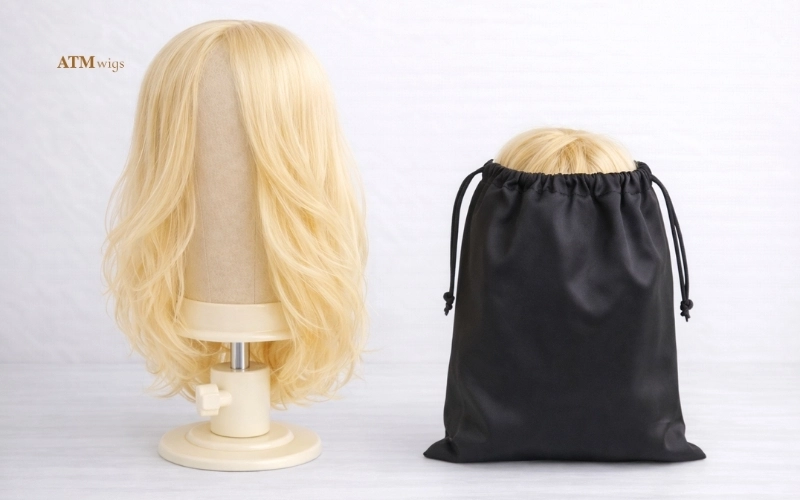
Place it in a breathable bag or a protective box so it doesn’t get crushed. Minimizing friction in storage is a big part of preventing nape tangles.
Common mistakes to avoid
The “don’t do this” list
- Hot water is the fastest way to stress synthetic fibers. So is scrubbing, wringing, or brushing aggressively when wet.
- Avoid using regular shampoo and heavy conditioner meant for human hair. These often leave residue and can make tangling worse over time.
- Don’t store a wig before it’s fully dry. That can lead to odor, mildew-like smells, and a flattened shape.
Troubleshooting (fast fixes for real problems)
My synthetic wig still feels sticky or heavy
That usually means residue.
Rinse longer next time, and reduce the amount of spray or product you use between washes. A lighter routine often makes the wig feel softer and fresher.
It smells even after washing
Focus more on cleaning the inside cap area.
Let it air out fully while drying, and don’t store it damp. If odor is persistent, it may be time to wash a bit more frequently.
It tangles badly at the nape
Nape tangling is usually friction from collars, scarves, and daily movement.
Detangle more gently and store it properly. Keeping the nape smoother (and not overloaded with product) helps a lot.
The ends look frayed
Some wear at the ends is normal over time.
A gentle wash routine and low-friction storage can slow it down. If the ends are severely frayed, it may be a sign the wig is nearing replacement time.
FAQ: How to wash a synthetic wig
Can you wash a synthetic wig with regular shampoo?
It’s not recommended. Regular shampoo can leave residue or be too harsh for synthetic fibers, making tangling and frizz more likely.
What is the best shampoo for synthetic wigs?
A cleanser labeled for synthetic wigs is best. It’s designed to clean without roughing up the fiber surface.
Do I need conditioner for a synthetic wig?
Not in the traditional sense. If you want softness, use a lightweight synthetic wig spray or a product made specifically for synthetic fibers.
Can I wash a synthetic wig in hot water?
No. Hot water can warp the fibers and permanently change the texture, especially on straight styles.
How often should you wash a synthetic wig if you wear it daily?
Wash based on wear and buildup. If it starts tangling faster, looking dull, or holding odor, it’s time to wash sooner.
Can you wash a synthetic lace front wig the same way?
Yes, but take extra care around the lace and hairline area. You want to avoid scrubbing on the lace and instead use light pressure and rinse thoroughly.
Can you blow-dry a synthetic wig?
Usually, no. Air-drying is the safest. Even heat-friendly synthetic wigs can react poorly to uncontrolled heat.
Can you wash a synthetic wig in the washing machine?
It’s not recommended. Machine agitation can tangle fibers and stress the cap construction.
How do I remove odor from a synthetic wig?
Clean the inside cap thoroughly, rinse well, and let it air-dry completely. Avoid masking odor with heavy perfume sprays.
How do I stop a synthetic wig from tangling after washing?
Detangle before washing, don’t scrub, rinse in one direction, and air-dry on a stand. Light, wig-safe spray can reduce friction at the ends.
How long does a synthetic wig take to air dry?
Synthetic wigs require an air-dry time that varies based on the density and length of the wig. Synthetic wigs should always be allowed to dry entirely before being stored or styled after air-drying.
What’s the best way to wash a curly synthetic wig?
Finger-detangle, soak gently, rinse carefully, and avoid brushing out curls. Let it air-dry and reshape curls with your hands.
Once you know how to wash a synthetic wig the right way—gentle detangling, cool cleansing, thorough rinsing, and full air-drying—you’ll get a smoother look and longer wear. If you’re exploring high-quality wigs and care guidance, take a look at ATM Wigs’ catalog and services to find options that fit your style and routine.

