

The choice between a lace vs skin toupee is dependent on the look and feel you are going for on a daily basis. The base impacts your hairline, airflow, adhesive cleanup and longevity. This comparison will help you decide which construction suits your priorities.
Lace vs skin toupee at a glance
A lace toupee uses a fine, open mesh base. A skin toupee uses a thin polyurethane film, also called poly or PU. Both can look natural, but they perform differently in daily wear.
| What matters to you | Lace toupee | Skin toupee |
|---|---|---|
| Exposed hairline | Fine mesh can create a soft-looking front | A thin edge can also look natural |
| Scalp appearance | Depends on the mesh and hair attachment | Smooth base creates a scalp-like effect |
| Breathability | Air passes through the mesh | Less airflow through the film |
| Adhesive cleanup | Residue may settle into the mesh | Smooth underside is generally easier to clean |
| Durability | Depends on lace type and handling | Depends strongly on PU thickness and handling |
Use this table as a starting point. Base thickness, hair density, fit, and the final cut can change the result with either option.
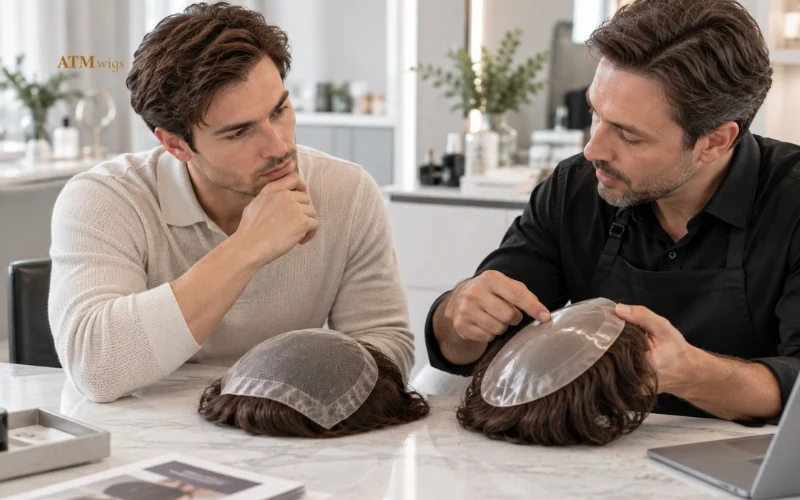
Which looks more natural?
Neither lace nor skin automatically looks more natural. The best choice depends on whether you expose your front hairline, show a parting, or usually style your hair forward.
For an exposed hairline
Lace is often chosen for hairstyles that lift or sweep the hair away from the face. Its fine mesh can help the front edge blend with the skin and create a soft-looking transition.
A thin skin base can also look convincing at the front. Its edge needs to lie flat, suit the wearer’s skin tone, and be attached carefully. “Skin” alone does not guarantee an invisible hairline.
When comparing products, look closely at front density and hair direction. A heavy, abrupt hairline can make either base noticeable. Close-up images of the front are more useful than a photo taken from several feet away.
For a scalp-like appearance
Skin bases can create the impression of hair emerging from the scalp. The effect depends on the film’s appearance, thickness, and the way the hair is attached.
Lace can also look natural from above, although the mesh or knots may be more apparent in some constructions. If you regularly part your hair, examine photos of the top as well as the front hairline.
For a forward-styled haircut that covers the front edge, small differences between lace and skin may matter less. Matching the toupee’s color, density, texture, and cut to your existing hair becomes especially important.

Which feels more comfortable?
Lace has the clearer advantage when airflow is your main priority. Skin may still feel comfortable, but its continuous film allows less air to pass through the covered area.
Airflow in warm weather and during exercise
Lace’s open mesh allows air to reach the scalp. That may appeal to someone who exercises often, sweats heavily, or lives in a warm climate.
A skin base covers the scalp with a polyurethane film. Some wearers are comfortable with it throughout the day; others prefer the more ventilated feel of lace.
Comfort also depends on fit, adhesive, and wear duration. Keep in mind those things with the base material in mind if you are selecting what will fit into your routine.
Does a thinner base always feel better?
Not always. An ultra-thin base may feel light, but it can also need more careful handling when removed and reattached. A secure, well-fitted system may feel better in practice than simply choosing the thinnest option.
If comfort is your top concern, compare the specific bases available rather than assuming every lace or skin toupee feels the same.

Which is easier to attach and clean?
Both types can be used with suitable tapes or liquid adhesives. The main difference appears when removing the toupee and clearing away adhesive residue.
Cleaning a lace base
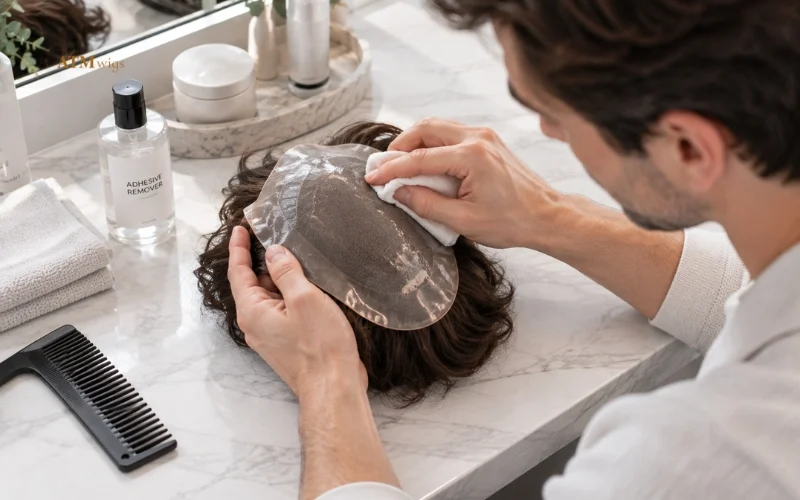
Adhesive can enter lace’s small openings, so residue may take more time to remove. Pulling at bonded mesh can stretch the base or loosen the attached hair.
Lace is manageable with a careful routine, but it rewards patience. Follow the instructions for the particular base and adhesive instead of scrubbing or pulling to speed up cleanup.
Cleaning a skin base
A skin base has a smooth underside. Adhesive residue is generally easier to reach and wipe away, which may appeal to someone who maintains their toupee at home.
The film still needs gentle handling, especially when it is very thin. Easier cleanup does not mean the base can be pulled sharply during removal.
If you want a simpler adhesive cleanup routine, skin is usually the more suitable starting point. If airflow matters more, the extra care required by lace may be a worthwhile trade-off.
Which lasts longer: lace or skin?
There is no dependable rule that all lace toupees last longer than skin toupees, or the reverse. Durability varies substantially within both categories.
Fine lace can be damaged by rough adhesive removal. Ultra-thin skin may offer a subtle edge but can stretch or tear if handled aggressively. A thicker construction may better tolerate handling while producing a different look at an exposed hairline.
The hair can also show wear before the base does. Shedding, friction, washing, and heat styling all affect how long the complete toupee looks its best.
Be cautious with fixed lifespan claims based only on “lace” or “skin.” Ask about the specific base construction and recommended maintenance. Those details provide a more useful comparison than a single promised number of months.
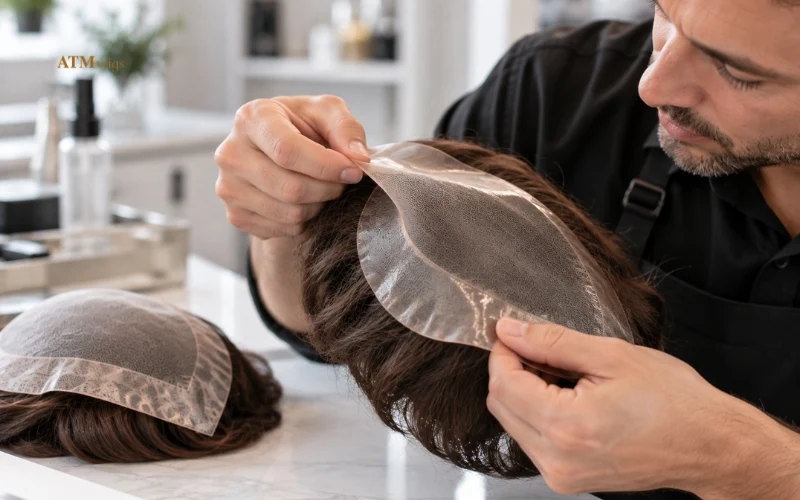
Lace or skin: Which should you choose?
Your best starting point depends on the result you care about most. This decision guide brings the main differences together:
| Your priority | More suitable starting point |
|---|---|
| Maximum airflow | Lace |
| An exposed hairline | Lace or carefully selected thin skin |
| A scalp-like surface | Skin |
| Easier adhesive cleanup | Skin |
| Different features in different areas | Hybrid lace and skin |
Choose lace if breathability and a soft-looking exposed hairline lead your list. Allow time for careful adhesive removal from the mesh.
Choose skin if you prefer a scalp-like appearance and easier access to adhesive residue. Check the base thickness closely if you plan to expose the front edge.
A hybrid toupee may be worth considering when neither full-lace nor full-skin construction fits your needs. For example, ATM Wigs’ XM-119 combines a French lace front and center with thin skin at the back and sides.
Before ordering, ask yourself three questions: Will I expose my hairline? How important is airflow? Will I handle adhesive cleanup myself? Your answers will help narrow the choice.
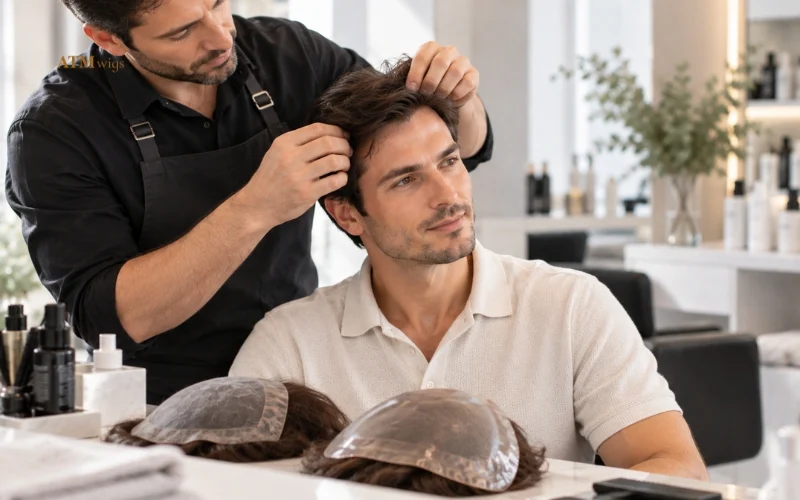
FAQs about lace vs skin toupee
Is lace or skin better for a natural hairline?
Both can create a natural-looking hairline. Lace is often chosen for a soft-looking exposed front, while thin skin can produce a subtle edge when fitted well. Hair density, placement, and styling are just as important as the base material.
Is a skin toupee the same as a poly toupee?
Generally, yes. “Skin,” “poly,” and “PU” commonly describe polyurethane-based toupees. Products sold under those names can vary in thickness and construction, so check the specifications of each one.
Is lace more breathable than skin?
Yes. Air can pass through lace’s open mesh, while skin is a continuous film. Individual comfort still varies with fit, adhesive, climate, and wear duration.
Is a skin toupee easier to maintain than lace?
The smooth underside usually makes adhesives easier to clean up. Lace may require more careful cleaning as any residue can get into the mesh. Even very thin skin needs to be handled carefully at removal.
Should I choose a hybrid lace and skin toupee?
If you want different features in different areas like a lace front with skin on the sides or back then think hybrid. Make sure the layout is the same as your hair style and how you usually put it in.
The selection of right lace or skin toupee hinges on style of hairline, comfort, and maintenance considerations. Explore ATM Wigs’ toupee collection to compare lace, skin, and hybrid constructions for your salon, store, or hair replacement business.

