

What is a full hand tied wig, if you’re wondering, is a construction method where individual strands or small groups of strands are hand tied over the hair bearing areas of the cap. This guide explains how the construction works, what makes it different from other wig types, and how to identify it.
What does “full hand tied” mean in a wig?
A full hand tied wig is defined mainly by the way the hair is attached to the cap. Instead of relying primarily on machine-sewn rows of hair, individual hairs or small groups of hairs are knotted by hand directly onto a fine base.
The term “full hand tied” generally means that the hair-bearing areas of the cap are hand-knotted rather than constructed primarily with machine-sewn wefts. This distinction is important because structural areas such as ear tabs, elastic sections, reinforced edges, or the nape may use other materials even in a fully hand tied design.
How the hair is attached
In a full hand tied construction, hair is distributed across the base through many small hand-tied knots. This differs from a traditional wefted wig, where hair is sewn into strips and those strips are attached to the cap in rows.
Because the hair is not mainly fixed into horizontal weft tracks, it can move more independently from its attachment points. The exact cap layout can vary by manufacturer, so a product diagram is often more useful than the product name alone.
Why hand-knotting matters
The attachment method affects how the wig behaves when worn. Hand-knotted hair is not confined to fixed rows, which can result in softer movement and a less structured look. It can also reduce some of the internal bulk created by multiple layers of sewn wefts.
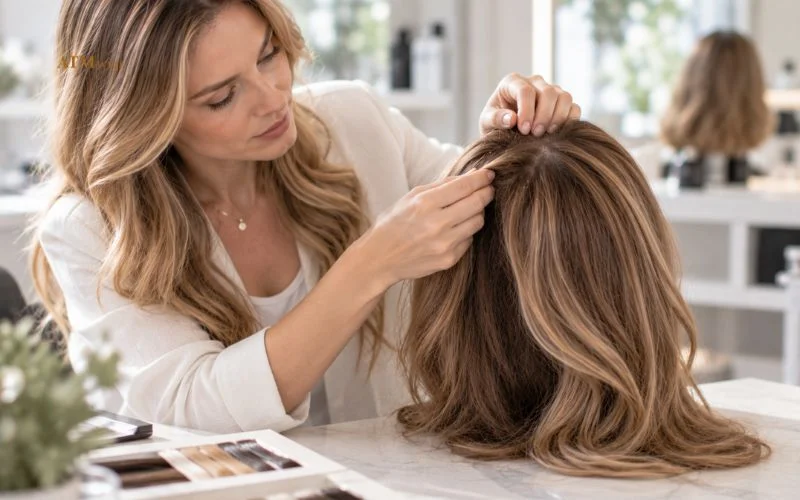
How is a full hand tied wig made?
Producing a full hand tied wig requires considerably more manual work than making a standard machine-wefted wig.
Exact processes vary from manufacturer to manufacturer, but the basic principle is the same: the hair is hand-knotted directly to the cap.
Preparing the wig cap
It starts with a light base. Depending on the design, the cap may include fine mesh, monofilament, lace, or a combination of different materials.
These materials form the surface onto which the hair is tied. This is an important distinction: full hand tied describes the attachment method, not one specific cap material.
Tying the hair by hand
A wig maker works across the hair-bearing areas of the cap, tying individual hairs or small groups of hairs onto the base. The number of hairs used in each knot can vary depending on the location, density, and desired appearance.
The way the knots are spaced and tied also influences the way the finished hair falls. Because this process may involve thousands of knots, it requires more time and skilled manual work than machine sewing.
Completing the cap construction
A full hand tied wig may also include a lace front, monofilament section, adjustable nape, reinforced ear tabs, or other structural features. These elements serve different purposes and should not be confused with hand tied construction itself. For example, a wig may have a lace front but still use machine-sewn wefts across most of the back and sides.

What does a full hand tied wig look and feel like?
The differences are usually most noticeable in the way the hair moves and how the cap sits on the head. A well-made hand tied cap generally feels less rigid than a heavily wefted construction.
Natural hair movement
Because individual hairs or small groups of hairs are tied directly to the base, the hair can shift more freely when the wearer moves or changes the direction of the style. This can lead to a softer, less fixed look.
Flexible cap feel
A full hand tied wig cap will typically have softer wefted sections. This enables the base to better conform to the shape of the head and may reduce internal bulk. The exact feel still depends on factors such as cap material, density, and overall design.
Natural-looking hair distribution
Hand-knotting allows hair to be distributed across the cap instead of being arranged mainly in visible horizontal rows. This can help to give a more natural overall finish. But the scalp’s look still depends on the base material in areas like the top, parting and hairline.

What are the main benefits of a full hand tied wig?
The main benefits come directly from the hand-knotted construction.
Softer movement
Hair is less restricted by machine-sewn tracks, allowing it to move more freely from the base.
Greater cap flexibility
A cap with fewer rigid wefted sections can adapt more closely to the shape of the head.
Less internal bulk
Reducing stacked wefts can create a flatter internal structure and a less bulky feel.
More freedom in hair direction
Depending on the cap design, hand-knotted hair may be easier to redirect than hair fixed into strong horizontal weft patterns.
This does not mean every full hand tied wig can be parted anywhere. Parting flexibility still depends on the materials and construction used in the relevant area.

Full hand tied vs partial hand tied wig
The main difference between a full hand tied wig and a partial hand tied wig is how much of the hair-bearing cap uses hand-knotting. A full hand tied wig uses hand tying across most or all hair-bearing areas. A partial hand tied wig uses it only in selected sections and typically combines those areas with machine-sewn wefts.
| Feature | Full hand-tied wig | Partial hand tied wig |
|---|---|---|
| Hand tying | Across most or all hair-bearing areas | Selected areas |
| Machine wefts | Minimal or absent in hair-bearing areas, depending on design | Usually present |
| Hair movement | Flexible across more areas | Most flexible in hand tied areas |
| Cap structure | Generally less rigid | More structured |
| Production | More labor-intensive | Less labor-intensive |
| Typical price | Generally higher, depending on hair and construction | Generally lower for comparable specifications |
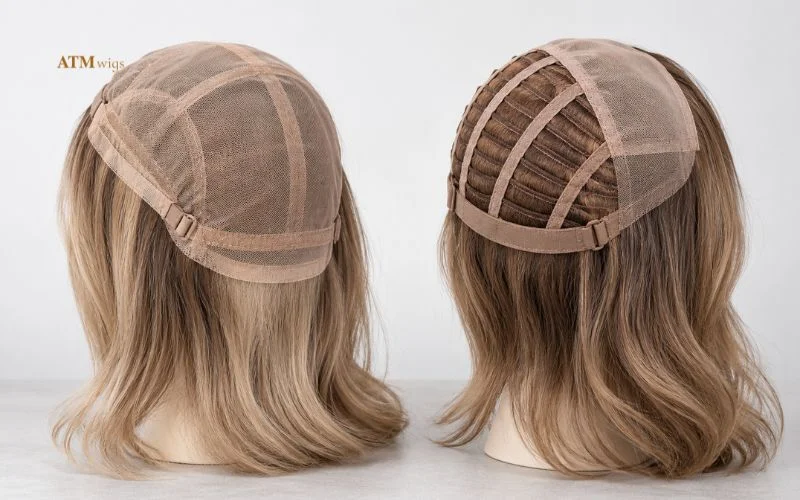
The label alone does not always explain the complete cap design. A cap diagram can show exactly where hand tied and wefted sections are used.
Full hand tied vs machine-made wig
The main difference between a full hand tied and machine-made wig is the way the hair is attached. Full hand tied wig is a wig in which individual hairs or small groups of hair are hand-knotted onto the cap. A machine made wig has hair sewn into wefts, and then the wefts are attached in rows.
Hand tied construction allows for more independent movement across the hair bearing areas, whereas the machine made construction creates a more structured internal framework. Machine wefted construction can also be produced more efficiently and may provide built in volume through the arrangement of the wefts.
Neither method is automatically better in every situation. They simply create different cap structures and wearing characteristics.

Full hand tied vs full lace wig: are they the same?
No. A full hand tied wig and a full lace wig are not automatically the same thing. The terms describe different aspects of construction. Full hand tied describes how the hair is attached. Full lace describes the type and extent of the lace base. A full lace wig commonly uses hand-knotting because the hair is attached directly to lace.
However, the terms are not exact synonyms. A full hand tied wig may also combine monofilament, lace, polyurethane, mesh, or other materials within the cap. Looking at the actual cap layout is therefore more accurate than relying on the product name alone.
Can a full hand tied wig use human or synthetic hair?
Yes. Full hand tied refers to construction, not hair material. The same attachment method can be used with human hair, synthetic fiber, or heat-friendly synthetic fiber. The type of hair does not determine whether a wig is full hand tied.

How to identify a full hand tied wig
The most reliable way to identify the construction is to inspect the inside of the cap and review the product specifications.
Check the hair-bearing areas
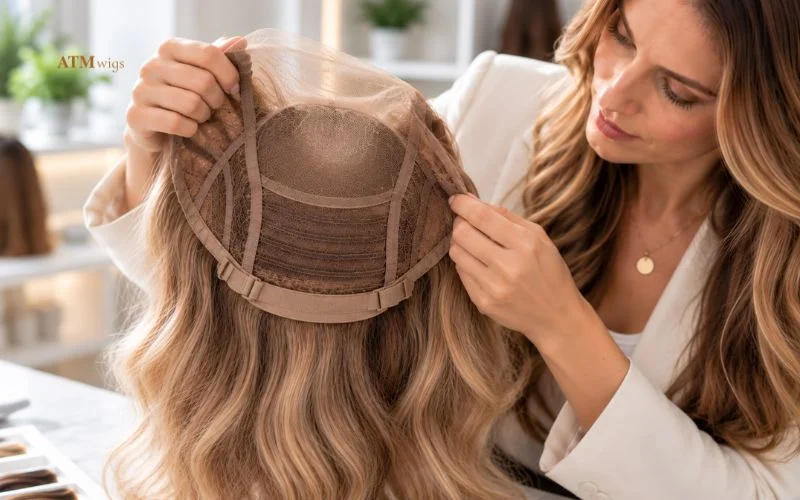
Turn the wig inside out and examine the base. A full hand tied construction should show small knots distributed across the hair-bearing areas rather than obvious rows of sewn wefts through most of the cap.
Look at the cap diagram
A cap diagram can show exactly which sections are hand tied. This is useful because some wigs are hand tied only at the top while the sides and back remain wefted.
Read the specifications carefully
Common terms include:
- Full hand tied
- Fully hand tied
- 100% hand tied
- Hand-knotted cap
Terminology can vary by brand, so the technical cap description is more important than the label alone.
Do not confuse lace front with full hand tied
A lace front only describes the construction at the front hairline. The rest of the wig may still contain machine-sewn wefts. A lace front wig should therefore not automatically be considered fully hand tied.

FAQs about What is a full hand tied wig?
Is a full hand tied wig more comfortable?
It can feel softer and less rigid because the cap usually contains fewer machine-sewn wefts. Comfort still depends on cap fit, materials, density, and individual sensitivity.
Does full hand tied mean there are no wefts?
Not always. A full hand tied design generally means the hair-bearing areas are hand-knotted, but some structural sections may still contain reinforcement or other construction elements. The actual cap diagram is the best reference.
Is a 100% hand tied wig the same as a full hand tied wig?
The terms are often used to describe a similar construction concept. However, terminology can vary between manufacturers, so it is better to confirm which hair-bearing areas are actually hand-knotted.
Can you change the part on a full hand tied wig?
It depends on the cap design. Hand-knotting can allow more freedom in hair direction, but parting flexibility is also affected by the base material and where monofilament, lace, or other fine materials are used.
How can you tell if a wig is really hand tied?
Inspect the inside of the cap for small hand-tied knots rather than rows of machine-sewn wefts. A detailed cap diagram or construction specification can also confirm which areas are hand tied.
Understanding what is a full hand tied wig starts with one key point: it describes how the hair is attached across the hair-bearing areas of the cap, not a specific cap material. Explore the ATM Wigs collection to compare full hand tied wigs with other cap constructions and find the design that best suits your needs.

