

Synthetic wigs can hold gorgeous curls—but only if you use the right method for the fiber. This guide on how to curl a synthetic wig covers heatless sets, steam setting, and heat-friendly styling so your curls look natural and last longer.
Understanding your synthetic fiber: can it take the heat?
Before you curl anything, confirm what type of synthetic fiber you’re working with. This is the difference between a beautiful curl pattern and a permanently misshapen strand.
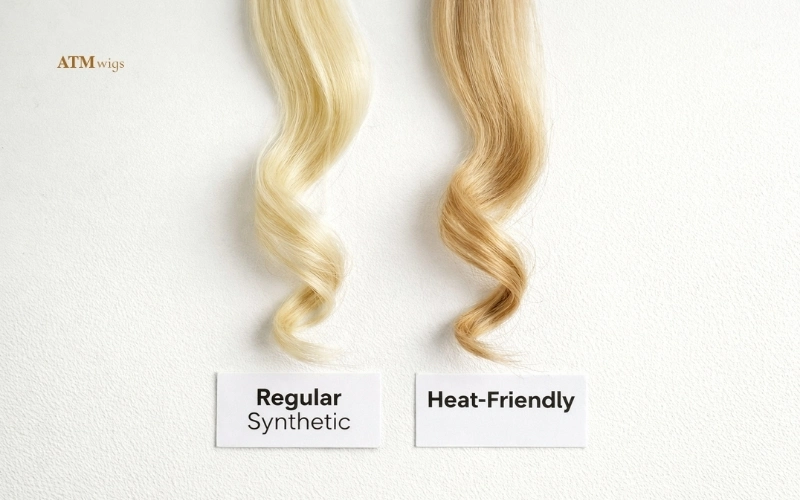
Regular synthetic vs heat-friendly (HD) synthetic
A standard synthetic wig is designed to keep its factory style. Direct heat from hot tools can warp the fibers, especially around the ends and face-framing pieces.
Heat-friendly (sometimes labeled HD, heat-defiant, or heat-resistant) synthetic wigs are made to tolerate controlled heat. Even then, they still have limits, and too much heat can cause frizz or a “crispy” texture.
Why synthetic “curls when it cools”
Human hair changes shape while it’s being heated and re-bonded as it cools. Synthetic fibers behave differently: the style is “locked in” when the fibers cool in a specific shape.
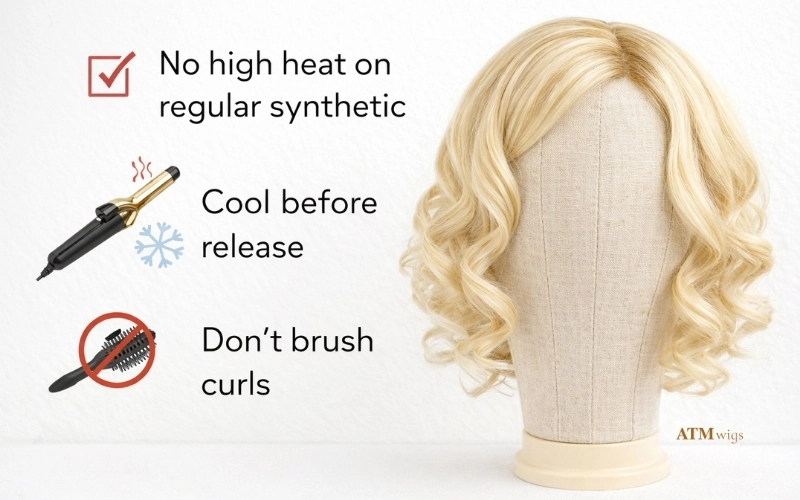
That’s why the most important step in every method is the same: hold the curl and let it cool completely before you release it.
Do a quick strand test first
If you’re unsure whether your wig is heat-friendly, test a small hidden piece near the nape or an inside layer. It’s a fast way to protect overall fiber integrity.
If the strand goes limp, rough, or oddly shiny, stop and switch to a heatless or steam-based method.
Tools you’ll actually need (and why)
Great curls are about control. The right setup prevents slipping, tangling, and uneven curl sizes.
Setup essentials
Use a wig stand or, ideally, a canvas mannequin head for stability. Secure the cap with stainless steel T-pins so the wig doesn’t shift while you roll or pin curls.
A wide-tooth comb and sectioning clips are non-negotiable. They help you create clean, even sections that produce consistent curls.
Curling tools: choose your lane
For heatless curls, you’ll want flexi rods, foam rollers, or pin curl clips. These are perfect for overnight curls and DIY wig styling at home.
For steam setting, a handheld steamer is the most efficient way to reshape and refresh synthetic fibers without direct contact heat.
For hot tools, only use a curling iron or wand if the wig is clearly heat-friendly, and always prioritize temperature control.
Styling products that work on synthetic
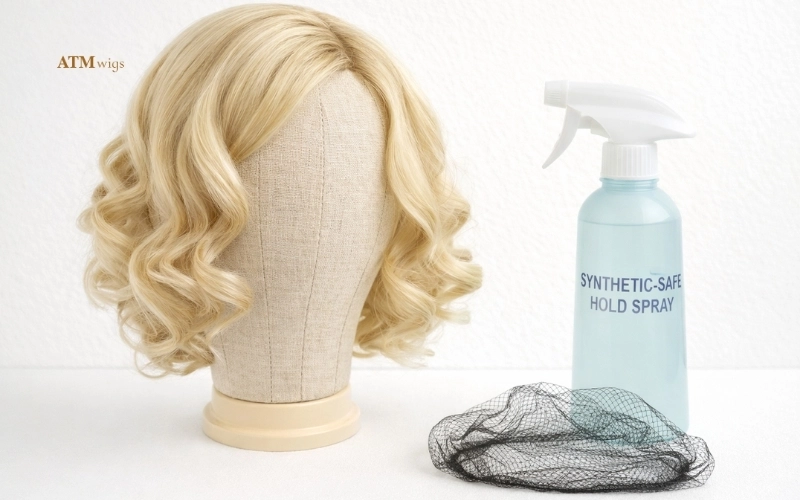
Use lightweight, synthetic-safe holding spray if you need extra staying power. Heavy oils and typical human-hair hairsprays can cause buildup, extra friction, and frizz on synthetic fibers.
Less product usually looks more natural on synthetic curls.

Method 1: the “cold set” roller curl (safest for most synthetic wigs)
If you want the safest method for nearly any synthetic wig, the cold set is it. This technique relies on shape + dry time rather than heat.
Step-by-step roller set
Start by gently detangling from ends to roots with a wide-tooth comb. This reduces shedding and prevents stretching the fibers.
Next, section the wig into even panels. Smaller sections create tighter curls; larger sections create softer waves.
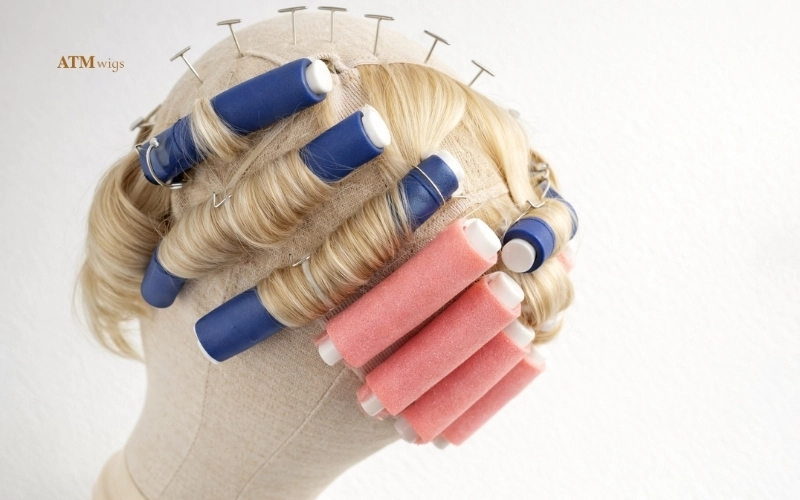
Lightly mist the hair so it’s slightly damp—not wet. Then roll each section onto flexi rods or foam rollers, keeping the tension even from root to end.
Secure the rollers and leave the wig to dry completely. If the fibers are even slightly damp when you remove the rollers, the curls will collapse fast.
Optional upgrade: “cold set” + steam reset
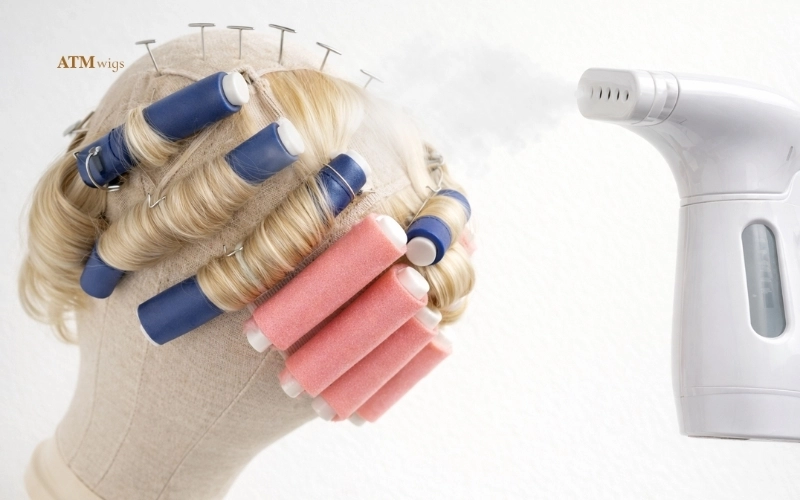
If your wig has lost its shape or feels stubborn, steam can help “reset” the fiber memory while the hair is wrapped on rollers.
Keep the steamer at a safe distance and use gentle passes. You’re aiming for light heat and moisture—not soaking or overheating the fibers.
Release and shape without frizz
When the wig is fully dry and cool, remove the rollers slowly. Let the curls fall, then separate with fingers for a soft, natural finish.
Avoid brushing curls aggressively. For looser movement, use a wide-tooth comb very lightly and only after the curls have fully set.
Method 2: steam curling (best for refreshing and long hold)
Steam curling is a favorite because it’s efficient and helps curls “stay trained” in the shape you set.
It’s especially useful for refreshing droopy curls between wears, reshaping bent ends, or restoring a curl pattern after storage.
Steam set workflow
Roll or pin sections into the curl size you want. Flexi rods, rollers, or pin curls all work well here.
Apply steam in light passes and let the wig cool completely while the curls remain secured. That cooling phase is what locks the style in.
Once it’s fully cool, release the curls and finger-style to blend the pattern. If you need more hold, use a small amount of synthetic-safe setting spray.
The “hold and cool” rule
Steam methods fail most often because curls get released too early. Even if the curl looks formed, it hasn’t “set” until it cools in that shape.
Give the wig time. A patient cool-down creates curls that look smoother and last longer.
Method 3: hot tools (heat-friendly/HD wigs only)
Hot tools can create the most polished curl quickly, but they’re only appropriate for heat-friendly synthetic wigs.
If your wig is not heat-friendly, skip this method and use cold set or steam instead.
Temperature control is king
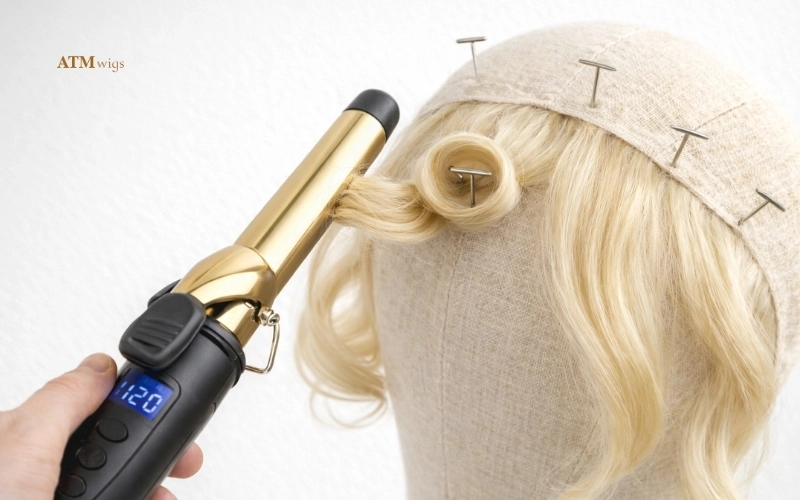
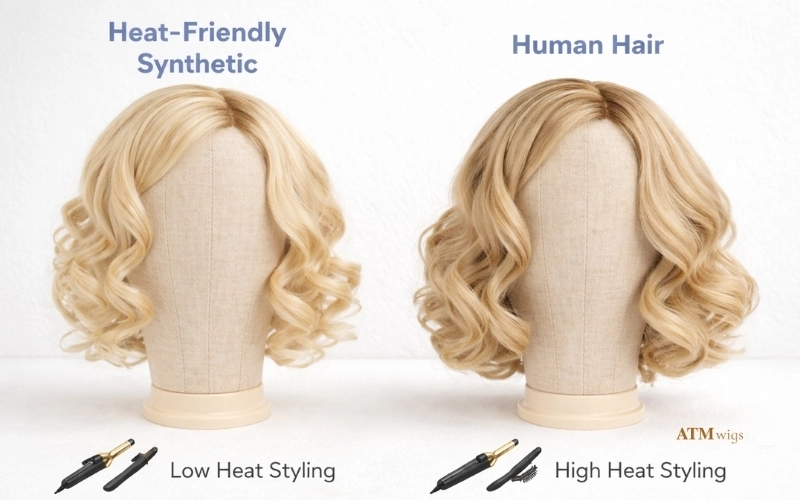
Synthetic styling works best at lower temperatures than human hair. A common safe range for many heat-friendly fibers is around 250–300°F (120–150°C), but you should always follow the manufacturer’s guidance for your specific wig.
Using higher heat doesn’t give better curls. It usually increases frizz, shine issues, and long-term fiber damage.
The “hold and cool” technique (non-negotiable)
Wrap a small section around the wand or iron briefly, then slide it off carefully without stretching the curl.
Immediately pin the curl to the mannequin head so it cools in a coiled shape. This is what gives you bounce and longevity.
After the curl is fully cool, unpin it gently. Repeat across the wig, keeping sections consistent for an even curl pattern.
Wand vs curling iron: which looks more natural?
A curling iron gives more uniform curls and is easier to repeat across the head. A wand often creates softer, modern waves.
If you want a “blowout curl,” use larger sections and a larger barrel, then loosen the curls with fingers after they cool.
Advanced option: hot water setting (professional-level only)
Some professionals use a controlled warm-water setting to reshape synthetic texture in bulk. However, it involves scalding risks and is easy to overdo, which can compromise fiber integrity.
For at-home users, especially if you’re not experienced, steam setting and cold sets are safer and usually deliver the same visual result.
If you want a dramatic texture change, consider having a stylist handle this method or choosing a wig that already has your preferred curl pattern.
How to make synthetic curls last longer
A great curl day isn’t just about the curl. It’s about how you cool, handle, and store the wig afterward.
Use product strategically
Stick to light, synthetic-safe hold products. Heavy oils and thick creams can weigh down curls and attract friction, which increases frizz.
If you want shine control, use minimal product and focus on smooth sectioning and gentle release.
Refresh without re-curling everything
To refresh curls, lightly mist and re-pin only the pieces that need help, like face-framing sections or ends. A quick steam pass can bring bounce back without a full restyle.
This reduces repeated heat exposure and helps the wig last longer overall.
Store in a curl-friendly way
Store the wig on a stand to avoid flattening. If you use a hair net, keep it loose so it doesn’t crush the curl pattern.
When traveling, avoid compressing curls tightly in a small bag. Gentle placement preserves the style.
Troubleshooting: when curls won’t hold (and how to fix it)
If your curls fall out quickly, the problem is almost always one of these factors.
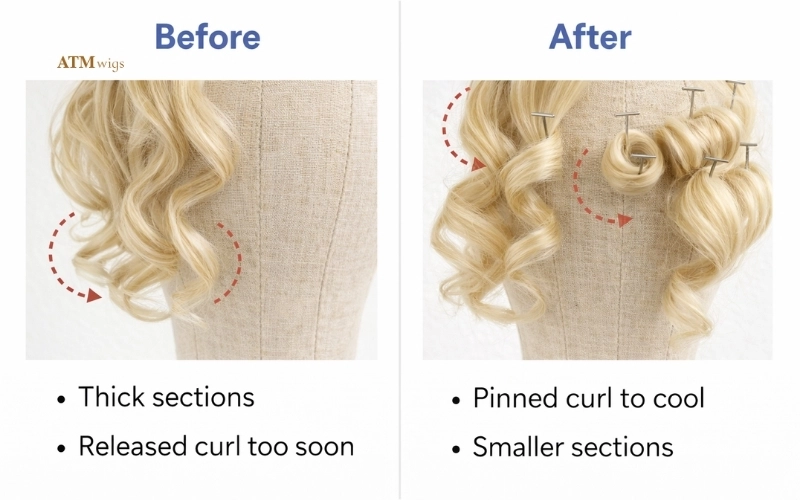
The sections are too thick
Synthetic curls hold best when sections are consistent and not overloaded. Reduce section size for better definition and durability.
You released too early
Whether you used steam or heat, curls must cool completely in shape. Pinning and patience are what make curls last.
The wig isn’t heat-friendly
If hot tools aren’t working or the fibers feel rough afterward, the wig may be standard synthetic. Switch to cold set or steam methods to protect the fibers.
Frizz or flyaways after curling
Frizz often comes from over-manipulation, too much heat, or too much product. Use gentler handling, lower temperatures, and minimal spray.
Common mistakes to avoid
Avoid using hot tools on non-heat-friendly fibers. Even brief contact can permanently change synthetic strands.
Don’t skip the strand test when the fiber type is unknown. It’s the easiest way to prevent an expensive mistake.
Don’t remove rollers before the wig is fully dry and cool. This is the fastest path to curls that collapse.
Finally, avoid brushing curls like human hair. Finger styling and wide-tooth combing keep the curl pattern intact.
Choosing the right wig for your styling goals
If you love frequent restyling, a heat-friendly synthetic wig offers flexibility, but it still requires careful temperature control and gentle handling.
If you want the most natural movement and full styling freedom, premium human hair can be the better long-term choice, especially for clients who change looks often.
ATM Wigs offers a curated range of human hair wigs, toppers, and toupees designed for natural-looking finish and easy styling, while still keeping maintenance manageable.
FAQ about how to curl a synthetic wig
Can you curl a synthetic wig with a curling iron?
Only if it’s clearly labeled heat-friendly. Standard synthetic fibers can warp or melt with direct heat. When in doubt, use rollers or steam instead.
How do you curl a synthetic wig without heat?
Use flexi rods or foam rollers on lightly misted hair, let it dry completely, and release gently. Heatless sets are safe and can look very natural.
What temperature should I use on a heat-friendly synthetic wig?
Many heat-friendly wigs curl best at lower settings, often around 250–300°F (120–150°C). Always follow the manufacturer’s recommended curling iron temperature.
Is steaming a synthetic wig safe?
Yes, steam is one of the safest ways to reshape synthetic fibers when done gently. Keep distance, avoid soaking, and let curls cool fully before releasing.
Why won’t my synthetic wig hold a curl?
The most common reason is releasing the curl before it fully cools or dries. Thick sections and mismatched methods (heat on non-heat-friendly fiber) also cause drooping.
Can I use hot rollers on a synthetic wig?
Hot rollers are only suitable for heat-friendly synthetic wigs and should be used at controlled temperatures. For most synthetics, use standard rollers + steam instead.
Can I use hairspray on synthetic curls?
Use a light, wig-safe spray formulated for synthetic fibers. Regular hairsprays can create buildup that dulls the wig and increases tangling.
How do I refresh droopy curls between wears?
Spot-refresh with rollers or pin curls, then steam lightly and let the curls cool completely. This is faster and gentler than re-curling the entire wig.
How you know how to curl a synthetic wig safely using heatless sets, steam setting, or heat tools for heat-friendly fibers. If you’re ready to explore premium options that style beautifully, check out ATM Wigs’ catalog and services for wigs, toppers, and toupees.

