

Learning how to detangle synthetic wig fibers the right way can save your style from frizz, shedding, and that dreaded nape “bird’s nest.” Below is a practical at-home method for straight, wavy, and curly synthetics, plus prevention tips so tangles don’t come right back.
Why synthetic wigs tangle so easily
Synthetic fibers don’t have natural oils like bio hair, so friction and static build up quickly. Once strands grab each other, knots form fast.
The nape is the biggest trouble spot. Collars, scarves, and seat backs rub the ends and create matting, especially on longer styles.

What you need before you start
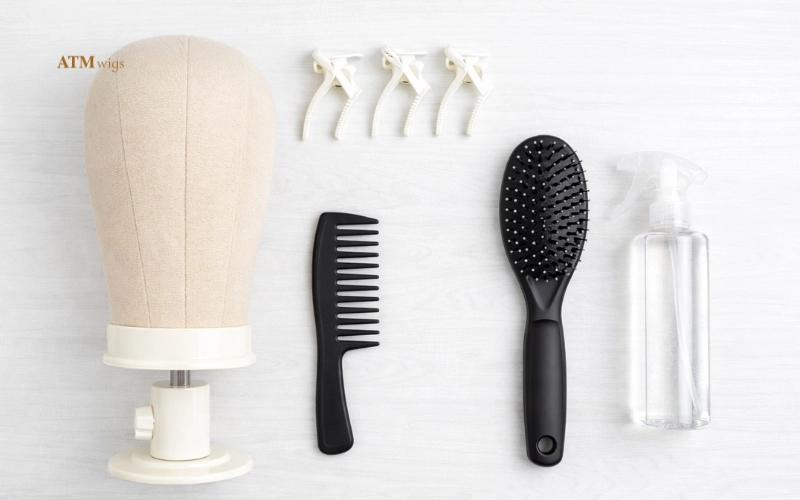
Gentle tools do more than “stronger brushing.” Keep it simple and controlled.
Tools (recommended)
- Wig stand or mannequin head
- Sectioning clips
- Wide-tooth comb
- Loop brush (low snag) or a wide paddle brush for straight styles
Products (keep it light)
A detangling spray for synthetic wigs adds slip and reduces static. Avoid heavy oils and thick serums that attract dirt and cause buildup.
What to avoid
Skip fine-tooth combs for detangling and avoid tugging at the roots. If you’re unsure about heat tolerance, don’t use hot tools.
Quick checks before detangling
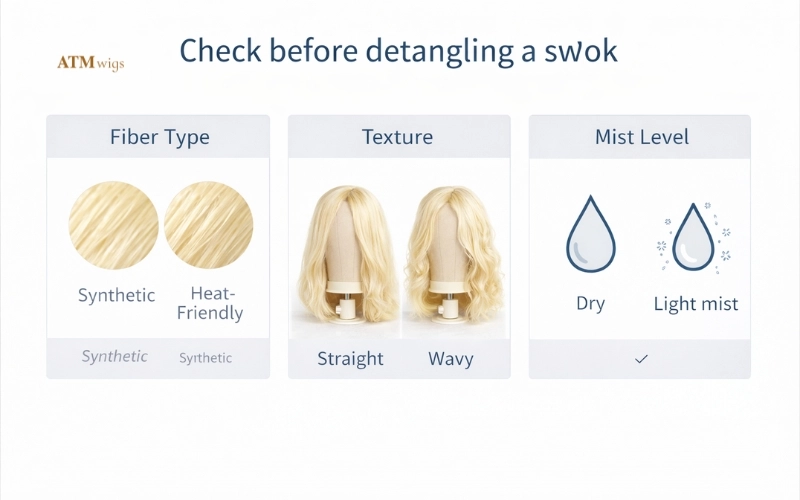
These checks help you choose the safest approach in seconds.
Regular synthetic vs heat-friendly synthetic
Heat-friendly fibers tolerate gentle steam better than standard synthetic. If you can’t confirm the fiber type, assume it’s not heat-friendly.
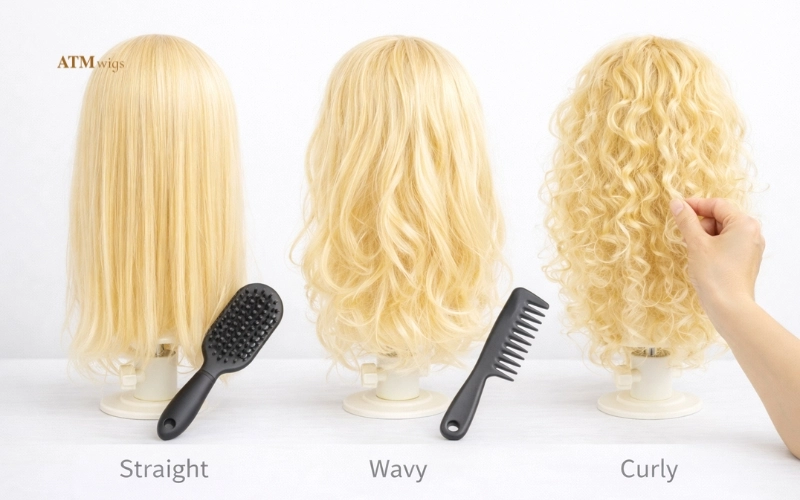
Straight vs wavy vs curly
Straight wigs handle brushing better. Wavy and curly wigs need more finger detangling to protect the pattern.
Dry vs lightly misted
Most synthetic wigs detangle best with a light mist-never soaking wet.
Step-by-step: how to detangle a synthetic wig safely
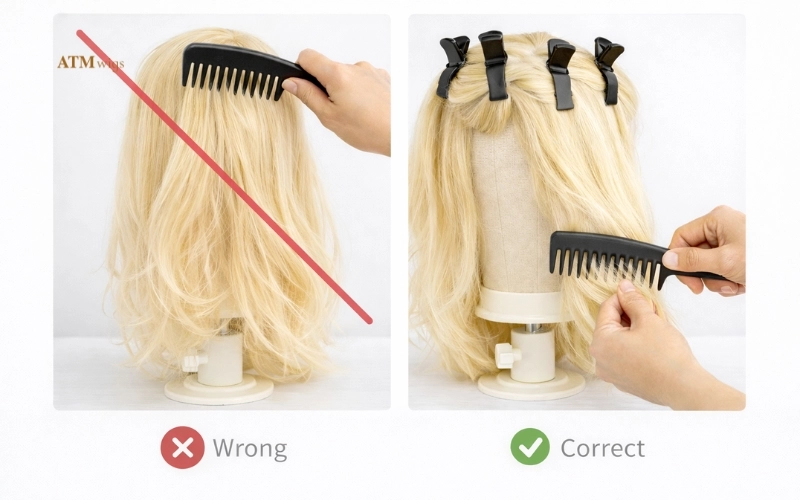
The rule that prevents most damage: start at the ends and work upward in sections.
Step 1: secure the wig
Mount the wig on a stand so it doesn’t spin. If the wig is very tangled, detangle before washing to avoid tightening knots.
Step 2: mist mid-lengths and ends
Spray detangler from mid-shaft to ends, then wait 30–60 seconds. You want slip, not saturation.
Step 3: finger detangle the worst knots
Loosen big tangles with your fingers first. Hold the hair above the knot so you’re not pulling on the cap.
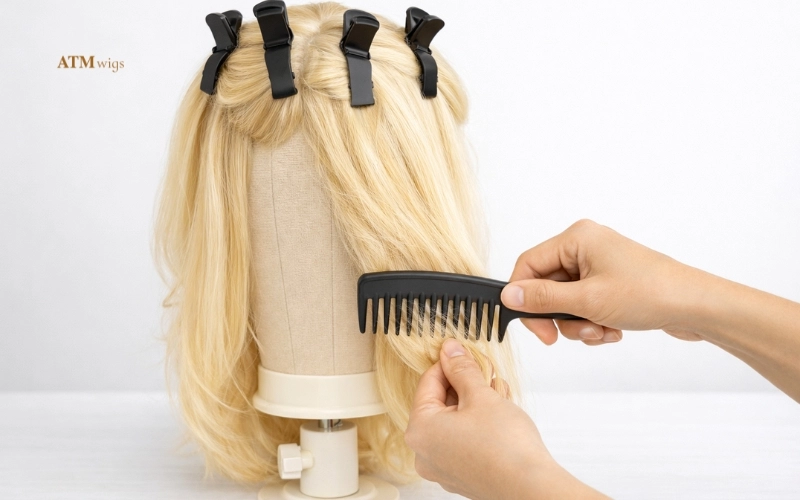
Step 4: comb the ends with a wide-tooth comb
Start with the last 1–2 inches using short strokes. Move up an inch at a time, and stop if you feel resistance.
Step 5: work in sections
Clip the wig into 4–6 sections and finish one section fully before moving on. For straight styles, you can finish with a loop brush; for waves/curls, keep brushing minimal.
Step 6: fix the nape (where matting starts)
Lift the hair away from the cap edge. Break the mat into smaller pieces with your fingers, then comb only the ends of each piece outward.
Step 7: reset the shape
Straight wigs: a final gentle brush-through and rest on the stand.
Curly wigs: scrunch and twist small sections with your fingers to re-form curls.
How to detangle a severely matted synthetic wig (rescue mode)
Severe matting needs slow, controlled work. Many wigs are recoverable, but not every end will look “new” again.
When it’s fixable (and when it’s not)
Friction mats (especially at the nape) are often fixable. If fibers look melted, crunchy, or severely frayed, detangling can improve wearability but won’t fully restore the ends.
Method A: softening rinse (last resort)
Use cool to room-temp water and gently swish to soften tangles. Apply a small amount of synthetic-wig-safe conditioner or detangling solution to the ends, rinse well, blot (no rubbing), then detangle again when mostly dry.
Method B: finger detangle + pick-out
Work at the edges of the mat first. Separate tiny layers with your fingers, then use a wide-tooth comb on freed ends only.
Method C: steam (only if appropriate)
For heat-friendly synthetic, short steam passes at a safe distance can relax “set” tangles. Keep the steamer moving and never concentrate heat on one spot.

After detangling: keep it smooth longer
Detangling helps today. Prevention keeps the wig wearable for longer.
Washing and buildup
Wash only as needed using a shampoo made for synthetic wigs. Apply conditioner or spray mainly to mid-lengths and ends to avoid weighing the style down.
Drying the right way
Blot, then air dry on a stand. Once mostly dry, do a light ends-first comb-through if needed.
Anti-tangle habits that work
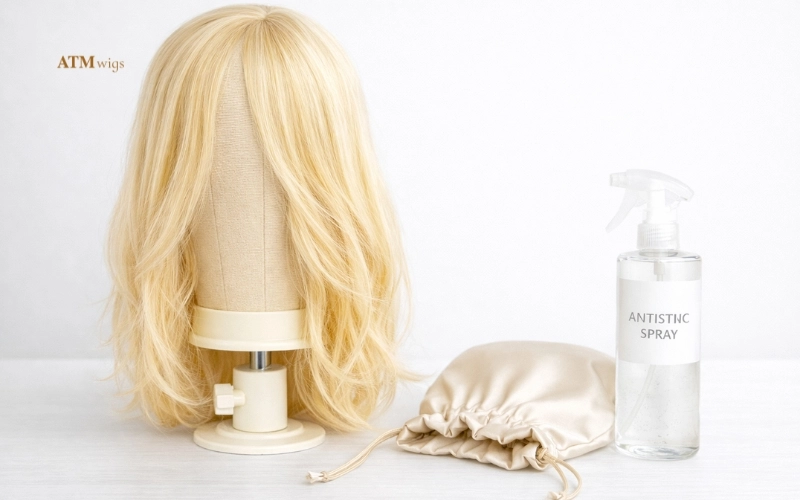
Reduce nape friction, store on a stand or in a satin/silk bag, and do a quick 2-minute detangle after each wear (ends + nape).
Common mistakes that make tangling worse
Overusing heavy products creates buildup that increases friction. Brushing curly synthetics like straight hair can also cause frizz and lost definition.
Detangling by Texture (Quick Guide)
Straight synthetic wigs
Mist, section, comb ends-first, then finish with a loop brush. Check the nape last.
Wavy synthetic wigs
Use a wide-tooth comb and minimal brushing. Scrunch lightly after detangling to refresh the wave.
Curly synthetic wigs
Finger detangle first, then comb only where necessary. Re-form curls by twisting small sections or scrunching.
Long synthetic wigs
Sectioning is essential. Quick after-wear maintenance prevents small knots from turning into full mats.
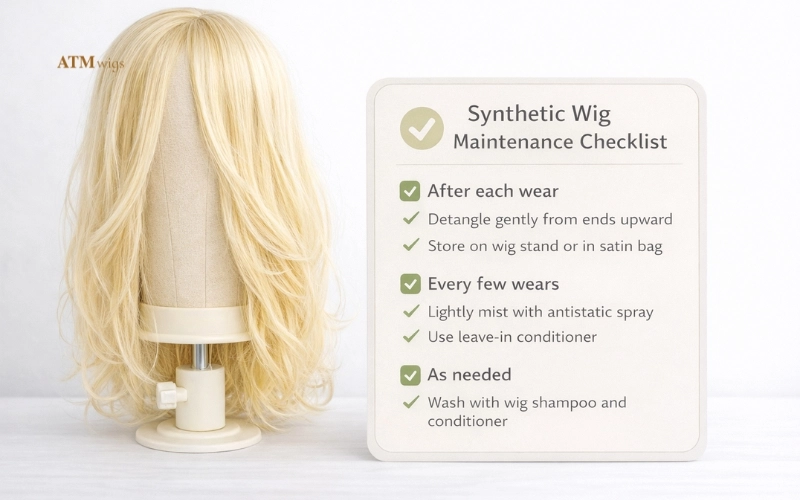
Maintenance checklist (fast and realistic)
After each wear: quick detangle at the ends and nape.
Every few wears: full section detangle + light anti-static refresh.
As needed: wash, air dry, then detangle lightly once mostly dry.
FAQ: How to detangle synthetic wig questions
Can I use regular hair conditioner to detangle a synthetic wig?
You can in a pinch, but use a tiny amount on the ends only and rinse well. Heavy formulas can leave buildup and make tangling worse.
Is fabric softener safe for detangling synthetic wigs?
Some people use diluted fabric softener, but residue and fragrance buildup are common. A synthetic-specific detangling spray is easier to control.
What is the best brush for synthetic wigs?
A loop brush is often the best brush for synthetic wigs because it reduces snagging. Start with a wide-tooth comb for knots and matting.
Should I detangle a synthetic wig wet or dry?
Lightly misted is best. Fully wet detangling can stretch fibers, while fully dry detangling can increase static.
How do I detangle a matted synthetic wig at the nape?
Break the mat into small pieces with your fingers, then comb only the ends outward in tiny sections. Reduce collar friction to prevent repeat matting.
Can I use heat or a steamer to detangle a synthetic wig?
Steam can help on heat-friendly synthetic wigs, but use short passes at a distance. Avoid heat if the wig isn’t clearly heat-friendly.
Why does my synthetic wig tangle again so quickly?
Usually it’s friction + static + buildup. Focus on nape protection, proper storage, and quick ends-first maintenance after each wear.
When is a synthetic wig too tangled to save?
If the hair has burnt fibers, feels hard and crunchy, or has become so badly frayed that it’s impossible to untangle the wig, you could never restore it completely. Cutting off the damaged ends and/or replacing the wig may be a better option than attempting to detangle the wig.
With the right tools and an ends-first routine, you can detangle synthetic wig tangles without turning the hair frizzy or worn out. For more care guidance and premium-ready styles, explore ATM Wigs’ services or browse the ATM Wigs catalog.

