

Knowing how to make a toupee look natural comes down to getting a few visible details right. The hairline, density, color, blending, attachment, and styling should work together so the toupee looks like part of your own hair rather than a separate hairpiece.
Why does a toupee look unnatural?
A toupee usually looks unnatural when one or more details do not match the wearer’s appearance. The most common problems are excessive density, an unrealistic hairline, poor color matching, weak blending, visible base edges, or overly stiff styling.
Even a high-quality human hair toupee can look artificial if it is fitted or styled incorrectly. The goal is not simply to hide the base, but to create a consistent transition between the toupee and the natural hair around it.
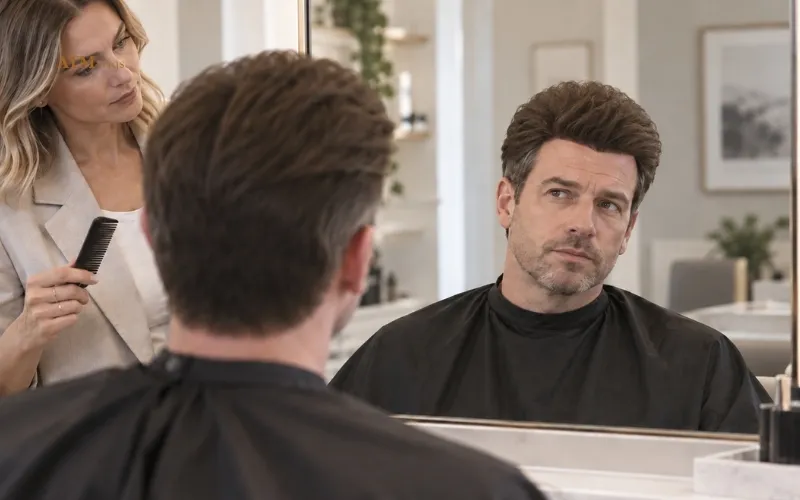
How to make a toupee look natural
Match the hair density to your natural hair
Hair density is one of the first things people notice. A toupee that is significantly fuller than the hair at the sides and back can create a heavy, helmet-like appearance.
Choose a density that matches the wearer’s age, remaining hair, and hairstyle. Someone with fine hair around the temples will usually need a softer density than someone with naturally thick side hair.
Avoid choosing the fullest option simply because it appears healthier. In most cases, balanced density looks more realistic than maximum volume.
Keep the front density softer
Natural hairlines usually become gradually denser as they move backward from the forehead. A toupee with the same heavy density from the very first row can look abrupt.
A softer, graduated front creates a more seamless transition from scalp to hair. This is especially true when the hair style reveals the hairline.
Create a natural-looking hairline
The front hairline is often the most visible part of a toupee. If it sits too low, looks perfectly straight, or starts with excessive density, it may immediately appear unnatural.
Position the hairline according to the wearer’s facial proportions and age. A slightly mature hairline can often look more believable than trying to recreate an unusually low teenage hairline.
Avoid a perfectly straight hairline
Real hairlines are rarely completely symmetrical. Small variations around the front and temple areas can help create a more natural appearance.
This does not mean making the hairline deliberately uneven. The goal is subtle irregularity rather than a perfectly sharp line.
Keep the front edge flat
The base should sit smoothly against the scalp. Lifted edges, wrinkles, or visible adhesive around the front can make even a realistic hairline noticeable.
Check the front under normal indoor lighting and natural daylight after attachment.
Match the toupee color carefully
A natural-looking toupee should match the hair that remains visible around the sides and back.
Do not judge color only by broad labels such as brown, black, or blonde. Two shades with the same depth may still look different because one has warm undertones while the other appears cool or neutral.
Match gray hair too
Gray percentage is especially important for mature wearers. If the temples contain visible gray while the toupee is completely dark, the transition may look unnatural.
The placement of gray strands also matters. Matching the overall balance helps the toupee blend more naturally with the surrounding hair.
Whenever possible, check the shade in indirect daylight before making a final decision.
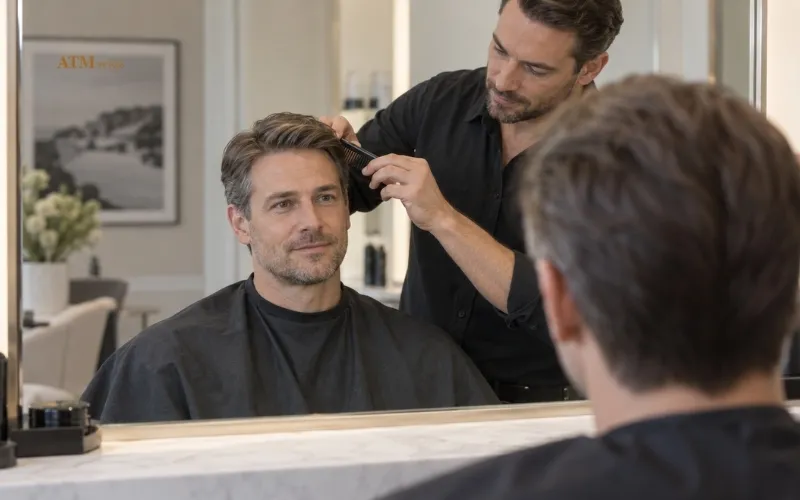
Match hair texture and direction
Color alone is not enough. The texture of the toupee should also work with the natural hair at the sides and back.
Straight, wavy, and curly hair create different levels of volume and movement. If you have side hair that isn’t naturally straight, a straight toupee can be an obvious visual break.
Blending can also be affected by strand thickness. The very coarse hair on top can appear disconnected from the fine natural hair.
Hair direction also needs to support the final hairstyle. The front, crown and parting should fall naturally, not as if they have been forced into position.
Blend the toupee with the sides and back
One of the most important steps in making a toupee look natural is blending.
A successful cut-in means a seamless transition between the hair system and the wearer’s own hair. There should not be an obvious line where the toupee ends and the natural hair begins.
Pay particular attention to:
- Temples
- Side areas
- Back perimeter
- Crown transition
- Differences in length and density
The top should feel visually connected to the rest of the haircut.
Avoid the “helmet” effect
A helmet-like look usually happens when the top has too much bulk compared with the sides.
Layering, texturizing, and reshaping the haircut can often solve this problem without dramatically reducing the density of the toupee.
If major thinning is required, it is safer to have it done professionally. Removing too much hair can expose the base or create uneven areas that cannot easily be corrected.
Keep the toupee flat against the scalp
The base should be shaped to the form of the scalp without folds or raised areas.
Check that the toupee is centered and in the right place before you fasten it down completely. If the base is stretched or misaligned, this can affect the hairline and shape of the hairstyle.
Lifted edges are particularly noticeable at the front and temples. Adhesive or tape residue can also create shine that makes the edge easier to see.
Keep attachment areas clean and avoid using more adhesive than necessary.
Style the hair with natural movement
Natural hair is rarely perfectly fixed in place. A little separation, movement and variation between strands help a toupee look more realistic.
Avoid creating a stiff style using large amounts of gel, wax, pomade or hairspray. Heavy products can make hair clump or give it an artificial shine.
Use lightweight styling products in small amounts and add more only when necessary.
Avoid excessive volume
New toupees can sometimes appear fuller or puffier than expected, particularly before the haircut has been properly shaped.
Do not immediately assume the system has too much density. The problem may come from excess length, insufficient layering, or the direction in which the hair is styled.
A good cut-in often makes the biggest difference.
Control unnatural shine
Excessive shine can make both the hair and base more noticeable.
Common causes include oily buildup, heavy styling products, adhesive residue and formulas that leave a glossy coating on the hair.
Keep the toupee clean and use styling products sparingly. Human hair should look healthy and soft rather than unusually reflective.
Always check the finished style in more than one lighting condition.
How to make a new toupee look more natural
A new toupee may look slightly different from the finished result immediately after installation. The hair may appear fuller, longer, or more uniform before it has been properly cut and styled.
Start by getting a professional cut-in that matches the wearer’s existing haircut. Adjust the perimeter, layering, and overall shape before considering major density changes.
Then check the toupee from several angles:
- Front
- Left and right sides
- Back
- Crown
- Hairline and temples
Do not rely only on the bathroom mirror. Indirect daylight and ordinary phone photos can reveal excessive shine, poor blending, or uneven density that may not be obvious from one angle.
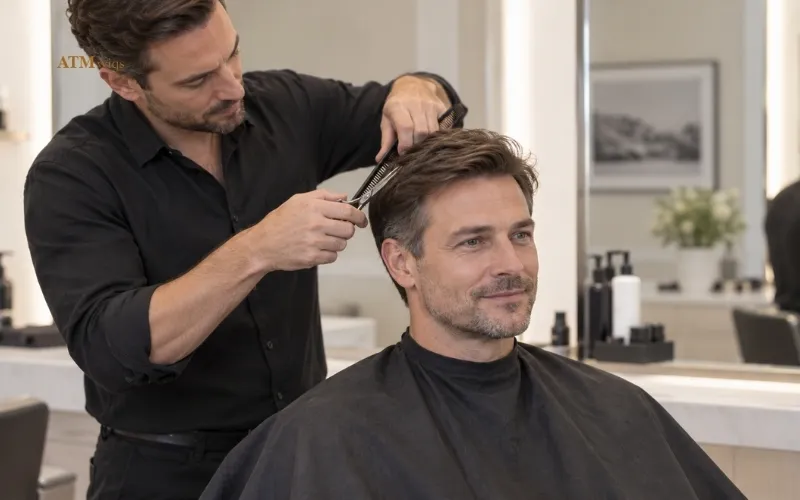
Common mistakes that make a toupee look fake
Several small mistakes can make an otherwise realistic hair system easier to notice.
The most common include:
- Choosing density that is too heavy
- Placing the hairline too low
- Creating a perfectly straight front hairline
- Using a shade that does not match the side hair
- Ignoring gray percentage
- Choosing the wrong texture
- Poor blending around the temples and back
- Leaving lifted base edges visible
- Using too much styling product
- Creating excessive shine or stiffness
If the toupee looks unnatural, identify the most obvious mismatch first rather than changing everything at the same time.
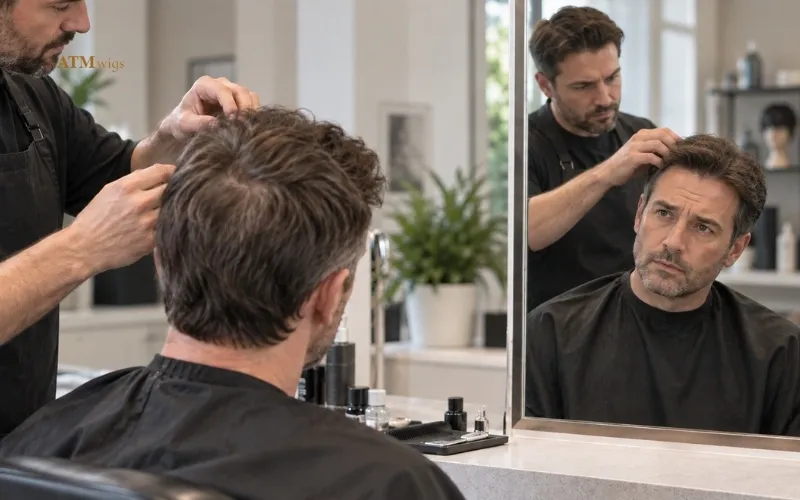
Quick natural-looking toupee checklist
Before finishing the style, check the toupee as a complete look rather than inspecting only the hairpiece itself.
| Area | What to check |
|---|---|
| Hairline | Natural position, soft density, no visible edge |
| Density | Balanced with the sides and back |
| Color | Matching shade, undertone, and gray percentage |
| Texture | Similar movement and strand appearance |
| Blending | No obvious transition at the perimeter |
| Attachment | Base sits flat without wrinkles or lifting |
| Styling | Natural movement without excessive volume |
| Shine | Healthy finish without oily or glossy buildup |
A natural-looking toupee should remain convincing from more than just the front view.
When should you ask a professional for help?
Professional help is useful when the toupee requires major density reduction, a first cut-in, color correction, hairline repositioning, or significant reshaping.
A stylist experienced with hair systems can also identify whether an unnatural appearance comes from density, haircut, attachment, or incorrect positioning before permanent changes are made.
FAQs about making a toupee look natural
Can a toupee really look natural?
Yes. A properly selected, fitted, cut, and styled toupee can look highly natural. The best results come when the hairline, density, color, texture, and surrounding natural hair are visually consistent.
Why does my toupee look fake?
Common reasons include excessive density, an unnatural hairline, incorrect color, weak blending, visible base edges, or too much styling product.
Look at the toupee from different angles and determine what area is creating the most mismatch.
How can I make a toupee hairline look more natural?
Use an appropriate hairline position, softer front density, slight irregularity and flat attachment.
Avoid placing the hairline too low or making it perfectly straight.
What density looks most natural for a toupee?
There is no single density that looks natural for everyone.
The ideal density should suit the wearer’s age, hairstyle, and remaining hair around the sides and back. Matching the surrounding hair is more important than choosing the highest density.
Can a toupee that is too thick be thinned out?
Yes, but if you do heavy thinning, you have to be careful.
An experienced stylist can reduce bulk but maintain an even appearance. Aggressive thinning can expose the base or cause permanent uneven areas.
How do I make a new toupee look less puffy?
Start with a great cut-in and a layering and styling adjustment.
Too much puffiness doesn’t necessarily mean the density is too high. Too much volume can also be created by length, hair direction and lack of texturizing.
Which toupee base looks the most natural?
Lace, thin skin and combination bases can all look natural.
The best choice depends on the hairstyle, how much of the hairline is to be exposed and the fit of the system to the scalp.
Can people tell if someone is wearing a toupee?
Normally, a well-fitting, properly blended toupee can be difficult to tell apart from natural hair.
The end result, however, is determined by the design of the hairline, density, color-matching, attachment and styling.
How should I check if my toupee looks natural?
Don’t judge one angle. Look at it from the front, from the side, from the back and from the crown.
Verify the hairline, temples, color transition, density, base edges, and overall silhouette in both indoor lighting and natural daylight.
Learning how to make a toupee look natural is about creating consistency between the hairline, density, color, texture, blending, and fit. Explore ATM Wigs’ toupee catalog and services to find natural-looking hair systems designed for realistic everyday results.

