


Understanding “How are human hair wigs made?” is vital when acquiring high-quality products for salons or retail stores. Every authentic wig reflects professional workmanship, ethical sourcing, and stringent quality checks. Let’s dive deep into the entire process of making human hair wigs.
What are human hair wigs?
Human hair wigs are wigs constructed wholly of natural, real human hair, obtained ethically. They more closely reproduce the look, feel, and movement of real hair than do synthetic wigs. Human hair is unlike synthetic fibers in that it can be colored, heat-styled, and treated with professional products.
Thanks to this versatility, human hair wigs are very much in demand by clients seeking authenticity and high-end looks. For salons and retailers, selling human hair wigs is crucial in keeping up with demands for realistic, long-term hair solutions.

Step-by-step process: How human hair wigs are made
Hair collection and ethical sourcing
The practice begins with the acquisition of raw human hair, typically from regions that are famous for having healthy, strong hair, like India, Europe, and Southeast Asia. Ethical sourcing involves voluntary donation or fair payment, ensuring quality and sustainability.
Premium wig companies use cuticle-aligned Remy hair, with every strand oriented in the same direction. This retains softness, minimizes tangling, and keeps the natural shine of the hair. Transparency in acquisition is now an essential buying factor, particularly with enlightened salon proprietors.

Sorting and preparing pair
After procurement, the hair is sorted intensively by hand. Strands are sorted by length, texture, and color to provide homogeneity in the wig. This minimizes the need for excessive chemical treatment in the future.
The hair is then washed in professional solutions to remove grime, oils, and potential lice without stripping natural moisture. Conditioning treatments are performed to maintain elasticity and softness, critical to a high-end product.
In high-end manufacturing, there is little chemical processing to maintain the original strength of the hair so that longevity is possible even when washed or styled multiple times.

Creating the wig base (Cap construction)
The wig base or cap upon which hair is mounted. The most common styles are:
- Lace front cap: Offers a natural hairline with hand-knotted hairs at the front.
- Full lace cap: Totally hand-tied for complete flexibility and realism.
- Monofilament cap: A strong, breathable option with a natural scalp appearance.
Each of the cap styles serves different needs: full lace for versatility, mono-top for strength, and lace front for budget. Top-of-the-line producers put their investment into light, soft materials with a good conforming ability to different types of scalps for greater comfort during extended wear. Craftsmen prepare these caps before the hair ventilation process begins.

Hair ventilation (Hand knotting or wefting)
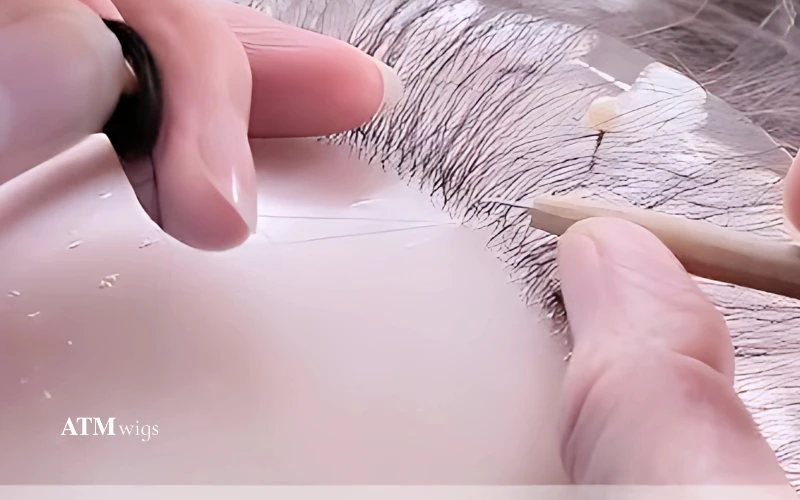
Ventilating refers to sewing hair onto the cap, strand by strand, in small knots. Skilled ventilator use:
- Single knots: Natural, flat finish, which is best for hairlines.
- Double knots: More durable but with some visibility, it is usually used in fuller areas like the crown.
This time-consuming process can vary from 40 to 100 hours per wig based on size and style. Direction, density, and placement of knots are all precisely mapped out to mimic natural hair growth patterns. Custom ventilation also enables part lines, crown swirls, and baby hairs to be adjusted for realistic effects.
Machine wefting, while quicker, is less adaptable and follows a natural flow produced through hand ventilation, and that is why high-end brands prefer handcrafting.
Styling and finishing touches
Following ventilation, the hair enters the styling phase. The professional wig stylists cut, shape, and layer the hair precisely, adding fringe or bangs and creating natural movement. If the wig is to be colored, it is professionally colored using processes similar to salon coloring.
Machine wefting is faster but lacks the flexibility and natural fluid found through hand ventilation, so designer brands focus on hand work.
Finally, the wig is washed, conditioned, and styled into its final shape before it is packed.
All wigs go through strenuous quality control at this stage, from which no hair falls out, no knots appear at hairlines, and which fits well on different head sizes.

Types of human hair used in wig making
The type of human hair selected significantly impacts the finished wig:
- Remy hair: Cuticles present and all in the same direction, ensuring long-lasting softness, shine, and tangle-free wear. The preference for high-end wigs.
- Non-remy hair: Directional hair is blended, which must often be subjected to excessive processing. Less durable but cheaper.
- Virgin hair: Never previously processed, never chemically or color-treated. Virgin Remy hair is the luxury wig material par excellence.
By region:
- European hair: Fine, soft, naturally lighter tones, perfect for high-end Caucasian-market wigs.
- Indian hair: Naturally wavy, thick hair, typically used, but must be processed gently for top-end use.
- Chinese hair: Strong, coarse strands suited for creating wigs with denser volume or heavy styles.
Each hair type is selected based on the target customer demographic and intended style results.

Key factors that impact wig quality
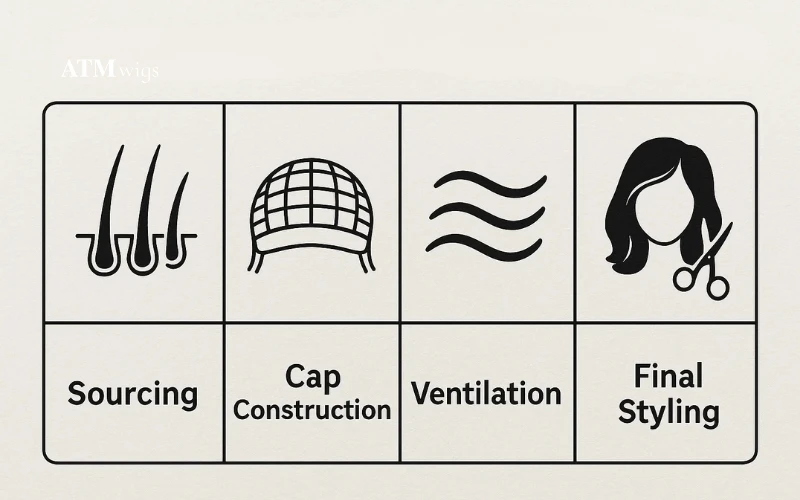
Certain factors influence wig quality directly:
- Hair sourcing: Real, responsibly sourced Remy or virgin hair will yield natural movement and durability.
- Cap construction: The application of high-quality lace or monofilament material offers greater comfort and longevity.
- Ventilation technique: Hand-tied wigs display superior realism compared to machine-made alternatives.
- Final styling: Precision cutting, coloring, and finishing polish the product into a luxury item.
High-end wigs are the result of excellence at every stage—from hair collection to final inspection.
Why handcrafted human hair wigs are superior
Hand-tied human hair wigs stand out because each hair is intentionally placed to mimic the way natural hair grows. That means more freedom to style, part, and move the hair unnoticed.
Compared with machine-made wefts mass-produced by the thousands, hand-knotted wigs offer more air permeability, lighter weight, and a tighter, more secure fit.
Salons and retail outlets that commit to handmade wigs will find higher levels of customer satisfaction, loyalty, and repeat business.

How to choose a trusted human hair wig manufacturer
Your credibility relies on the selection of a good producer. The most crucial aspects to analyze are:
- Transparency regarding hair sourcing and processing methods.
- Customization services for specific client needs, such as bespoke density, color, or size.
- Regular quality control so that every shipment meets your approval standard.
Look for suppliers who have a deep understanding of the salon and retail businesses and offer products that meet real-world use specifications, not internet appearance.
Dealing with real industry experts saves time, builds credibility with your customers, and boosts your bottom line.

FAQs about “How are human hair wigs made?”
How long does it take to make a human hair wig?
It will take 40–100 hours to produce a high-quality, entirely hand-tied human hair wig, depending on the complexity and requirements of customizations.
Are all human hair wigs made by hand?
No. While top-quality wigs are usually hand-knotted for realism, some commercial wigs combine machine-sewn wefts with partial hand-tying as a compromise between quality and price.
What makes Remy human hair wigs better?
Remy hair maintains cuticle alignment, reducing tangling and contributing to shine and longevity. It’s a requirement for wigs that are going to be styled many times and worn for a long time.
Can human hair wigs be customized during the manufacturing process?
Yes. Large manufacturers offer customizations in density, cap construction, hairline design, texture, and color to suit individual client needs.
How do manufacturers ensure the quality of human hair wigs?
Manufacturers conduct multi-step quality inspections: initial hair assessment, process control, ventilation regularity, styling needs, and pre-shipment final inspections.
Discovering “How are human hair wigs made?” reveals the masterful craftsmanship that goes into creating superior products. If you are seeking high-quality, expertly crafted, ethically made wigs admired by professionals everywhere, ATM Wigs delivers uncompromising excellence—find out about our exclusive collections today!

