Can you sleep in a toupee? Yes, if your hair system is designed for overnight wear and stays securely attached. But sleeping can create friction, tangles, or loose edges. Learn when it is safe, how to protect the hair, and what to check after waking.
Can you sleep in a toupee with tape, glue, or clips?
Attachment matters more than hair material. Some systems stay in place between maintenance appointments; others require daily removal.
Tape-attached toupees
You can usually sleep in a toupee secured with tape if the specific tape is approved for extended wear, the bond is stable, and your scalp feels comfortable. Temporary tapes may not offer the same overnight reliability. Follow the manufacturer’s wear instructions.
Glue-attached toupees
A properly bonded hair system may also stay on overnight with an extended-wear liquid adhesive. Check the hairline before bed, especially if you sweat heavily or have an oily scalp. After a fresh application, follow the adhesive’s setting instructions.
Clip-on and daily-removal toupees
Clip-on pieces are generally best removed before sleeping. Pressure against the pillow can pull on the hair holding the clips and make the piece shift. Other daily-wear hairpieces should also be removed.
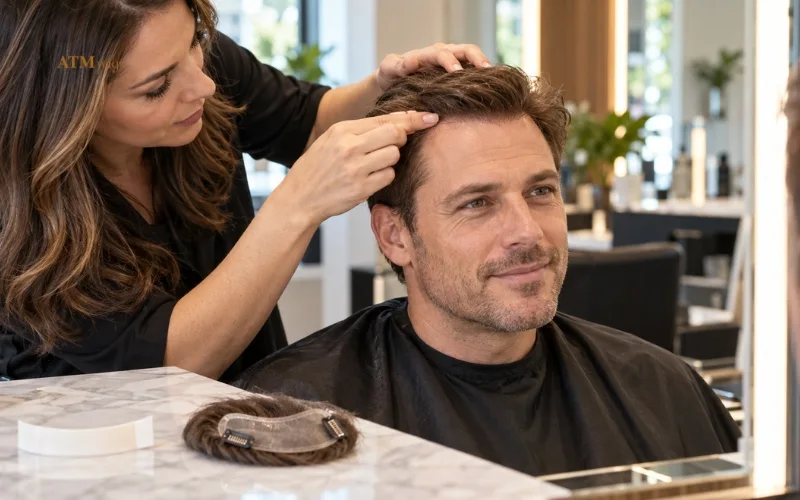
For a broader explanation of attachment methods, see how toupees work.
What happens when you sleep with a toupee on?
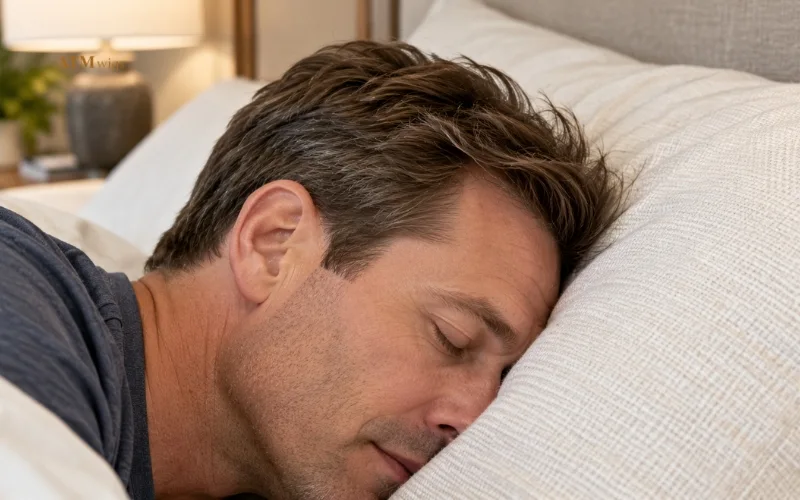
A secure attachment does not mean the hair system is unaffected by sleep. The main concerns come from repeated contact with bedding, nighttime perspiration, and tension around the edges.
Friction can cause tangling, matting, and shedding
Each time you turn your head, the hair rubs against the pillow. On longer toupees, strands can cross and tighten into tangles, particularly at the back and crown. Repeated friction also contributes to frizz and breakage.
Pulling through these tangles the next morning may loosen strands from delicate knots. This is why reducing friction matters more than trying to keep your hair perfectly styled overnight.
Sweat and scalp oils can loosen the hairline
A warm room, night sweats, or naturally oily skin can affect how certain adhesives hold. You might see a small raised edge, some sticky residue, or a hairline that is more easily moved when you wake up.
These signs do not rule out overnight wear, but the bond needs checking. Do not press loose edges down with dirty fingers or layer fresh adhesive over sweat and residue.
Nightly wear can affect comfort and durability
A tight base, pressure point, or adhesive sensitivity may become more noticeable after several hours in bed. Itching, persistent redness, or soreness is a reason to assess the fit and scalp rather than ignore the discomfort.
Sleeping also adds hours of wear to the hair and base. Fragile lace, thin skin, and hand-tied areas can be affected by rough handling, although no single base type automatically determines how well a toupee tolerates overnight wear.
How to sleep in a toupee without damaging it
Prepare before bed, reduce rubbing during sleep, and check the attachment each morning.
Before bed: Prepare the hair and attachment
- Gently detangle the hair. Use your fingers or a wide-tooth comb or hair system friendly brush. Work upward from the ends while holding the hair near the base. If you have curls, finger-detangling might be better for preserving the pattern than brushing.
- Make sure the system is dry. Do not go to bed with wet hair or a wet foundation. Moist strands can tangle more easily, and moisture trapped near some bonds can affect adhesion. If you take a bath at nite, allow enough time to dry off before you go to bed.
- Inspect the hairline without pulling it. Look for lifting at the front, temples, and perimeter. A secure edge should sit comfortably against the scalp. If a section has lifted significantly, follow the attachment’s care instructions or arrange a proper rebond rather than relying on the pillow to hold it down.
During sleep: Minimize rubbing and pressure
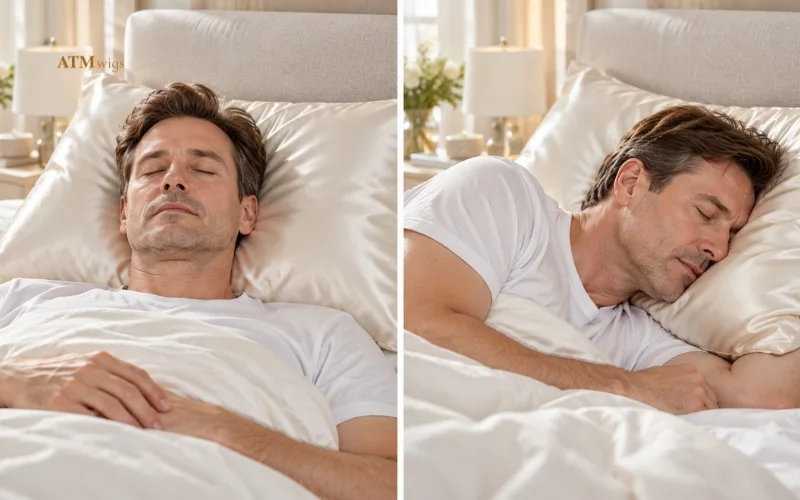
- Switch to a silk or satin pillowcase. The smooth surface reduces friction when the head is moving. It won’t repair a weak bond, but it can help to reduce tangles and frizz, particularly if you sleep on your side.
- Consider a loose sleep cap. A soft silk or satin cap can keep longer hair from spreading across the pillow. Choose one that does not pull on the front hairline or press against the edges. Skip it if it makes your scalp too warm or uncomfortable.
- Avoid tight hairstyles. If the toupee has longer hair, loosely gathering the lengths may reduce tangles, provided there is no tension on the base. Do not sleep with a tight ponytail, clips, or pins that press into your scalp.
In the morning: Check and refresh
Before brushing, inspect the front hairline and sides in a mirror. If everything is secure, gently separate any tangles and restyle flattened sections with products suitable for the hair fiber.
Keep heavy oils and conditioners away from bonded edges unless your stylist recommends otherwise. If the hair feels unusually matted, take time to work through small sections instead of pulling a comb through all at once.

Does sleeping position affect your toupee?
Your position can change where pressure and friction occur, but there is no universal rule that toupee wearers must sleep on their backs.
Side and stomach sleeping
Side sleeping places more contact along one side of the hairpiece and around the temple. Stomach sleeping may press the front hairline against a pillow if your face is turned. Neither position automatically causes detachment when the bond is secure.
If one edge repeatedly lifts after sleep, notice whether it matches the side you rest on. A smoother pillowcase and a review of the bond may help more than forcing an uncomfortable position.
Tossing, turning, and longer hairstyles
Restless sleepers create more opportunities for the strands to rub together. Short toupees may require less detangling in the morning. Longer or textured styles may benefit from a loose protective cap.
Focus on reducing tangling and not putting pressure on the edge. Protective accessories should not prevent comfortable sleep.
What if your toupee becomes loose or uncomfortable overnight?
If you wake up with a lifted hairline, avoid pulling, tugging, or repeatedly pushing the edge into place. Check whether the bond has simply begun to release or whether the base has shifted. Arrange an appropriate touch-up or reattachment using the correct products.
If the hair is tangled, hold the section near the base and slowly loosen the ends first. Do not rip through knots, especially on lace or hand-tied areas.
If your scalp feels itchy, hot, or sore, do not cover the problem with more glue. Inspect for redness, buildup, or pressure. A persistent reaction warrants removal using the correct method and professional advice if needed.

For safe removal when maintenance is necessary, follow this guide to removing toupee adhesive.
FAQs about sleeping in a toupee
Can you sleep in a toupee every night?
Yes, many extended-wear hair systems are intended to remain attached overnight throughout their wear cycle. That does not mean they can be left on indefinitely. Follow the recommended removal, cleaning, and reattachment schedule, and reassess if the scalp becomes uncomfortable.
Will a toupee fall off while sleeping?
A securely bonded system is unlikely to fall off during ordinary sleep, but no attachment is guaranteed. Older adhesive, sweat, scalp oils, and lifting edges can increase movement. If the bond already feels unreliable, address it before bedtime.
Can you sleep right after having a toupee attached?
It depends. Some adhesives need time to set before exposure to sweat, moisture, or pressure. Ask your stylist about the specific product and follow its instructions rather than assuming a fresh application is immediately ready for sleep.
Is it okay to sleep with a wet toupee?
It is better to dry your toupee before bed. Damp hair is more likely to tangle, while moisture near the base may interfere with certain adhesives. Dry on low heat according to hair and construction. Do not use too much heat on bonded areas.
Do you need a sleep cap when wearing a toupee?
No. A sleep cap is optional. Silk or satin may help longer hair stay contained and reduce friction, but a smooth pillowcase alone may be enough for shorter styles. Whichever you choose, make sure it’s loose, breathable and comfortable around the hairline.
Can you sleep in a toupee? YYes, if the system is designed for overnight wear the attachment is secure and your nighttime routine reduces friction. For different hair and base options, explore ATM Wigs’ toupee collection and find a style that suits your daily routine.