

Can you dye a synthetic wig? It’s one of the most common questions wig wearers ask-especially after realizing the color isn’t quite right. This guide breaks down what’s possible, what’s risky, and what actually works, so you can make the smartest choice before attempting any color change.
What are synthetic wigs made of?
Synthetic wigs consist of synthetic (man-made) fiber that looks like real hair but has been manufactured so that it will hold its style and color for an extended period of time. Knowing what these fibers are made of is an important part of knowing how dye works.
Common synthetic fibers explained
The majority of synthetic wigs are manufactured using 100% acrylic and/or 100% polyester or premium fibers such as Kanekalon and Toyokalon. Efficiency in color retention/memory is built into the structure of these fibers.
Unlike natural human hair, synthetic fibers do not have a porous outer layer (cuticle). This means that synthetic fibers do not have a way of absorbing color (pigment), like human hair does.
Why do synthetic fibers react differently to dye
Human hair has a cuticle layer that opens and allows dye molecules to penetrate. Synthetic fibers lack this structure.
For that reason, traditional hair dye has nothing to anchor to (bond with) on a synthetic fiber; therefore, the dye will result in uneven color in a synthetic wig or permanent damage to the fibers.
Can you dye a synthetic wig with regular hair dye?
The short answer is no. Regular hair dye does not work on synthetic wigs.
Hair dye is formulated for keratin-based hair. Synthetic fibers are plastic-based, so the dye simply sits on the surface or washes away.
In many cases, applying hair dye can cause the fibers to stiffen, melt, or lose their original texture entirely.

What methods can change the color of a synthetic wig?
While traditional dye is off the table, there are limited methods that can alter the appearance of a synthetic wig’s color.
Using fabric dye: what actually works
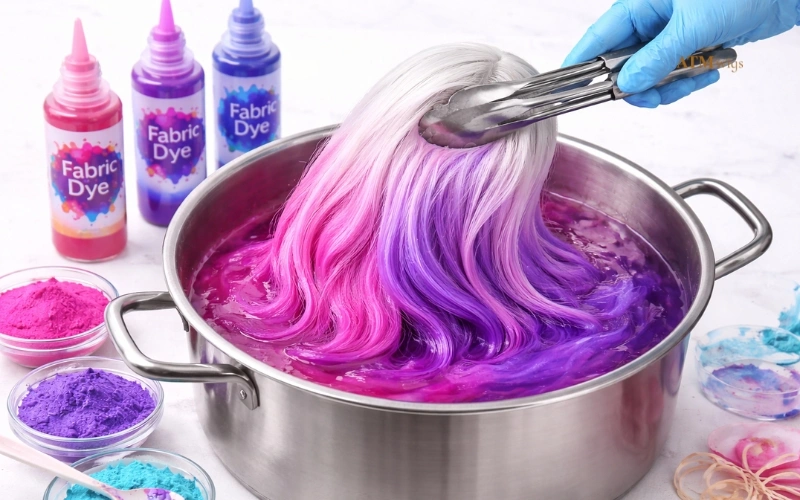
Fabric dye designed for synthetic materials is the most reliable option. These dyes are created to bond with plastic-based fibers.
This method works best for darkening a wig or shifting it to a deeper tone. Lightening or dramatically changing color is not possible.
Results can vary, and color consistency is never guaranteed, even with careful application.
Can you lighten or bleach a synthetic wig?
No-synthetic wigs cannot be lightened or bleached.
Bleach relies on breaking down natural pigment inside hair. Since synthetic fibers contain no natural pigment, bleach only damages the material.
Attempting to lighten a synthetic wig often leads to irreversible frizz, brittleness, or fiber breakdown.
Alcohol ink and marker methods (temporary only)
Some people use alcohol-based inks or permanent markers for small color adjustments, such as adding depth at the roots.
These methods are strictly temporary and best for visual effects rather than full color changes. They may bleed, fade, or transfer color.
Heat-resistant synthetic wigs: Are they dyeable?
Heat-resistant synthetic wigs are often misunderstood. While they can tolerate low to moderate styling heat, they are not designed for dyeing.
Heat resistance does not equal chemical resistance. Fabric dye and heat combined can still damage these fibers.
Even with heat-resistant synthetics, color change remains limited to darkening only.

Risks of dyeing a synthetic wig
Before trying any cloth dye method, you should be aware of the possible negatives associated with it.
Texture damage
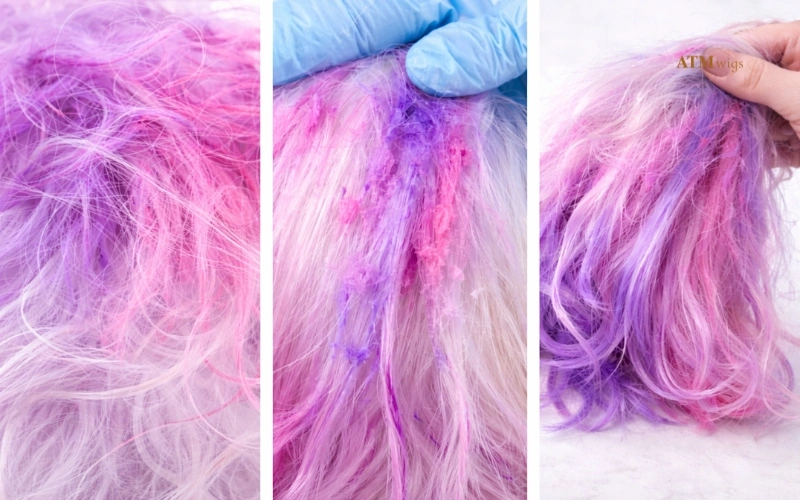
Synthetic fibers can lose their smooth finish after dyeing. Once damaged, the texture cannot be restored.
The wig may feel stiff, tangled, or unnatural to the touch.
Color transfer and staining
Improperly prepared dye may easily rub off your skin, clothing, and wig caps when used on a humid day.
Darker fabric dyes, as well as dyeing with an alcohol-based product, often suffer from dye transfer and staining problems.
Shortened wig lifespan
Although a dyed wig may look good when finished, dyeing typically reduces the lifespan of the wig.
Color-treated synthetic wigs typically require more maintenance and wear out faster.
Better alternatives to dyeing a synthetic wig
For most wearers, alternatives offer better results with far less risk.
Choosing the right color before buying
Modern synthetic wigs come in a wide range of shades, including rooted, blended, and highlighted options.
Selecting a well-blended color from the start usually looks more natural than a dyed synthetic wig.
Custom-colored synthetic options
Some manufacturers offer pre-colored or specialty shades designed during production.
These manufactured colors have a much better permanence, as well as a more uniform saturation, than any home-dyeing process.
Switching to human hair for color flexibility
If color customization is a priority, human hair wigs offer full dyeing flexibility.
They respond to hair dye like natural hair, making them ideal for frequent color changes or precise shade matching.

When does dyeing a synthetic wig make sense?
There are specific situations when it is reasonable to dye synthetic wigs, and they include instances such as using a synthetic wig for short-term situations, costume styling, cosplay, or to provide wig styling for photo shoots. In these types of situations, the manufacturer’s specifications for longevity are not as relevant.
For everyday wear or professional use, dyeing is rarely the best solution.

FAQs
Can you dye a synthetic wig at home?
Yes, but only with fabric dye or temporary methods. Results vary, and there is always a risk of damage.
What dye works best on synthetic wigs?
Fabric dye made specifically for synthetic fibers works better than hair dye. Even then, results are limited.
Can you dye a synthetic wig black?
Darkening to black or very deep brown is possible, especially from lighter shades. Even coverage is not guaranteed.
Can you dye a synthetic wig lighter?
No. Synthetic wigs cannot be lightened or bleached under any circumstances.
Does dyeing ruin a synthetic wig?
It can. Many dye attempts permanently damage texture, shine, or durability.
So, can you dye a synthetic wig? Seeking professional wigs or premium versions of wigs will usually yield better results in fit and durability. Explore the ATM Wigs Collection for expertly crafted wigs and color-ready options.

