


What are monofilament wigs? They are wigs made with a special cap area that creates a more natural scalp effect and more flexible parting. This article will inform you about the different types of monofilament wigs available, the advantages and disadvantages of each type, as well as how to select the best wig for you.
What are monofilament wigs?
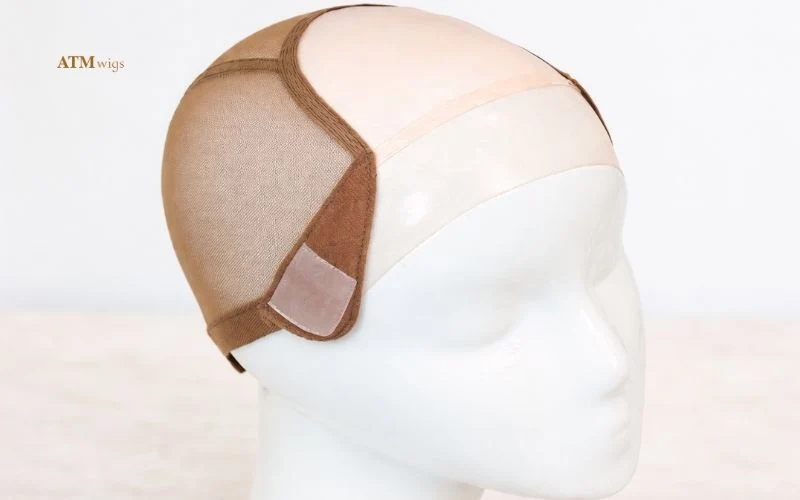
Monofilament wigs are constructed using a fine sheer material on areas of the cap; typically the top, crown and/or part line; to create a lifelike imitation of the scalp to produce the effect that hair grows naturally from the head.
The word “monofilament” refers to the cap construction, not the hair itself. A monofilament wig can be made with human hair or synthetic hair, although human hair monofilament wigs are often preferred for a softer, more realistic finish.
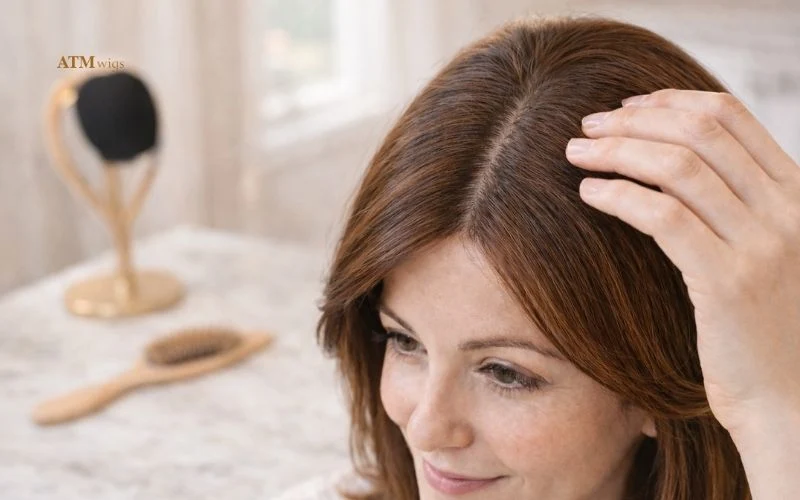
What makes mono wigs popular is the scalp effect. Because the base is thin and semi-transparent, the parting area usually looks more natural than a standard machine-made cap.
In simple terms, monofilament wigs are designed to improve the look of the top of the wig. They help create a softer part, a more believable scalp appearance, and a more polished overall finish.

How a monofilament cap is constructed
A monofilament cap includes a fine mesh section placed where scalp visibility matters most. This is usually the top, crown, or part area, depending on the style.
In that section, individual hairs are tied by hand rather than sewn in rows. This hand-tied method gives the hair a more natural fall and makes the top look less stiff.
Monofilament material and the “scalp effect”
The mono material is lightweight and see-through enough to create the illusion of scalp under the hair. That is why mono tops and mono parts are often chosen by wearers who want a more realistic look in daylight or close-up views.
This effect is especially helpful when the hair is parted. Instead of seeing a dense cap underneath, the eye sees a softer, more skin-like surface.
That does not mean every monofilament wig looks exactly the same. The final result still depends on the wig’s density, color match, and overall craftsmanship.
Hand-tied on mono vs other constructions
In a mono section, the hair is tied strand by strand. In standard wefted caps, the hair is attached in rows, which can make the top look more fixed.
That is the main difference in appearance. Monofilament wigs usually give a more natural-looking top, while simpler cap styles are often more affordable and easier to produce.
Because the construction is more detailed, mono wigs are usually priced higher than standard machine-made wigs. The extra cost comes from the added labor and the more refined finish.
Types of monofilament wigs
Not all monofilament wigs are built the same way. The biggest difference is how much of the cap uses monofilament material.
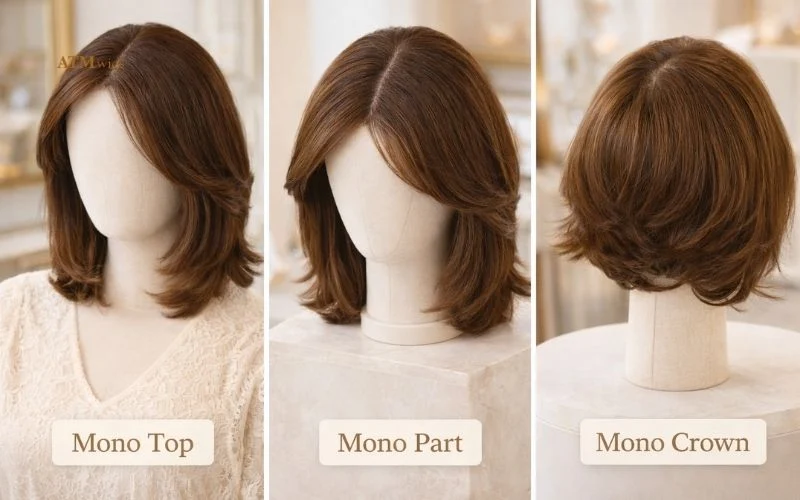
Mono top
A mono top wig has monofilament across the full top section. This gives the most flexibility for changing the part and creates a natural-looking scalp effect across a wider area.
It is a strong choice for people who like to switch between a center part and a side part. It also works well for wearers who want a natural top view from different angles.
Mono part
A mono part wig only has monofilament in the parting line. It is a practical option for people who usually keep the same hairstyle and want a more natural part without paying for a full mono top.
This style is often chosen because it improves realism where it matters most while keeping the design simpler.
Mono crown
A mono crown wig includes monofilament at the crown area. This helps create a more natural look where the hair normally forms a swirl at the back top of the head.
It is especially useful in shorter styles or hairstyles where the crown is more visible.
Combo builds: lace front + mono top or mono part
Many premium wigs combine a lace front with a mono top or mono part. This is one of the most common cap combinations.
The lace front improves the front hairline, while the mono section improves the scalp look where the hair is parted. Together, they create a more balanced and natural appearance.
Pros and cons of monofilament wigs
| Aspect | Pros | Cons |
|---|---|---|
| Scalp appearance | Provides a more natural appearance to the scalp (a realistic scalp look) | There may still be some knots shown depending on the design of the wig |
| Parting | Allows for a softer appearance at the parting of the hair, especially if the wig has a mono top | Not every mono wig has the ability to allow for full freedom to part the hair |
| Comfort | They are generally lightweight, breathable and comfortable for daily wear | The mono portion is much more fragile than a basic cap |
| Styling | Hair tends to move more naturally at the top | Rough handling can shorten the life of the mono section |
| Cost and value | A good option for wearers who prioritize realism | The majority of them are usually more expensive than a standard wig produced on a machine |
Overall, the biggest advantage of monofilament wigs is realism. The biggest trade-off is that they cost more and need gentler care.
That does not mean everyone needs a full mono top. For some wearers, a mono part gives enough improvement without adding unnecessary cost.
Monofilament vs silk top vs lace top
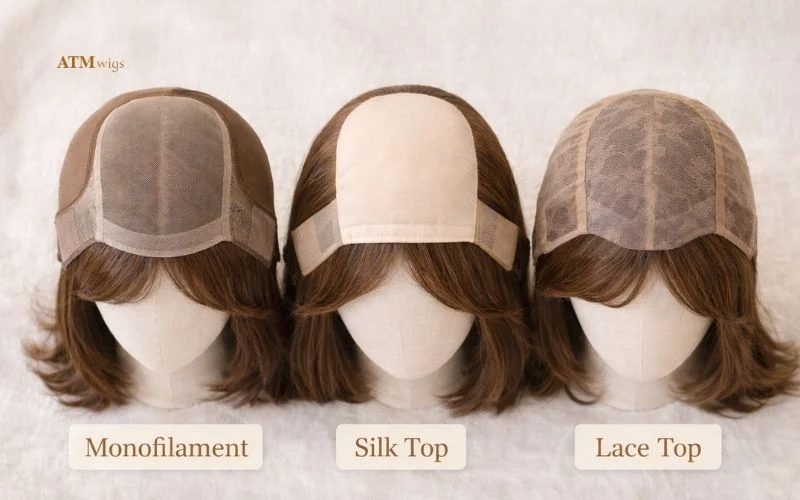
These cap types are often confused because they all aim to improve realism. The difference is how they create that effect.
| Feature | Monofilament | Silk Top | Lace Top |
|---|---|---|---|
| Main benefit | Natural scalp effect with good parting flexibility | Very smooth scalp look with better knot hiding | Lightweight feel and natural finish depending on design |
| Scalp realism | Very natural | Usually the most polished-looking scalp | Varies by construction |
| Knot visibility | Some knots may be slightly visible | Knots are better hidden | Depends on density and design |
| Thickness | Usually lighter and less bulky | Often slightly thicker because of extra layers | Usually light and airy |
| Best for | Natural top appearance and flexible parting | Wearers who want a smoother scalp illusion | Wearers who prefer a lighter lace-based design |
Monofilament is often chosen for a thinner, more natural-looking top. Silk top is often chosen when knot hiding is the top priority.
Lace top designs can also look natural, but the result depends more on how the lace is used in the cap. Each option has a different feel, look, and level of structure.
Who should choose monofilament wigs?
Monofilament wigs are a good choice for people who want a natural-looking part and a more realistic top area. They are especially useful when the scalp area is visible in close-up, photos, or natural light.
They also suit wearers who like to change their part. A mono top is especially helpful if you do not want to be limited to one fixed direction.
For regular wear, many people also appreciate the balance between realism and comfort. A monofilament wig can look refined without feeling too heavy on the head.
At the same time, mono is not essential for everyone. If scalp visibility is not a big concern or budget is the main priority, a simpler cap can still work well.

How to choose a monofilament wig
Start by deciding how much monofilament coverage you need. A mono top gives the most flexibility, while a mono part is often enough for a fixed style.
Next, check the cap fit carefully. Even a well-made monofilament wig will not look natural if it sits too loose, too tight, or out of place.
Density is another important detail. A natural scalp effect usually looks better when the hair density matches the style and does not overwhelm the top area.
It is also worth checking the hairline design. A lace front combined with a mono top or mono part is often one of the best choices for a natural overall look.
Finally, think about your routine. If you wear wigs often, choose a cap construction that gives you the realism you want without adding more maintenance than you can comfortably manage.
How to care for a monofilament cap
The mono area should always be handled gently. Because it is finer than standard cap sections, rough brushing or pulling can shorten its lifespan.
When brushing, start from the ends and work upward. Try not to place direct tension on the mono section.
When washing the wig, do not scrub or twist the mono area aggressively. Clean it carefully and let water pass through the section gently.
It is also best to avoid stretching the mono panel while styling or re-parting the hair. Too much tension over time can affect the shape of the cap.
Store the wig on a stand or mannequin head when not in use. This helps the mono area keep its shape and reduces the risk of creasing or distortion.

FAQs about monofilament wigs
Are monofilament wigs more comfortable?
They often are. Many wearers find monofilament wigs lighter and more breathable at the top than basic cap constructions.
Is a mono top worth it?
A mono top is worth it if you want flexible parting and a natural scalp effect across the whole top. If you always wear one part, a mono part may be enough.
Do monofilament wigs last longer?
Not automatically. Their lifespan depends on the quality of the wig and how carefully the mono area is handled.
Can you part monofilament wigs anywhere?
A mono top wig usually allows flexible parting within the mono area. A mono part wig is more limited because it only has monofilament in one section.
What is the difference between a mono top and a mono part?
A mono top covers the full top section and gives more styling flexibility. A mono part only improves the parting line in one specific area.
Are monofilament wigs better than silk top wigs?
Not always better, just different. Monofilament wigs are often lighter and more flexible, while silk top wigs usually offer a smoother scalp look with better knot hiding.
Now you have a clearer answer to what are monofilament wigs and why they are valued for a natural scalp effect and more realistic parting. You should now be able to browse through the ATM Wigs catalog and see how you can compare the various styles of mono wigs with hairpieces made of silk top materials, as well as all the other high-quality human hair options available there.

