


Chemotherapy-related baldness, alopecia, or other medical hair loss may prove to be mentally traumatic. Medical wigs are a natural and comfortable solution specific to sensitive skin. This tutorial explores the types, benefits, and key things to consider when choosing the best medical-grade wig.
What are medical wigs?

A medical wig is a specially designed wig for individuals who experience temporary or permanent hair loss due to illness. Common causes include chemotherapy, radiation therapy, alopecia, and certain skin or scalp disorders. These wigs are not simply cosmetic—they are built with medical sensitivity in mind.
Unlike standard fashion wigs, medical wigs use hypoallergenic, breathable materials and feature innovative construction like lace fronts, monofilament tops, and hand-tied caps to offer maximum comfort and realism. Some are recognized as cranial prostheses, qualifying for insurance reimbursement.
Who needs medical wigs?

Medical wigs are a valuable option for anyone dealing with:
- Cancer treatments such as chemotherapy or radiation
- Alopecia areata, totalis, or universalis
- Autoimmune diseases affecting hair follicles
- Trichotillomania (compulsive hair-pulling disorder)
- Scalp injuries, burns, or dermatological conditions
- Hormonal imbalances or genetic disorders can cause hair loss
By mimicking the natural look and movement of real hair, medical wigs provide more than just coverage—they help individuals reclaim their identity and confidence during recovery.
Key features of medical wigs
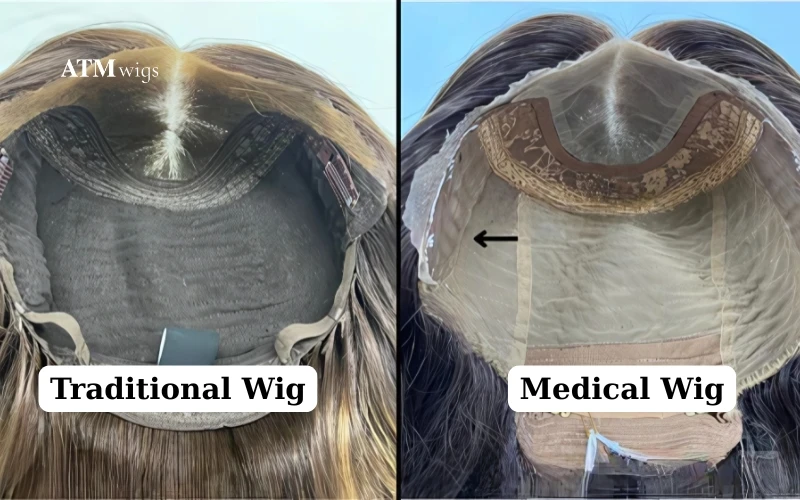
Comfortable and skin-friendly wear
- Hypoallergenic materials to avoid irritation
- Light construction for everyday wear
- Breathable cap construction for better airflow
Natural appearance & style
- Hand-tied construction for natural movement
- Premium synthetic fiber and human hair options are both available.
- Monofilament caps and lace fronts provide a natural-looking hairline.
Secure fit & stability
- Medical-grade silicone grips, adjustable straps, or vacuum suction technology
- Non-slip base holds the wig securely without adhesives.
Types of medical wigs
Based on hair type

Human hair medical wigs
These wigs provide the most natural appearance, allowing for full styling freedom using heat tools and dyes. 100% Remy human hair is considered the highest quality, as the cuticles remain aligned, resulting in shine, smoothness, and long-term durability.
Which hair fiber type offers the best quality and provides the closest match to the wearer’s natural hair?
Answer: 100% Remy human hair.
Synthetic medical wigs
Made with high-quality synthetic fibers, these wigs are pre-styled, weather-resistant, and require minimal upkeep. While they can’t be heat-styled like human hair wigs, modern synthetics can still look incredibly realistic.
Blended wigs (human + synthetic)
Combining real hair with heat-friendly synthetic fibers, blended wigs offer a balance of affordability, realism, and easier maintenance. These are excellent for individuals looking for the feel of natural hair without the full investment.
Based on cap construction

- Lace front wigs: Provide a natural-looking hairline, especially useful for styles that expose the forehead or hair part. The sheer lace blends seamlessly with the skin.
- Monofilament wigs: Each hair is hand-tied to a transparent, mesh-like base, giving the illusion that hair is growing directly from the scalp—ideal for multi-directional parting.
- Hand-tied wigs: Fully hand-knotted onto a soft cap, these wigs offer maximum movement and realism, making them one of the most comfortable and natural options on the market.
- Capless wigs: Lightweight with open wefts for excellent ventilation—perfect for hot climates or people seeking maximum breathability.
Which of the following descriptions is a benefit of capless wigs?
Answer: They provide optimal ventilation, which lessens discomfort on the scalp over extended use.
How to choose the right medical wig

Choosing the right medical wig depends on your specific needs, lifestyle, and comfort preferences. Here’s what to consider:
Select the ideal hair fiber
- Human hair for styling flexibility and realism
- Synthetic for low maintenance and consistency
- Blended fibers for a combination of ease and natural feel
Choose the correct cap construction
- Lace front for realistic hairlines
- Monofilament for versatile styling
- Hand-tied for sensitive scalps or all-day wear
Ensure a secure & comfortable fit
An improper fit may cause discomfort, pressure points, or slipping. Look for wigs with:
- Adjustable straps
- Medical-grade silicone grips
- Vacuum suction technology
Pick a color & style that matches your preference.
For a natural transition, choose a color close to your current or former hair. Opt for:
- Layered styles for volume
- Textured cuts for a realistic look
- Custom-styling from a wig professional for personalization
How to care for medical wigs

Proper care ensures your wig stays looking and feeling great.
Maintenance tips:
- Wash with mild wig shampoo every 7–10 wears
- Use leave-in conditioner for human hair wigs
- Let the wig air dry on a wig stand
- Avoid heat styling synthetic wigs unless they are heat-friendly
- Store in a cool, dry place away from sunlight
With proper care:
- Human hair medical wigs can last 12–24 months
- Synthetic wigs typically last 4–6 months
Where to buy medical wigs?
Purchasing from a reputable medical wig supplier ensures you get a quality product that meets medical-grade standards. These suppliers often work with healthcare professionals and understand the unique needs of individuals experiencing hair loss.
Many medical wig specialists offer:
- One-on-one consultations
- Custom fittings
- Guidance on insurance reimbursements
Some insurance providers cover cranial prosthesis wigs when prescribed by a physician. Always check with your insurer to confirm eligibility and documentation requirements.
FAQs about medical wigs
Are medical wigs different from fashion wigs?
Yes! Medical wigs are designed just for hair loss sufferers, with comfortable, breathable materials, greater comfort, and a nice fit.
Can a medical wig be worn every day?
Yes, as a matter of fact! Medical-grade wigs are designed for everyday wear, so they will be comfortable and durable.
Do medical wigs look natural?
Yes, they do! Hand-tied wigs, monofilament wigs, and lace front wigs have natural movement and a natural-looking hairline.
Are medical wigs covered by insurance?
Some insurance policies might cover medical wigs either fully or partially, especially those that reimburse for cranial prostheses. It’s best to check with your provider.
Medical wigs are a natural and comfortable choice for those who lose their hair for medical reasons. You can have both comfort and confidence with the right choice of wig type, cap, and fit. You will be best advised to make the most informed choice by speaking with a medical wig consultant. Explore expert insights and helpful resources at ATM Wigs.

