


Lace front wigs have become one of the most commonly used wig styles to create a natural-looking hairline. This guide will provide information on what lace front wigs are, how to compare different types of lace front wigs, and what indicators show different types of quality between lace front wigs. In addition, it will help you make an informed decision when selecting a lace front wig for other than just every day; such as salon wear and/or resale.
What are lace front wigs?
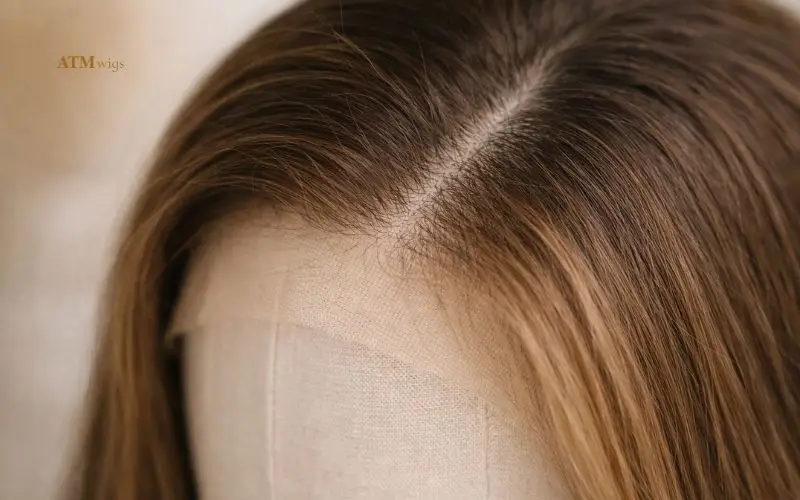
A lace-front wig is a hairpiece that has a thin layer of lace across the front of the wig’s base that provides for individual strand-to-strand attachment to the base, allowing for a realistic-looking hairline and a nearly seamless transition from lace to skin.
This design helps the front of the wig blend more smoothly with the skin. That is why lace front wigs are often chosen by people who want a more realistic finish around the forehead and parting area.
Compared with basic cap wigs, lace front wigs usually look softer and more natural from the front. They are especially popular for styles where the hair is worn away from the face or parted at the front.
The term natural hairline refers to the way that a lace-front wig looks as though the hair grows straight from the head at the hairline. Any type of wig can have a natural hairline, but a lace-front wig must not appear to have a large or thick density of hair along the hairline.
Lace front wigs can work well for many users. They are often a strong choice for first-time wig wearers, regular users who want a polished everyday look, and professionals who need a realistic option that is easier to wear than more complex constructions.
Types of lace front wigs
Not all lace front wigs are the same. The differences can come from the lace material, cap construction, lace size, and hair type.
By hair type
Lace Front Wig made with human hair – Disco wigs styled with human hair provide the most realistic movement and feel. Additionally, you have the option of styling your disco wigs with hot tools, toning your disco wigs and having them custom made more easily than if you used a synthetic lace front wig. Most users would prefer a high quality wig that has a premium appearance and provides multiple ways to style their wigs.
Synthetic lace front wigs are easier to maintain and often more budget-friendly. They can be a practical option for occasional wear or for styles that need to hold their shape with minimal effort.
For ATM Wigs, the strongest fit is naturally human hair lace front wigs, especially for buyers who care about realism, consistency, and long-term value.
By lace type
The lace itself affects both the appearance and the wearing experience.
Transparent lace is designed to blend with a range of skin tones and is commonly used in many lace front wig designs. It can offer a natural result when properly matched and styled.
HD lace is thinner and more delicate. It is often chosen when users want the lace to appear even less visible against the skin. Because it is finer, it may need more careful handling.
When comparing these options, the goal is not only invisibility. Durability, ease of use, and suitability for the intended wearer also matter.
By lace size
Lace front wigs also vary by the size of the lace area. Common sizes include:
- 13×4 lace front wigs
- 13×6 lace front wigs
A 13×4 construction usually offers enough front lace space for natural parting and everyday styling. A 13×6 design gives deeper parting space and can look even more flexible at the front.
The right choice depends on how much styling freedom the user wants and how natural the front section needs to appear.
By cap construction
Some lace front wigs use different cap combinations to balance realism, comfort, and durability.
These may include:
- Hand-tied sections
- Wefted back construction
- Mono top elements
- Lace top variations
For example, a hand-tied top with a wefted back can offer a natural appearance at the top while keeping the cap durable and comfortable for regular wear.
This matters because construction affects more than appearance. It also influences breathability, weight, styling flexibility, and long-term wear.

How to choose a lace front wig
Choosing the right lace front wig is not just about picking a nice style photo. A good choice comes from understanding quality, construction, and fit.
Start with hair quality
Hair quality has a major impact on the performance of the wig.
If you are comparing human hair lace front wigs, look closely at whether the hair is described as Remy hair, virgin hair, or another grade. The main question is whether the hair feels consistent, natural, and manageable over time.
A better-quality wig should look natural in texture, move well, and respond well to regular care. It should not become dry, rough, or unmanageable too quickly.
Check density and hairline design
Density affects how realistically a wig looks. A lace front wig that has too much hair density density near the front will create a “heavy” or “fake” appearance.
A good hairline should look soft and believable. Features such as a pre-plucked hairline and bleached knots can help create a more realistic finish.
The goal should be to create a balanced look; having enough fullness to be visually appealing without being so heavy that it appears unnatural.
Choose the right lace
Lace type should match the wearer’s priorities.
If the focus is an ultra-soft front and a more invisible finish, HD lace may be preferred. If the priority is easier handling and practical everyday use, transparent lace may be the better fit.
Also look at the lace color and how easily it can blend with the intended skin tone.
Get the cap size right
A high-quality wig can still perform poorly if the cap size is wrong.
A proper fit improves comfort, security, and the overall appearance of the hairline. A wig that sits incorrectly can shift, lift, or create an unnatural front edge.
This is especially important for salons and repeat buyers who want a reliable result across multiple customers.
Think about the wearer’s real needs
Not every buyer needs the same thing.
Some want a beginner-friendly glueless option. Some want a salon-ready piece with more styling freedom. Some want a premium human hair lace front wig for long-term wear.
The best lace front wigs are not simply the most expensive. They are the ones that match the wearer’s expectations in terms of realism, comfort, maintenance, and styling.

What to ask a supplier before buying
When evaluating lace front wigs at a deeper level, it helps to ask better questions.
This matters for professionals, salons, and resellers, but it is also useful for any buyer who wants more confidence before ordering.
Ask about quality consistency
A supplier should be able to explain the quality level clearly and consistently.
Important questions include:
- Is the hair quality consistent across batches?
- What are the available textures and densities?
- How natural is the hairline design?
- Are knots pre-bleached or left standard?
A strong supplier should be able to answer these without vague language.
Ask about lace and construction options
Not every customer needs the same lace or cap design.
It is helpful to ask:
- Which lace types are available?
- Do you offer 13×4 and 13×6 options?
- Are there hand-tied, mono top, or wefted back constructions?
- Are glueless options available?
These details help buyers choose products that fit different styling and comfort needs.
Ask about customization
Customization is often where a lace front wig becomes more commercially useful.
Useful questions include:
- Can the color be customized?
- Can the density be adjusted?
- Are custom lengths available?
- Can cap size be changed?
- Is private label packaging possible?
These are important if the goal is to serve a specific customer base or build a stronger product offering.
Ask about lead time and ordering conditions
Practical details matter just as much as product quality.
Ask:
- What is the lead time for ready stock?
- What is the lead time for custom orders?
- Is there a minimum order quantity?
- How is packaging handled?
- What support is available after the order?
These points can affect planning, customer service, and restocking efficiency.

Quality signals and common problems
A strong lace front wig should look natural, feel balanced, and remain manageable with proper care. But not every wig performs that way.
Knowing the warning signs can help buyers avoid disappointment.
Lace that looks too thick
Lace that is visible, heavy at the front of the wig and/or very stiff will not blend as well into the hairline and will make the wig look very artificial regardless of whether or not the hair in the wig is of good quality.
Knots that are too visible
Knots that stand out too strongly can reduce scalp realism. When the front knots are too dark or too noticeable, the wig may not create the soft natural hairline users expect.
Shedding and weak construction
Some wigs begin shedding too early because of weak knotting, poor construction, or lower-quality hair handling. Light shedding may happen over time, but heavy early shedding is a bad sign.
Tangling at the nape
Hair tangles at the nape of the neck are a common issue with long hair. It’s normal for hair to get tangled from friction or movement, however, if a person constantly experiences excessive tangling at the nape; this may signify poor quality hair, inferior processing or a bad fit to the wearer’s lifestyle.
Unnatural shine
Too much shine can make a wig look less realistic. This is more common in lower-grade synthetic options, but it can also appear in poorly finished human hair pieces.
Hairline that looks too perfect
A natural hairline rarely looks overly dense, straight, or identical across the entire front. If the wig front looks too uniform, it may not blend as naturally as expected.
Customization and wholesale options
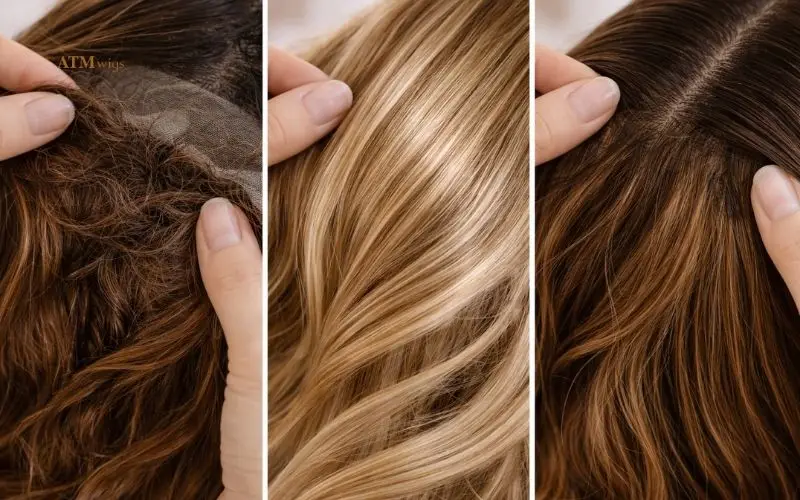
For many buyers, the real value of lace front wigs comes from how well they can be adapted to different needs.
Customization can improve both user satisfaction and product positioning.
Common custom options may include:
- Hair color
- Hair length
- Density
- Curl pattern or texture
- Cap size
- Lace type
- Hairline design
- Packaging and branding
Soft support for wholesale customers means having access to a catalog of products to sell and being flexible on product selection, or private-labeling. Consulting on which products work best for the customer’s market will also help them to be successful when selecting products to wholesale.
If your goal is to offer lace front wigs that match different customer preferences, having access to customization can be a strong advantage.
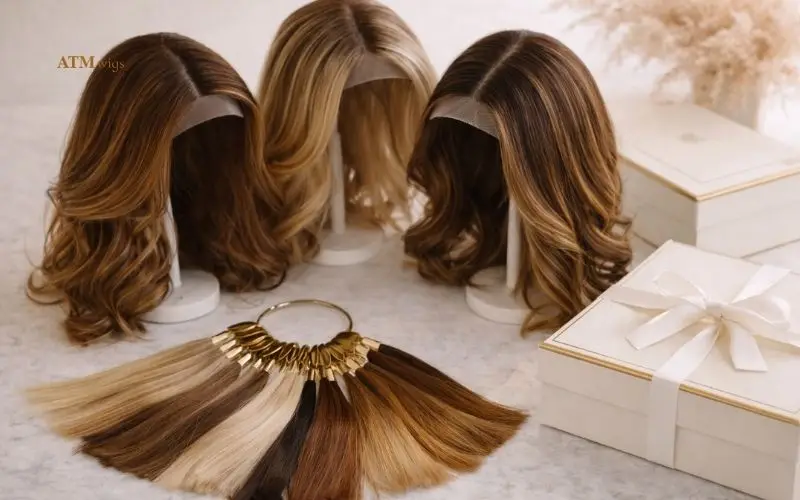
Explore ATM Wigs’ wholesale lace front catalog to compare lace types, constructions, and custom options for your market.
Installation and wear basics
A Pillar Page with an overall view without replacing specifics of the actual “how-to” information.
A lace front wig can be applied using glue, glue spray, tape or glueless depending on the wearers’ preferences. The application method is based on the wearers’ lifestyle, comfort and how secure the lace front wig needs to be.
In general, good placement matters more than over-styling. A lace front wig should sit naturally at the front without being pulled too far forward.
Proper fit also helps reduce common issues such as slipping, lifting, or an unnatural front shape.
This page provides an overview for lace front wig wearers. More specific topics will be covered elsewhere in cluster articles that detail how to apply adhesive, remove adhesive, and prevent slipping of the lace front wig.

Care and maintenance
Lace front wigs last longer when they are cared for correctly.
The lace front area should always be handled gently. Rough brushing, aggressive glue removal, or harsh washing can shorten the life of the wig and damage the front edge.
For human hair lace front wigs, use gentle cleansing products and keep heat styling controlled. For all wig types, detangle carefully from the ends upward while supporting the base.
Storage also matters. A wig stored on a proper stand or in a protective bag is less likely to lose shape or become tangled.
Care should stay simple and consistent. The goal is to preserve softness, shape, and the realism of the front.
For deeper guidance, related cluster articles can cover topics such as how long lace front wigs last, how to remove glue safely, and how to make a lace front wig look more natural.

FAQs about lace front wigs
What is the difference between a lace front wig and a regular wig?
A lace front wig has a sheer panel of lace at the front, allowing for a more realistic appearance of a hairline compared to non-lace front wigs, which frequently have visible edges and less of a natural-looking appearance along the forehead.
Do lace front wigs look natural?
Yes, high-quality lace front wigs can look very natural, especially when the hairline, knots, density, and lace type are chosen well. Proper placement and blending also make a big difference.
What is better, a 13×4 or 13×6 lace front wig?
A 13×4 lace front wig is sufficient for everyday wear and is frequently the more practical choice when selecting a lace front wig; however, choosing a 13×6 lace front wig gives greater parting space and far greater styling possibilities at the front of the wig.
How long can a lace front wig last?
The duration of wear for a lace front wig will depend upon three factors: the quality of the hair, how often the wig is worn and how well it is maintained. Human hair lace front wigs usually last longer than synthetic lace front wigs if properly maintained.
Lace front wig vs full lace wig: which is better?
Lace front wigs are often easier to wear and more practical for everyday use. Full lace wigs offer more all-around styling freedom, but they can require more maintenance and usually cost more.
How do you make a lace front wig look natural?
Focus on a realistic hairline, suitable density, proper lace blending, and correct placement. Features like pre-plucked hairlines and bleached knots can also help.
How do you remove glue safely from lace?
When removing glue from lace, use specialty wig adhesive removal product to take off glue by gently pulling or scraping as excessive force can cause damage to lace, therefore a different step-by-step guide has been created for about this topic.
Are human hair lace front wigs worth it?
Yes, if you decide to invest in one of these wigs you will find that they will look much more natural than other wigs and that you will be able to style them in a variety of ways for a long time, as quality and care play such an important part in the longevity of these wigs.
Lace front wigs remain one of the most versatile options for achieving a natural hairline, practical styling, and strong everyday wear. If you want to compare quality, constructions, or custom options, explore the ATM Wigs catalog or contact the team for tailored support.

