

If you’re searching how long does it take a wig to air dry, you probably just washed one and need an honest timeline you can plan around. The real answer depends on the hair type (human hair vs synthetic), density, cap construction, and weather conditions like humidity and airflow.
To help you air-dry your wig without causing it to lose its shape or damaging the Lace, this guide breaks down the several factors that affect drying time and gives you a practical checklist for drying a wig correctly.
Quick answer: typical air-dry times (human hair vs synthetic)
A wig can feel “dry” on the outside while the cap is still damp inside. These ranges assume you gently remove excess water with a microfiber towel and dry on a wig stand in a ventilated room.
Human hair wig drying time (most common)
- Short (8–12″): 2–6 hours
- Medium (14–18″): 4–10 hours
- Long (20–24″+): 8–24 hours
Human hair absorbs water into the strand, so thicker density and curl patterns push the time upward.
Synthetic wig drying time (regular and heat-friendly)
- Short (8–12″): 1–4 hours
- Medium (14–18″): 2–6 hours
- Long (20–24″+): 4–10 hours
Synthetic fibers don’t absorb water the same way, but the base and seams still hold moisture-especially at the crown and nape.
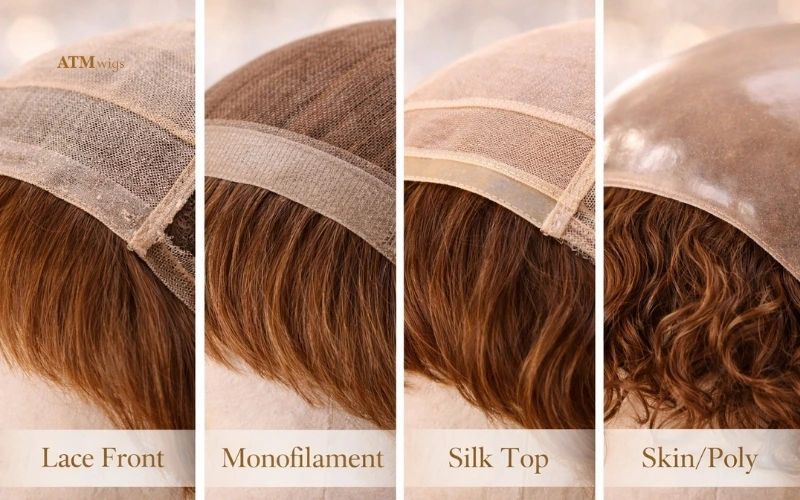
Quick cap-type guide (why your base changes the clock)
- Lace front / full lace: often dries faster due to ventilation
- Monofilament: usually moderate (breathable, but structured)
- Silk top: crown can dry more slowly (layered construction)
- Skin/poly: underside may stay damp longer (less airflow)
Toppers and toupees (usually faster)
- Toppers: 1–6 hours
- Toupees: 1–4 hours
Smaller surface area means faster drying, but base type still matters.

What affects wig drying time?
Drying time isn’t just about hair length. It’s about how water sits in the hair and where moisture hides in the cap.
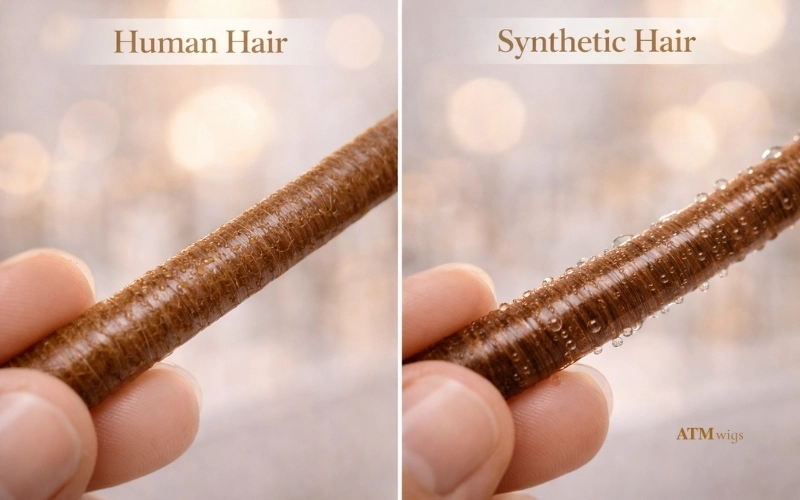
Human hair vs synthetic: how water behaves
Human hair swells slightly and holds water inside the strand. That’s why it can feel dry-ish but still be damp deeper down, especially in dense areas.
Synthetic fiber mostly holds water on the surface and between strands. It often “feels dry” faster, but the cap can remain damp longer than you think.
Length, density, and texture
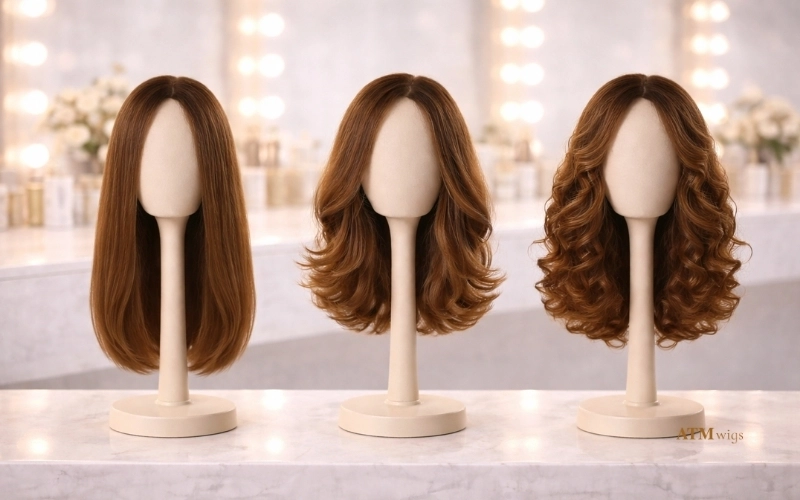
Length increases drying time because there’s more surface area and more water in the mid-lengths and ends.
Density can add hours even if the length is the same. A high-density wig traps moisture between layers of hair.
Texture matters too. Curly and wavy styles retain water longer than straight styles because water sits in bends and coils.
Cap construction and ventilation
Cap design controls airflow through the base, and airflow is what dries the interior.
Lace and many monofilament designs allow moisture to escape more easily. Silk top areas tend to hold moisture at the crown because they’re layered for realism.
Skin/poly bases may feel like they “seal” moisture under the base unless you dry them with strong airflow underneath.
Weather: humidity and airflow
Humidity is the silent reason people say, “My wig is still damp after 12 hours.” High humidity slows evaporation, even if the room feels warm.
Airflow speeds drying more reliably than temperature. A cool room with a gentle fan often beats a warm room with still air.
How wet the wig is after washing
A wig that was soaked and rinsed aggressively will take longer than one washed with controlled water flow.
Heavy product buildup can also slow drying. Thick oils, waxy serums, or too much conditioner can make hair feel heavy and “damp” longer.
Fast way to estimate your air-dry time
Start with the baseline from the quick answer section, then adjust:
- Add 1–4 hours for high density, very long length, or curly texture.
- Add 1–3 hours for a silk top or heavily structured crown.
- Add 25–50% more time in high humidity or low airflow rooms.
If you’re in a humid climate, you’ll get the best results by focusing on airflow, not “waiting longer.”
Air-dry checklist to protect lace and keep the shape
If you want consistent results, this checklist is the difference between “dries nicely” and “why does my hairline look weird now.”
Right after washing (first 5 minutes)
Let the wig drip for 30–60 seconds so water drains naturally.
Gently squeeze the hair from top to ends. Do not twist or wring-this stresses strands and can distort the cap.
Blot with a microfiber towel using press-and-lift motions. Rubbing creates frizz and can roughen the cuticle on human hair.
Protect the cap interior (where moisture hides)
Lightly blot the inside of the cap at the crown and nape. Those zones often stay damp the longest.
If it’s a lace front, blot the lace gently and keep it supported. Wet lace is more delicate and can stretch if pulled.
If it’s a silk top, blot around the crown again. That layered area loves to hold moisture.
Set up the drying environment correctly
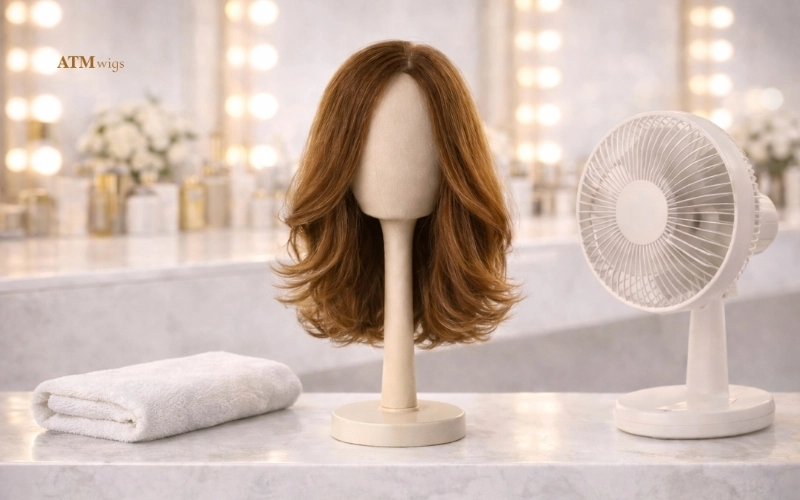
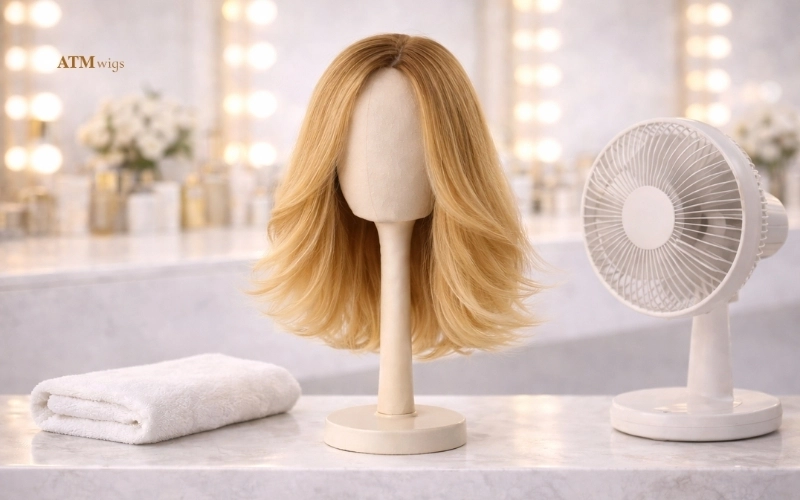
Place the wig on a wig stand so air can move through the cap. A stand often dries the base better than lying flat.
Choose a dry room with airflow. Avoid steamy bathrooms, laundry rooms, and closed closets.
If you want to speed things up, use a fan on low or medium for gentle circulation.
Shape-saving steps (so it dries how you want it to sit)
Set the part in its natural direction while the wig is damp. Human hair tends to “memorize” the drying position.
Smooth the top lightly to prevent crown dents. Don’t press the hair down hard-just guide it.
For bangs or face-framing layers, place them where you want them before the wig fully dries.
Midway check (2–4 hours in)
Touch the inside of the crown and nape. If it feels cool, it’s still damp.
Reposition the wig slightly on the stand so airflow reaches different areas evenly.
If needed, do a quick inside blot again. This is a huge time-saver in humid weather.
Best way to air dry a human hair wig (step-by-step)
Human hair wigs look best when they’re dried gently and evenly, especially around lace and knots.
Step 1: Remove water without stressing the hair
After rinsing, let the wig drain briefly. Then squeeze gently-never wring.
Microfiber blotting is ideal because it removes water efficiently without rough friction.
Step 2: Detangle at the right moment
Detangle when the wig is damp, not dripping wet. Wet hair stretches more and can break under tension.
Use a wide-tooth comb, start at the ends, and work upward. Keep extra caution around lace front areas.
Step 3: Dry on a stand with airflow
A wig stand helps the cap dry from the inside out. This reduces odor risk and helps the piece keep its intended shape.
Place the stand in a ventilated area. If humidity is high, add a fan for consistent airflow.
Step 4: Style when it’s mostly dry
If you style too early, you risk frizz and odd “drying lines.” If you style too late, the hair may set flat.
A sweet spot is when the wig is about 80–90% dry-damp enough to be flexible, dry enough to behave.

Best way to air dry a synthetic wig (step-by-step)
Synthetic fiber is more sensitive to friction and can hold its style memory differently than human hair.
Step 1: Blot, don’t rub
Rubbing can increase tangling and fuzz. Press with a microfiber towel and let the water lift out.
Avoid twisting the fiber, especially on longer synthetic wigs.
Step 2: Let the fiber settle on a stand
Synthetic wigs often dry better when the fiber can fall naturally. A wig stand helps the hair fall into its intended shape.
Keep it away from enclosed spaces while damp. Even if the fiber dries quickly, the cap can hold moisture longer.
Step 3: Use airflow for speed
A fan on low or medium is usually safe and effective. Airflow dries the cap and reduces the “damp underside” issue.

How to tell your wig is fully dry
Don’t rely on the hair surface alone. The cap check is what prevents odor and shape problems.
The cap check (most important)
Touch inside the cap at the crown and nape. It should feel dry, not cool.
If the cap is still cool, moisture is still present even if the hair feels dry.
The ends check
Pinch the last inch of hair. If it feels heavy, cold, or slightly tacky, it needs more time.
Ends of long wigs are often the last to fully finish drying.
Why does damp storage cause problems
Storing a damp wig in a bag or box traps moisture. That’s how you get musty odor and a cap that doesn’t feel fresh.
It can also create creases or flattening, especially around structured crown areas.

How to speed up air drying safely (without damaging lace)
If you’re in a rush, the goal is to remove moisture early and boost airflow.
Use airflow, not harsh heat
A fan is one of the safest tools for faster air drying. It speeds evaporation without overheating lace, knots, or fiber.
Air conditioning helps too because it lowers humidity, which can cut drying time significantly.
Blot twice for a faster finish
Blot immediately after washing, then blot again after 10–15 minutes once more water has released.
Also blot the inside cap at the crown and nape. This is where “still damp tomorrow” usually comes from.
Avoid common shortcuts that backfire
Avoid drying in direct sun for long periods, especially for colored wigs that can fade.
Avoid radiators or heaters that create uneven drying and can stiffen fiber or dry out human hair.
Avoid drying in a closed bathroom or closet. Low airflow is the enemy.
Lace front drying: what to do differently
Lace fronts can air dry beautifully, but only if the lace is kept stable while wet.
Keep the hairline flat and supported on the stand. Do not pull or stretch the lace when blotting.
If you have baby hairs, wait until the wig is mostly dry before doing detailed hairline styling. This helps the hairline dry clean and controlled.
Toppers and toupees: quick drying with hidden damp spots
Toppers and toupees are smaller, but moisture can hide around base materials and attachments.
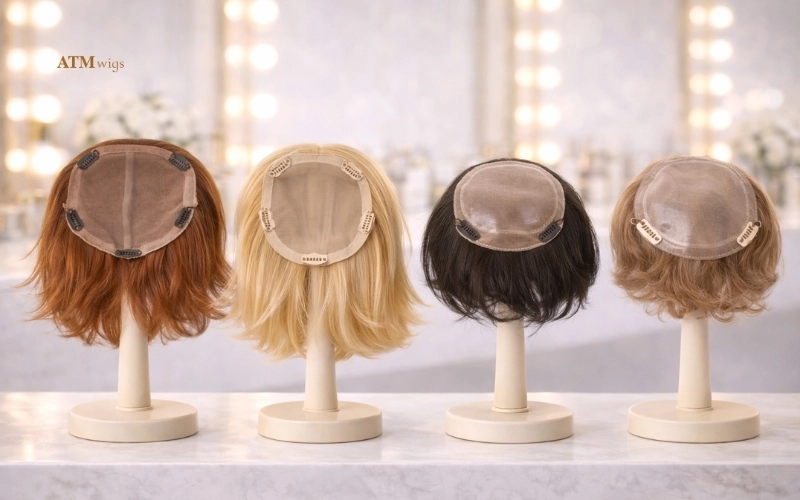
Toppers (with clips)
Open the clips while drying so air reaches the base. Moisture can sit around stitching and clip anchors.
Blot the base gently and confirm it’s dry before storage.
Toupees / hair systems
Lace bases ventilate well, so they often dry faster. Skin/poly bases may hold moisture underneath.
Always check that the underside is fully dry, especially near the perimeter where moisture can linger.
FAQs about how long does it take a wig to air dry?
Can I air dry a wig overnight?
Yes. Many wigs will fully air dry overnight if they’re on a stand in a ventilated room, especially short to medium lengths.
Why is my wig still damp after 12 hours?
The most common causes are humidity, high density, a silk top, or low airflow. Move it to a drier room and add gentle fan airflow.
How long does a lace front wig take to air dry?
Human hair lace fronts commonly take 4–12 hours, but long, dense, or curly styles can take 12–24 hours, especially in humidity.
Do human hair wigs dry more slowly than synthetic wigs?
Usually, yes. Human hair absorbs water inside the strand, while synthetic fiber mainly dries from the surface plus cap drying.
How long does it take a topper or toupee to air dry?
Toppers are often 1–6 hours, and toupees are often 1–4 hours, depending on base type and humidity.
Is it okay to wear a wig that’s slightly damp?
It’s better to wait. Damp caps can lead to odor and discomfort, and styling won’t hold well as it continues drying.
So, how long does it take a wig to air dry? Most human hair wigs need 4–12 hours (up to 24 in humidity), while many synthetic wigs need 1–10 hours depending on length, density, and cap type. If you want pieces that stay realistic and easy to maintain, explore ATM Wigs’ services or catalog for human hair wigs, toppers, and toupees designed for everyday wear.

