


A excellent silk top wig should look natural from all angles, not just in the pictures. In this article, you will learn how to choose the best silk top wig for the most natural scalp, hairline, human hair quality, density and everyday comfort.
What makes the best silk top wigs unique?
The best silk top wigs aren’t the longest, the thickest or the most expensive. They should offer the illusion of a natural scalp, should be comfy and allow for natural everyday styling.
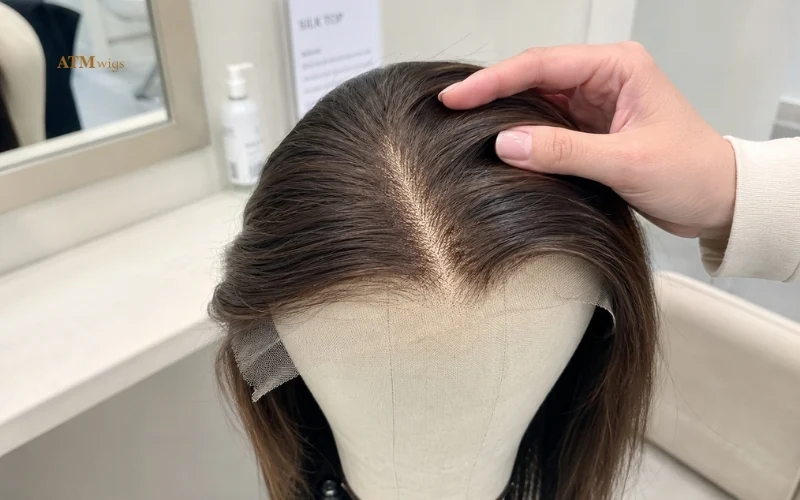
The creation of a silk top helps conceal knots under a layer of silk-like material, giving the parting area a smoother, more scalp-like appearance. However, overall quality also depends on the lace front hairline, cap fit, density balance, color dimension, hair movement, silk tone, and silk-to-lace transition.
For many wearers in the US and Europe, the best overall choice is a human hair silk top lace front wig with hidden knots, 120% to 130% natural density, soft rooted color, and a secure cap fit.
Best silk top wig types to consider
Different silk top wigs serve different wearing goals. Instead of choosing only by length or color, buyers should match the wig type to the wearer’s lifestyle, styling needs, and comfort expectations.
Best overall: human hair silk top lace front wig
The best overall option is usually a human hair silk top lace front wig. The silk top simulates a real scalp and the lace front offers a softer, more natural looking hairline.
This combo is good for wearers looking for close-up realism, versatile design and a superior finish for everyday wear.
Perfect for daily use: Silk top wig 120%-130% density
A density of 120% to 130% normally looks most natural for day to day wearing with a silk top wig. It is enough to cover without making the crown look overly hefty.
Best for blonde shades: rooted silk top wig
Rooted color and gentle dimension tend to look more natural with blonde and gray colors. A rooted silk top wig will help create some depth around the parting area and cut down on a flat, artificial look.
Best for hair loss: silk top wig with soft inside;
Comfort is as crucial as realism in the case of thinning hair, alopecia or medical hair loss. Good choices should be soft inside, fit snug on the cap and be made with low tension.
Best for premium style: remy human hair silk top wig
Premium style is best achieved with a Remy human hair silk top wig. It may be blow-dried, curled, straightened, layered and styled more organically than synthetic alternatives.
Features to consider when buying
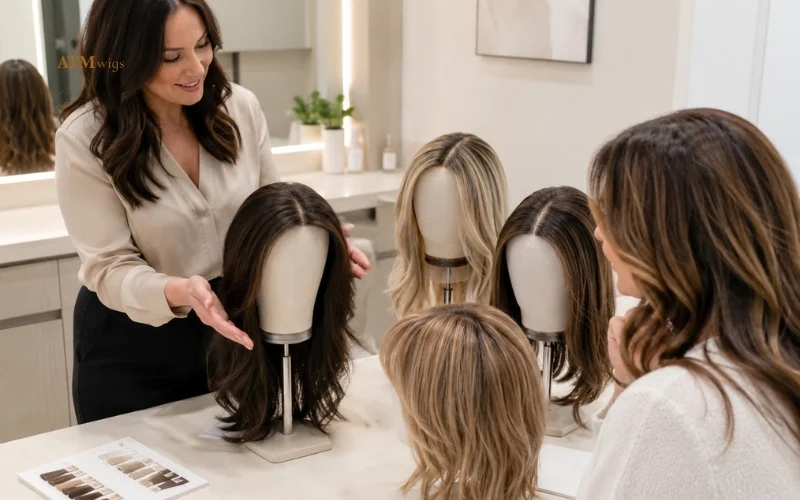
A silk top wig may look good on internet but the real quality is in the details of manufacturing. Before buying, check how the wig performs in realism, comfort, and long-term wear.
Silk top area size
The silk top area controls where the wig can be parted naturally. A larger silk top area gives more parting flexibility, while a smaller silk top may feel lighter but limits styling direction.
This matters because silk top construction does not usually cover the entire cap. The most natural parting effect only happens within the silk top section.
Silk layer thickness
A high-quality silk top should hide knots without looking bulky. If the silk layer is too thick, the crown may appear raised, padded, or unnatural.
Silk tone matching
The silk tone should blend with the wearer’s scalp tone. If the silk top is too pale, it may create a white cast under strong lighting, flash photography, or salon lights.
A balanced scalp-like tone helps the part look natural in real life, not only in product photos.
Density zoning
Density should not be the same everywhere. A natural wig usually needs lighter front density, balanced crown coverage, and enough fullness through the ends.
The hairline should look soft, the crown should not be overly dense, and the parting area should not look pluggy. Ends should feel full enough to move naturally without looking heavy.
Hairline design
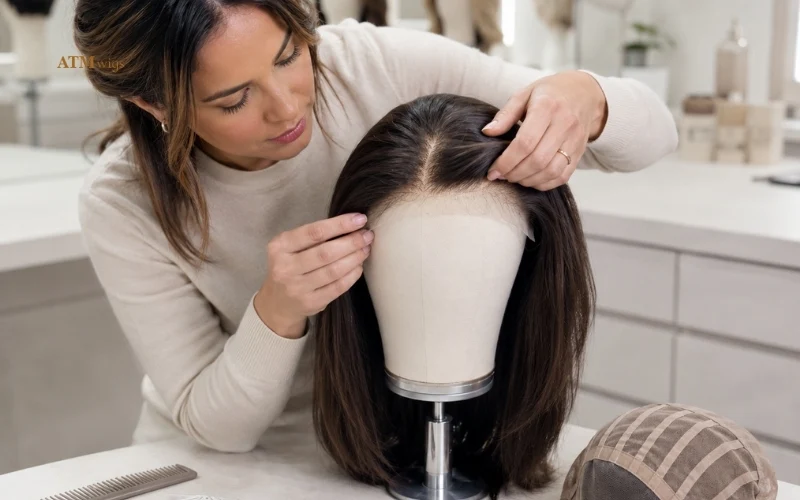
A natural hairline is essential if the wig will be worn away from the face. The lace should blend softly, and the front density should look gradual.
A harsh front edge can make even a well-made silk top wig look less realistic. Baby hairs can help, but they should stay subtle.
Cap size and fit
Fit affects both comfort and realism. A hat which is too big can move around, while one which is too little can raise, pinch or press on the temples.
Look for tiny, medium or large cap alternatives and make sure ear tabs, nape fit and adjustable straps provide stability.
Color and root design
Dimensional shades usually look more natural than flat, single-tone colors. There are also rooted blondes, soft brunettes, lowlights, highlights and balayage that can help to make the wig look more like real hair.
Rooted color is very beneficial for blonde and gray hair, since it creates depth around the part.
Quick decision guide
| Wearing goal | What to look for in a silk top wig |
|---|---|
| Most natural scalps | Hidden knots, smooth silk top, soft root density |
| Natural hairline | Lace front, lightly graduated front density, clean lace transition |
| Everyday wear | Secure cap fit, 120%–130% density, breathable cap areas |
| Hair loss coverage | Soft interior, stable fit, low-tension construction |
| Styling flexibility | Remy human hair, heat styling ability, salon customization |
| Blonde or gray realism | Rooted color, soft highlights, lowlights, natural dimension |
Human hair vs synthetic silk top wigs
Human hair silk top wigs are usually the stronger choice for premium realism, natural movement, and styling flexibility.
Synthetic silk top wigs can work for lower-maintenance wear and fixed styles, but they offer less customization. If the goal is the most natural-looking silk top wig, human hair is usually worth the investment.
Silk top, lace top and monofilament: quick comparison
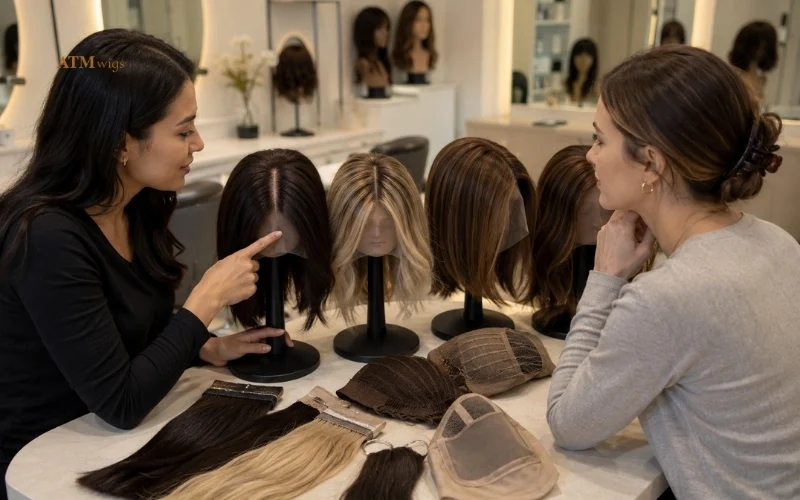
Silk top wigs are ideal for a seamless scalp look with hidden knots. Lace top wigs are generally lighter and more breathable, whereas monofilament wigs allow for natural movement and flexible parting.
For many premium wearers, silk top plus lace front is the strongest combination. For deeper comparisons, readers can explore dedicated guides on silk top, lace top, and monofilament construction.
Common mistakes when choosing silk top wigs
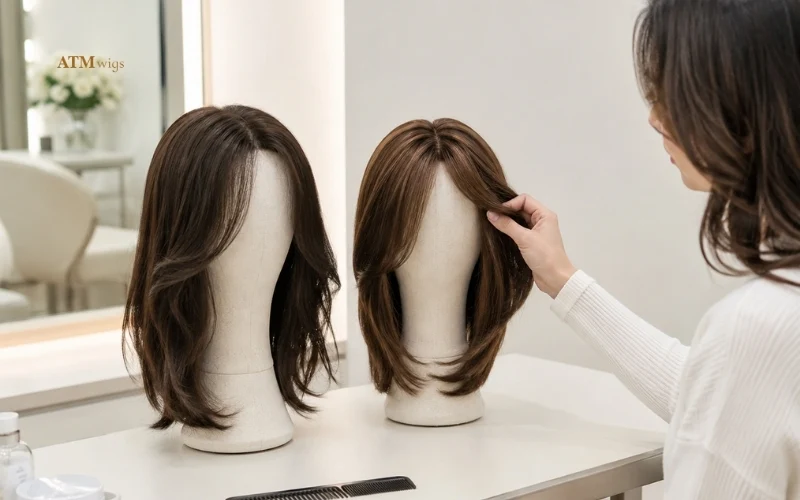
One common mistake is choosing only by color. A beautiful shade will not look natural if the cap fit, density, or hairline is wrong.
Another mistake is choosing too much density. Thick hair looks beautiful, but can make the crown look heavy or unnatural.
Some buyers ignore the silk top area size. If the silk section is too small, the wearer may not have enough parting flexibility.
Others overlook the silk-to-lace transition. If this area is not smooth, the wig may be harder to part or style naturally.
Finally, do not forget comfort. The best silk top wigs should be realistic enough to admire and comfortable enough to wear regularly.
Final Checklist Before Choosing
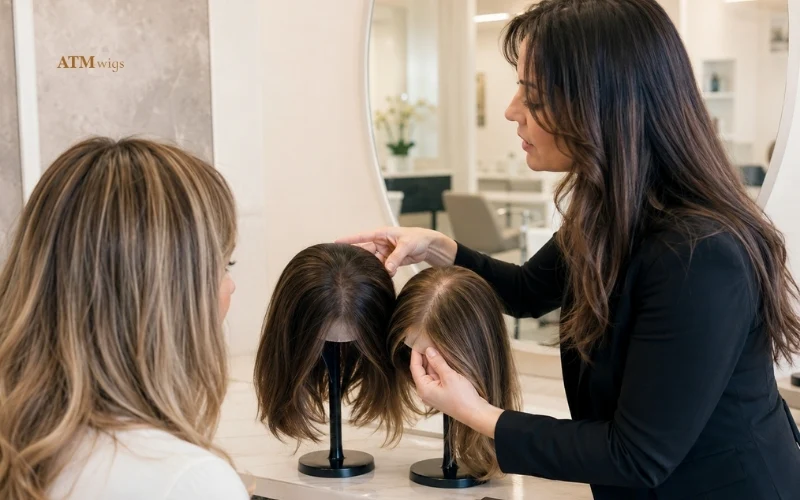
Before buying, check whether the wig has a natural scalp effect, hidden knots, soft hairline, correct cap size, suitable density, dimensional color, and a properly matched silk tone.
Also review the silk top area size, silk layer thickness, density zoning, silk-to-lace transition, hair quality, styling flexibility, and comfort level.

FAQs about the best silk top wigs
Are silk top wigs the most natural-looking wigs?
Silk top wigs are among the most natural-looking wigs for the parting area because the knots are hidden beneath a silk-like layer. For the most realistic result, many wearers prefer a silk top with a lace front hairline.
Are silk top wigs better than lace top wigs?
Silk top wigs are generally superior for scalp realism and for hiding the knots. Lace top wigs may feel lighter and more breathable, thus which is best depends on the priority of the wearer.
What density is best for a silk top wig?
For natural everyday wear, 120% to 130% density is often a good choice. A 150% density can work for fuller styles, while 180% is better for dramatic volume.
Can you part a silk top wig anywhere?
Most silk top wigs allow flexible parting only within the silk top area. A larger silk top gives more styling flexibility, while a smaller silk top may limit parting direction.
Are human hair silk top wigs worth it?
If you want the most realistic look, natural movement, flexibility to heat style and a more polished scalp look you might want to try human hair silk top wigs. They need adequate care but tend to have a softer finish and more natural movement than synthetics.
The greatest silk top wigs blend realistic natural scalp, quality human hair, secure fit and comfortable wear. Browse the ATM Wigs silk top wig inventory or consult with our experts for help in selecting the correct cap construction, density, color and fit for your market or customers.

