


Asian hair wigs are widely used in the human hair wig industry, but the term can mean more than one thing. This article covers hair origin, texture, processing, quality and who Asian hair wigs are most suited for, helping customers understand what makes a human hair wig appear and feel natural.
What are Asian hair wigs?
When people refer to Asian hair wigs they often mean wigs that are completely or partially produced from Asian human hair. This may include Chinese, Indian, Vietnamese, Indonesian, or other Asian-origin hair, depending on the supplier and production process.
The term does not always mean wigs designed only for Asian wearers. In most wig industry discussions, “Asian hair” describes the origin or type of hair used to make the wig.
This distinction matters because a wig made with Asian human hair can still be designed for wearers in Europe, the US, and other international markets. The final result depends on color, density, texture, cap construction, and customization.
Asian hair is commonly used for human hair wigs, toppers, and toupees because it is strong, versatile, and more widely available than rare European or Slavic hair. When processed and constructed correctly, it can create natural-looking wigs for many different buyers.
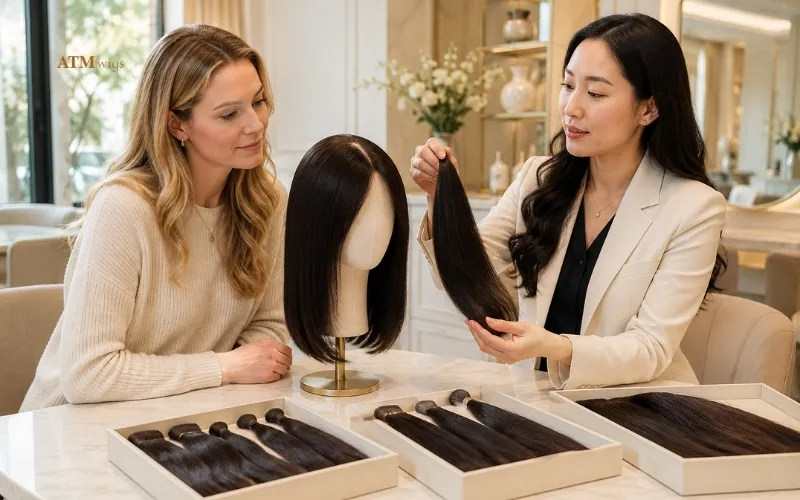
Hair origin and common Asian hair types
Hair origin affects the natural texture, strand thickness, color base, and processing potential of a wig. However, origin is only one part of the full quality picture.
A wig made with Asian hair can be premium or low quality depending on how the hair is collected, sorted, treated, colored, and ventilated into the cap.
Asian hair is not one single hair type. Different regions can produce hair with different strand thickness, texture, movement, and color characteristics.
Chinese hair
Chinese hair is often known for its strong fiber structure and naturally straight texture. It is often used for sleek wigs, dark brunette wigs, black human hair wigs and structured designs.
Since Chinese hair is black, if you want a lighter color you will need to bleach and dye carefully. A good quality Chinese human hair wig will look smooth, glossy and durable but not too dry or stiff.
Indian hair
Indian hair is typically used in human hair wigs as it has good natural movement, smoothness and a subtle wave. This can work nicely with layered wigs, wavy styles and designs that need additional flow.
Very straight hair types may have a softer finish compared to Indian hair. The final quality still depends on sorting, cuticle alignment, color treatment, and wig construction.
Vietnamese hair
Vietnamese hair is generally prized for its smooth feel, natural dark color, and strong strand quality. It may be used in premium human hair wigs when sourcing and processing are well controlled.
This type of hair can be suitable for wigs that need durability, smoothness, and a healthy-looking finish. Like other Asian hair types, it requires careful color work for blonde, grey, or ash shades.
Blended Asian human hair
Many commercial human hair wigs use a blend of different Asian hair types. This is common and not automatically negative.
A blended hair source can help balance softness, strength, movement, and cost. For buyers, the final wig should be judged by how it performs: texture, shine level, movement, tangling resistance, color blending, and comfort.
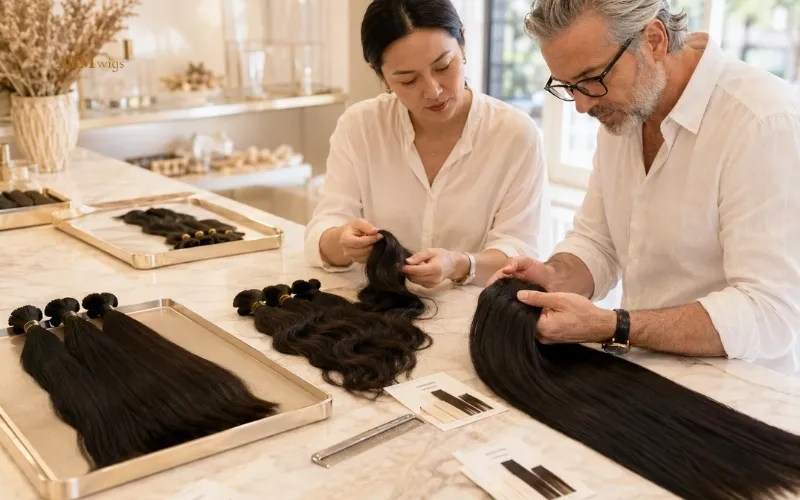
Texture, processing, and finished appearance
Asian hair is often naturally strong and may have a thicker strand structure than European hair. This can make it durable, especially for longer wigs or designs that need constant styling.
Many Asian hair types also have a natural dark pigment. This provides a deep basis for black, brown and brunette wigs, but also means lighter tints need more technical processing.
Texture can vary. Some Asian hair is very straight, while some has a soft wave or natural body. Processed hair can be straight, wavy, curly, layered or textured .
In Asian hair wigs, processing is one of the most significant variables. The hair is frequently naturally black, thus bleaching and dyeing is needed to get blonde, grey, ash or highlighted colours.
Good processing can produce in lovely finishes, keeping hair smooth and wearable. Improper processing can harm the cuticle leading to dryness, tangling, dullness or breakage.
When buying processed Asian hair wigs, customers should look for color mixing, luster, softness and movement. Rooted shades, soft highlights and dimensional brunettes tend to look more natural than flat, single tone colors.
For lighter colors like blonde, gray, ash brown or champagne blonde, the hue should appear sophisticated not harsh. Your hair should still be workable, not brittle or too covered.

Are Asian hair wigs good quality?
Asian hair wigs can be quite good quality when constructed from properly acquired human hair and proper structure. However, “Asian hair” itself should not be treated as a guaranteed quality label.
The most important quality factors include whether the hair is Remy, whether the cuticles are aligned, how much processing the hair has received, and whether the wig cap is well made.
Remy human hair means the cuticles are kept facing the same direction. This helps reduce tangling and supports a smoother, more natural feel.
Non-Remy hair is less expensive but more likely to tangle or require more intensive chemical treatment. For daily wearers, Remy Asian human hair is usually a better choice.
Cap construction also affects quality. A lace front, monofilament top, silk top or hand tied cap will make a huge difference to the feel and realism of the wig.
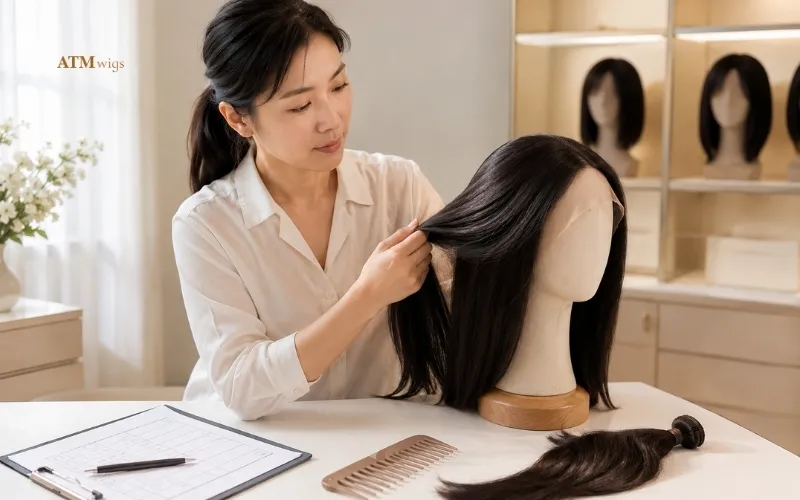
Asian hair wigs compared with European hair wigs
Asian hair and European hair have different strengths. Asian hair is often stronger, darker, and more available. European hair is often finer, softer, and naturally available in lighter shades.
European hair wigs are usually more expensive because the hair is rarer. They may be favored by purchasers who want a very fine hair texture or naturally light blonde tones.
Asian Hair Wigs For Durability And Style They are typically a reasonable solution for buyers who seek superior human hair wigs in more designs and price levels.
The ideal selection will depend on the needs, budget, color preference, and maintenance expectations of the wearer. A highly processed Asian human hair wig with realistic density and quality cap can still seem quite natural.
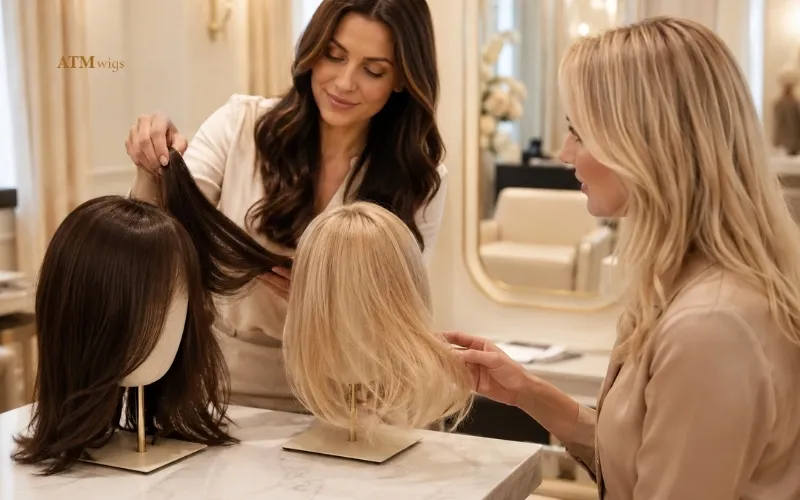
Who are Asian hair wigs suitable for?
Asian hair wigs have a broad appeal to a variety of purchasers, but the ideal pick depends on the wearer’s lifestyle, hair loss needs, styling habits and comfort expectations.
Asian hair wigs provide wearability, style versatility and a natural look to everyday wig wearers. Density and length that is controllable and pleasant, especially for daily usage are key.
Comfort and realism are key for persons who suffer from hair loss. If the density is managed, the cap is soft to the touch and the scalp area looks natural, Asian human hair might be a good choice for hair loss wigs.
Toppers should be color, texture, density and movement compatible with the existing hair of the person. Density management, base design, hair direction and front hairline are very critical to toupee wearers.
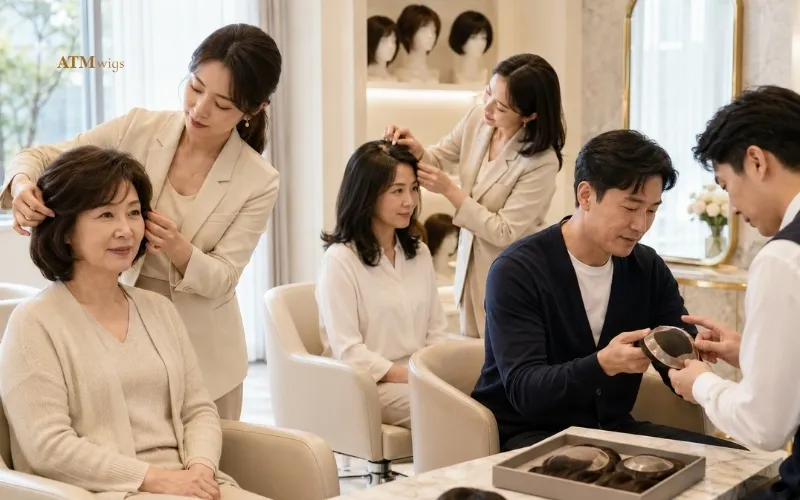
Asian hair wigs are a viable solution for salons, shops or professional purchasers when consistency, personalization and long-term wearability are vital. Before you choose, look at the color options, cap sizes, density levels, processing quality and aftercare assistance.
Asian Hair Wigs: Pros and Cons
The benefits of Asian hair wigs are many. They are generally sturdy, resilient, adaptable and can be used for a large variety of human hair wig types.
They are available in straight, wavy, layered, bob, topper or toupee styles. With the right processing, they can also reach colors that are sought for in the US and Europe.
But there are downsides as well. Darker hair naturally takes more processing to get to the lighter levels. If the processing is overly severe, it might dry the hair out or make it more prone to tangling.
Some Asian hair wigs are overly thick in volume. And need to be modified. Hair origin is vital, but so is density control and cap design for natural results.

How to choose and care for Asian hair wigs
What to check before buying
First, determine if the wig is manufactured from 100% real hair or a combination of human hair. 100% human hair wigs tend to be more versatile and more natural looking.
Next, seek for Remy hair or explicit instructions about cuticle alignment. This is vital for suppleness, less tangling and overall life span.
Take a good look at the cap structure. Lace front wigs give a more natural front hairline while monofilament and silk top wigs give a more realistic parting or scalp look.
Color finish check. A good wig will have excellent color mixing, a natural gloss, and no harsh brassiness. This is particularly significant for wigs made of blonde, gray and highlighted Asian hair.
Finally, think about the lifestyle of the wearer. A long blonde wig can look lovely, but it may require more maintenance than a shorter brunette bob or medium-length layered wig.
How to care for Asian human hair wigs
Asian human hair wigs need moisture and gentle handling. Even though the hair is real human hair, it does not receive natural oils from the scalp.
Use a hydrating conditioner and a shampoo that is sulfate-free. Don’t over wash especially if it is a blonde, grey or colour treated wig.
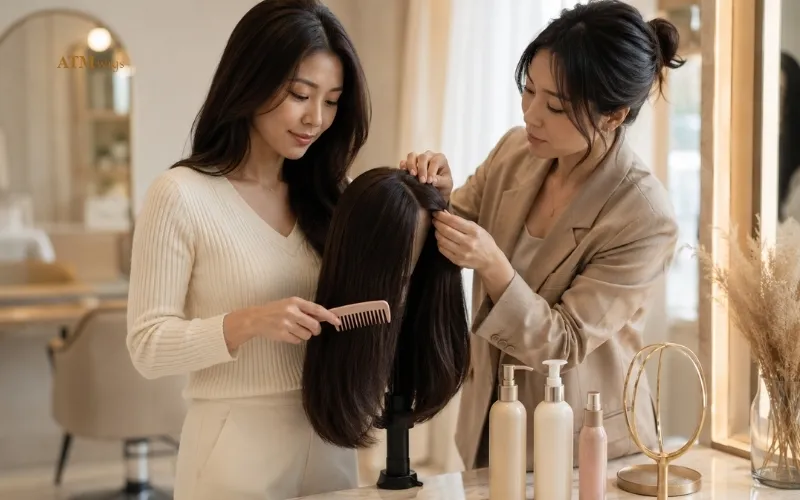
Using a wide-tooth comb or an appropriate wig brush, comb out from the bottom up. If you find any knots, tug gently not aggressively since this can cause breaking or shedding.
Most human hair wigs can be heat styled but it’s important to use a heat protectant. Lower heat settings are better for color quality and softness.
Store the wig on a wig stand or in a ventilated bag when not in use. Proper storage minimizes friction, maintains the style and extends the life of the wig.
FAQs about Asian hair wigs
What are Asian hair wigs?
Asian hair wigs are wigs manufactured with human hair that comes from Asian regions, in whole or in part. They may use Chinese, Indian, Vietnamese or other Asian-origin hair.
Are wigs made from Asian hair good quality?
Yes they can be of great quality when done with well sourced hair, good cuticle alignment, meticulous processing and realistic cap structure.
Can Asian hair wigs look natural for European and US wearers?
Yes. Asian hair wigs can look natural on European and US wearers if they have the right color, density, texture, lace tone and cap design.
What should buyers check before choosing Asian hair wigs?
Buyers should check whether the wig uses 100% human hair, whether the hair is Remy, how the color is processed, how realistic the cap construction is, and whether the density suits the wearer’s needs.
Asian hair wigs can be a strong choice for buyers who value durability, natural movement, and styling flexibility. Browse the collection and services of ATM Wigs for human hair wigs, toppers, and toupees made for realistic everyday use.

