

Can human hair wigs get split ends? Yes—and the key to getting your wig to look still stunning and hold up is to understand why it happens. Here in this article, you will learn why human hair wigs get split ends and how to prevent or repair them successfully
Why Do Human Hair Wigs Get Split Ends?
Even though human hair wigs don’t grow on your head, they’re still made from real hair—and that means they’re vulnerable to the same type of damage, like split ends. Here’s what happens:

Lack of Natural Oils
Human hair wigs do not have the advantage of sebum, the natural hair oil your scalp produces to maintain hair moisture and protection. Wig hairs become dry more easily because they lack the scalp’s natural protective coating, especially at the tips.
Heat Styling and Chemical Treatments
Blow dryers, curling wands, and flat irons can all be harmful to the outer layer of the hair (the cuticle), especially if repeated or done with high heat. Coloring, perming, or relaxing the hair with chemicals—though all possible—damages the hair shaft and accelerates split ends.
Friction and Mechanical Stress
Day-to-day handling is important. Aggressive brushing, particularly when the hair is wet or knotted, can rip the strands. Pulling out knots, sleeping in the wig with cotton pillows, or having it catch on clothing all have the potential to create split ends.
Environmental Exposure
Sun, wind, humidity, and pollution all have an effect on the state of the hair. Just like your own hair, repeated exposure to the elements dries out the wig and leads to damaged ends.
Age and Wear
No matter how careful you are, human hair wigs will age. Over time, the ends of the strands—being the oldest—naturally weaken. This makes them the most likely place for split ends to occur.
What Do Split Ends Look Like on a Wig?
Split ends on a wig may not always be immediately visible, but certain signs are present that reflect the accumulation of damage.
Signs to Watch For:
- The ends of the hair feel rough or brittle
- Increased frizz, especially at the bottom
- More tangling than usual during brushing
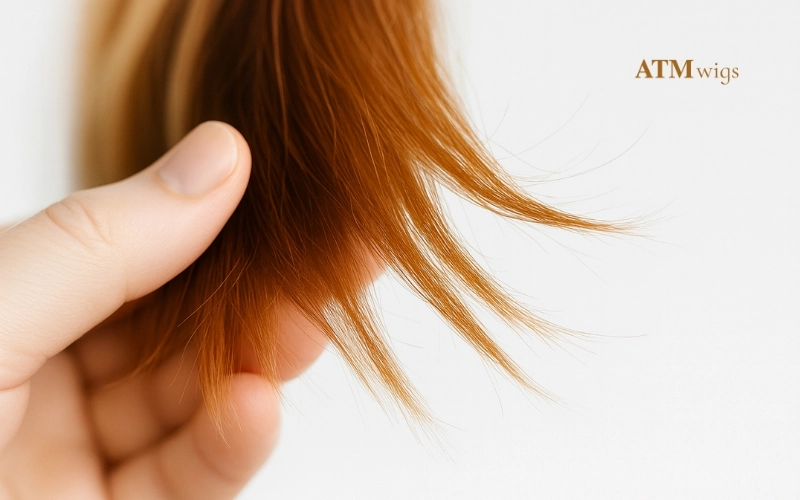
- Visible feathering or “frayed” hair tips
- A general lack of shine or luster
When these symptoms are visible, it’s high time to take action before the damage extends up the hair shaft.
How to Prevent Split Ends on Human Hair Wigs
Being proactive is the best way to keep your wig healthy, silky, and split-end-free.
Gentle Washing and Conditioning
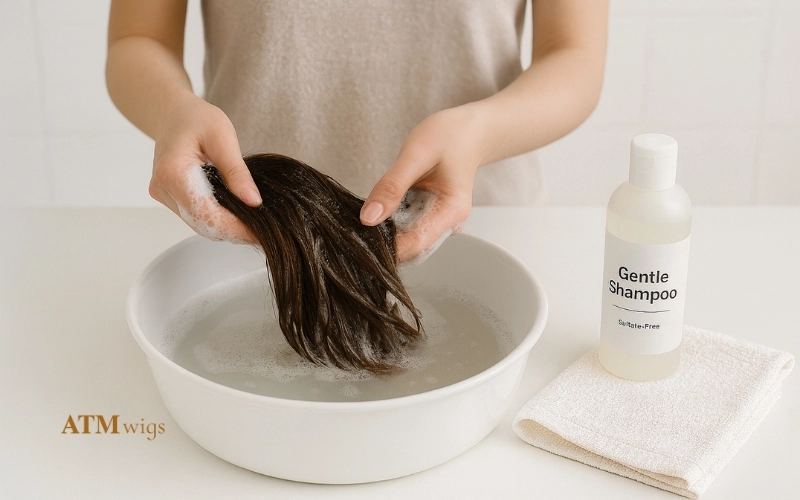
Wash your human hair wig every 8–10 wearings, or more frequently if you’re wearing a lot of styling products: sulfate-free shampoo and hydrating conditioner for human hair wigs or colored hair work best.
Do not scrub the hair. Work the shampoo down instead with your fingers. A cold water rinse will seal the cuticle and lock in moisture.
Use conditioner from mid-lengths through to ends. Deep conditioning can also be performed once in a couple of weeks for extra moisturizing.
Smart Styling & Heat Control
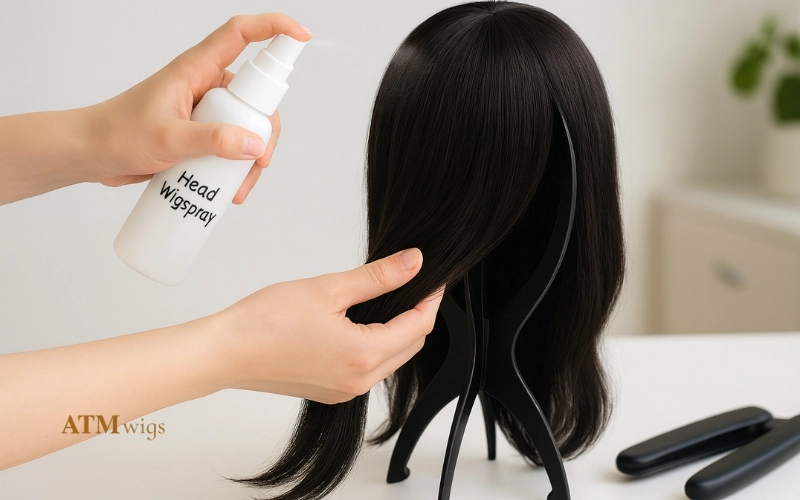
Pre-treat with heat protectant spray before using hot tools. Use the lowest temperature that is effective, and try to keep heat styling to 1–2 times a week.
Try heatless styles such as flexi rods or wet-set curls to minimize daily stress on the hair.
When drying your wig, air drying is always best. If blow-drying, always use low heat and a diffuser attachment.
Proper Detangling and Handling
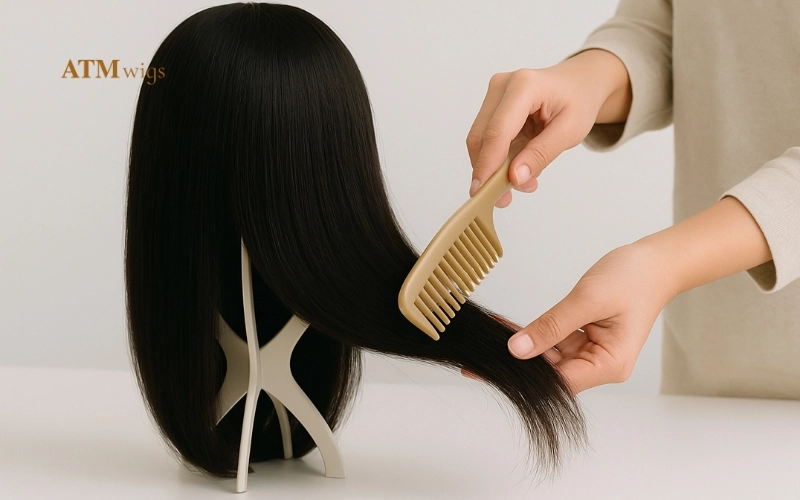
Use a soft-bristled paddle brush or wide-tooth comb. Always detangle from the ends upwards, in small sections, to prevent pulling.
Detangle prior to washing, not after. And never brush your wig when soaking wet—it’s when hair is most susceptible.
Effective Storage and Protection
Store your wig on a wig stand or mannequin head to maintain shape and avoid friction.
Store your wig in a silk or satin pouch when not worn to avoid static and dryness. When sleeping, wear your wig with a silk pillowcase to reduce tangling and friction.
Keep the wig away from direct sunlight or heat sources. The UV rays dry out the hair and can cause color loss.

How to Fix or Manage Split Ends on Human Hair Wigs
Once a hair strand splits, it can’t be undone. There are, however, ways to control its look and also prevent further damage.
Trim Regularly
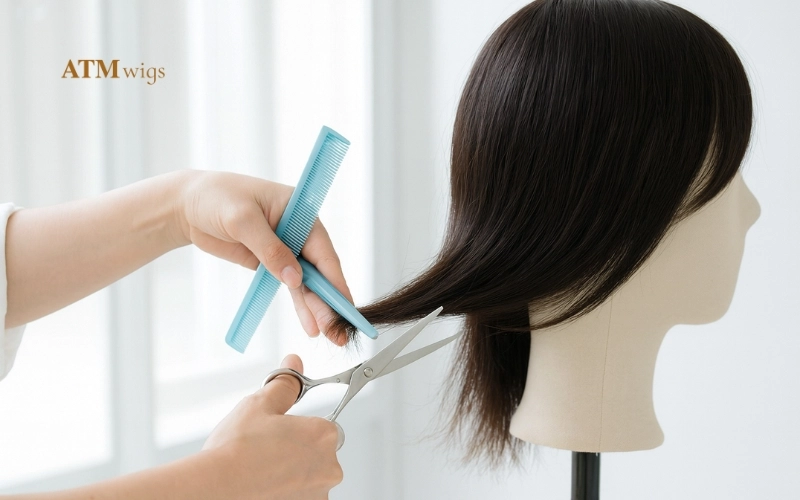
Trimming is the only permanent fix for split ends. Even a light dusting of the ends every 6–10 wears can significantly improve the look and feel of your wig.
If you’re not confident doing this yourself, take your wig to a professional stylist familiar with human hair wigs. They can shape and trim without overcutting the hair.
Use Hydrating Treatments
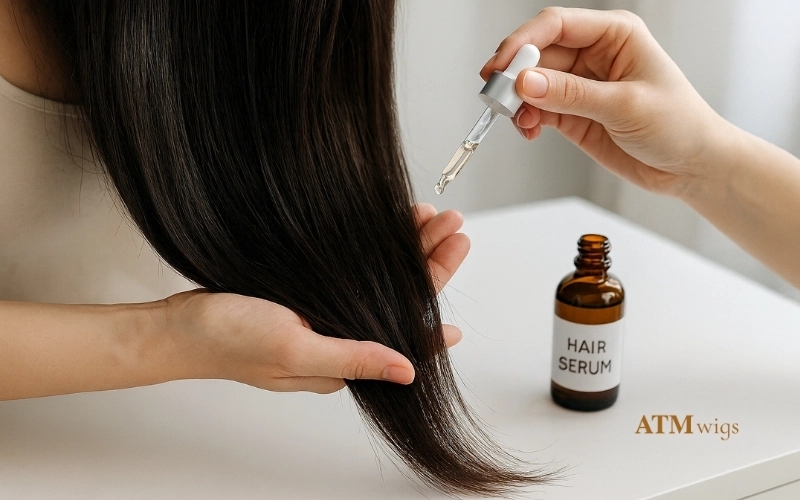
While they won’t “heal” split ends, the right products can mask their appearance. Use leave-in conditioners, recovery serums, or lightweight oils like argan or jojoba.
Apply these to the mid-length and ends, avoiding the roots or cap area, to avoid buildup that undermines ventilation and comfort.
Silicone serums will also subdue frizz and add luster—but apply sparingly to avoid weighing the hair down.
Extending Your Wig’s Lifespan by Avoiding Split Ends
Human hair wigs are an investment, and avoiding split ends is part of their beauty and life span preservation.
High-quality Remy or virgin hair wigs—like ATM Wigs—have better cuticle alignment and are more durable, but even high-quality wigs require upkeep.
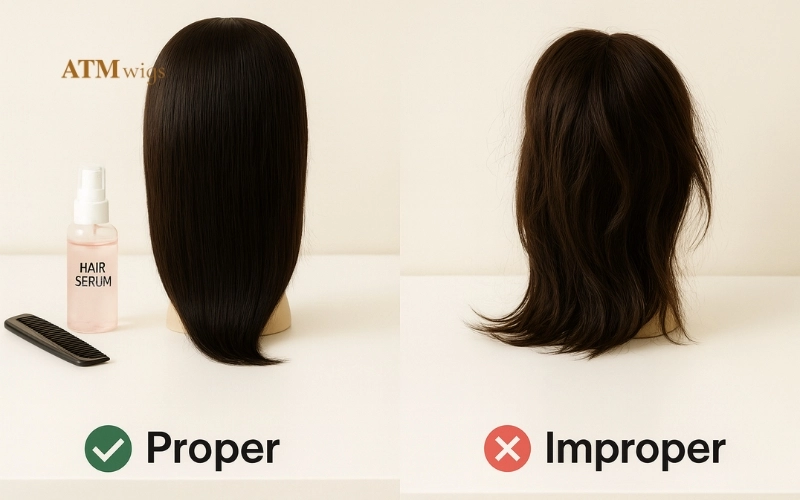
Optimal washing, detangling, styling, and storage practices will extend your wig’s lifespan and avoid undue repair or replacement.
FAQs: “Can human hair wigs get split ends?”
Can split ends on a human hair wig be repaired?
Not permanently. The only actual fix is clipping off the broken tips. But moisturizing treatments can be applied to soften and conceal the damage short-term.
How often should I wash my wig to avoid split ends?
Every 8–10 wearings is regular. If the wig is used with styling products or in hot climates, wash more frequently—but not excessively.
What are the best products to use for preventing split ends?
Look for sulfate-free shampoo, deep conditioning masks, leave-in sprays, heat protectants, and light oils. Do not use anything with drying alcohols.
Can I color or perm my wig without damaging it?
Yes, but carefully. Chemical processes can introduce split-end risk and must be done only by experts using products specifically designed for human hair wigs.
How do I know if my wig has split ends?
You’ll feel coarse, dry ends or find that it frizzes and tangles. In appearance, the ends may be feathered or broken.
Does air drying help prevent split ends?
Yes. Air drying is less damaging than blow-drying and has less heat exposure, which prevents the hair from dryness and cuticle damage.
Now you know the answer to “Can human hair wigs get split ends?”—they certainly can. You can avoid damage and prolong the lifespan of your wig with proper care and treatments. Explore expert wig solutions and human hair ranges at ATM Wigs.

