


Where does synthetic hair come from? Synthetic wigs consist of man-made polymer fibres produced through chemical reactions from chemical feedstocks to produce synthetic fibre that can be processed into fine strands for this purpose, typically using chemicals originating from petroleum as feedstocks.
The short answer: synthetic hair comes from man-made polymer fibers
Synthetic hair does not come from human donors. Synthetic wigs made from synthetic fibres created using petrochemical feedstocks (as described above) do not come from human sources but usually are also made with chemical processes in addition to those that produce petrochemical feedstocks, which are often based on natural gas or petroleum.
That is the key distinction this article needs to make clear. If someone asks where synthetic hair comes from, the most accurate answer is not simply “from plastic” or “from factories.” It comes from an industrial chain that usually starts with petrochemical raw materials, moves into polymer production, and ends with fiber spinning and finishing.
Synthetic hair does not come from real people
Human hair wigs and toppers begin with donated or collected hair. Synthetic hair does not. It is engineered to imitate the appearance of natural hair, which is why it can still look soft, realistic, and wearable even though its origin is completely different.
Why this keyword needs a different angle
This topic is easy to confuse with “what is synthetic hair made of.” That question focuses on fiber composition. This one is better answered through origin and manufacturing chain: where the raw materials come from, how they become polymer, and how polymer becomes wig fiber. That framing keeps the intent clear and much more useful for readers trying to understand the product at a deeper level.
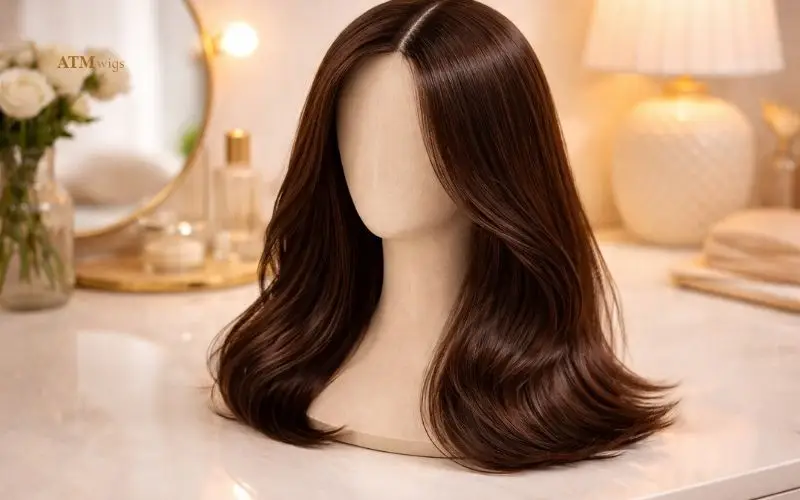
Synthetic hair comes from petrochemical-based industries
Most synthetic fibers used in textiles come from chemical processes based on fossil-fuel-derived resources, including petroleum-based chemicals and petrochemicals. In simple terms, the starting point is usually the petrochemical industry, not agriculture and not human hair collection.
That is why synthetic hair belongs to the broader family of man-made fibers. Depending on the product, the fiber family may be polyester, nylon, acrylic, or modacrylic. U.S. fiber definitions classify all of these as manufactured fibers formed from long-chain synthetic polymers.
Common fiber families behind synthetic hair
Polyester is one of the most widely used synthetic fibers in textiles. Nylon is another major synthetic category. Acrylic and modacrylic are also important manufactured fiber families, especially in applications where softness, lightweight feel, or controlled appearance matters.
If you want a more technical definition, U.S. regulations define modacrylic as a manufactured fiber whose polymer contains at least 35% but less than 85% acrylonitrile units by weight. Acrylic sits above that threshold. That is a useful distinction because it shows these wig fibers are not random “fake hair” materials, but recognized fiber classes with specific polymer structures.
So is synthetic hair basically plastic?
In everyday language, many people call synthetic hair “plastic hair,” and there is some truth behind that shorthand. These fibers are polymer-based and man-made. But that phrase is still too simplistic, because different polymers, different spinning methods, and different finishing steps can produce very different results in softness, shine, flexibility, and heat response.
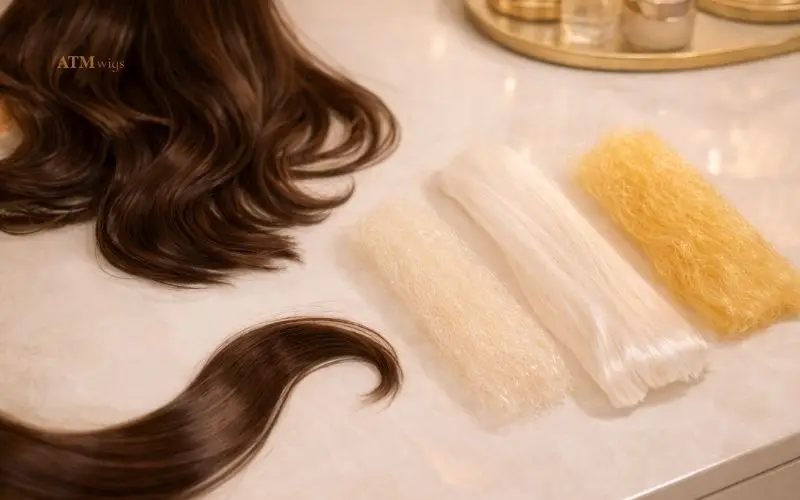
From petrochemicals to polymer: where the raw material begins
To understand where synthetic hair comes from, it helps to zoom in on one common fiber route. Polyester fiber begins with PET, or polyethylene terephthalate. EPA process documentation states that PET polymer is produced from ethylene glycol and either dimethyl terephthalate or terephthalic acid.
That chain goes back even further. U.S. Department of Energy materials documentation explains that terephthalic acid and dimethyl terephthalate, both important for polyester production, can be produced from p-xylene. So when people say synthetic hair often comes from petrochemicals, that is not just a vague idea. For common polyester-based fibers, the supply chain really does trace back through petrochemical intermediates.
This is also where the article should stop short of becoming a chemistry lesson. Readers do not need a full polymer textbook. What matters is the logic: petrochemical feedstocks are processed into polymer-building chemicals, those chemicals become polymer, and that polymer becomes fiber.
A quick note on recycled synthetic fiber
Not every synthetic fiber has to begin from virgin petrochemical input. U.S. trade documentation on polyester staple fiber notes that polyester fiber can also be made from recycled polyester, including post-consumer PET bottles or industrial polyester waste. That does not change the fact that the fiber is synthetic, but it does add an important nuance to origin.

How wig fiber is made
Once the polymer exists, the next step is fiber formation. This is where the manufacturing chain becomes easier to picture. In fiber spinning, a liquid polymer is extruded through very small holes in a spinneret to form thin filaments. As those filaments leave the spinneret, they solidify and can then be drawn to change their properties.
That is the heart of synthetic hair production: polymer first, filament next. The strand is not cut from a head of hair. It is formed as a controlled filament in a fiber process.
Polymer to spinning or extrusion
For polyester fibers, EPA documentation notes that polyester filament yarn and staple can be manufactured by direct melt spinning of molten PET. In practical terms, that means the polymer is heated, liquefied, and pushed through spinneret holes to create continuous filaments.
For readers outside the textile world, the easiest way to imagine this is a very fine, highly controlled extrusion process. The polymer starts as a workable melt or solution, and exits the spinneret as many thin strands that later become usable fiber.
Cooling, drawing, and setting the strand
After extrusion, the new filaments are cooled and solidified. They are then often drawn or stretched, which helps refine properties such as strength, diameter, and handling. The University of Michigan’s fiber spinning overview describes this step as part of the normal process for changing final filament characteristics.
This is one reason synthetic hair can be made so consistently. The strand diameter, surface behavior, and performance can all be influenced during manufacturing rather than left entirely to nature.
Texturizing, curling, coloring, and finishing
Raw filament alone does not yet look like salon-ready hair. It needs finishing. Post-treatment processes can crimp or curl synthetic fibers to give them a structure more like natural fibers. The U.S. Patent and Trademark Office classification guidance specifically describes crimping and curling as post-treatment used to give fibers a structure more like natural fibers.
After that, fibers may be colored, blended, cut, and finished for their intended application. In broader synthetic fiber production, finishing can also include added surface treatments that affect touch and appearance. Trade documentation on polyester staple fiber, for example, notes that fibers may be crimped and may also receive finishes that make them smoother to the touch.
By the time the fiber reaches wig manufacturing, it is no longer just polymer. It has been shaped into a visual and tactile material designed to behave like hair.

Why origin and material matter in real wear
The reason this keyword matters is not just curiosity. Origin affects performance. Because synthetic hair starts as engineered polymer fiber, it behaves differently from human hair in shine, friction, heat response, and long-term wear.
That is why some synthetic wigs appear glossier than expected, why some fibers hold curl better, and why certain products react poorly to heat. The manufacturing route shapes the final result.
Shine and realism
Some synthetic fibers reflect light more evenly than natural hair, which can make them look shinier. Better finishing and better fiber design can reduce that effect and create a more natural-looking result. In other words, not all synthetic hair looks artificial for the same reason, and not all synthetic hair is equal. This difference often starts in the fiber itself and continues through finishing and wig construction.
Tangling and friction behavior
Synthetic strands can also respond differently to rubbing, movement, and daily friction. That is one reason lower-quality fibers may tangle or roughen faster at the nape or ends. A strand engineered for one balance of softness, memory, and durability may wear differently from another.
Heat behavior
Heat is another major difference. Synthetic fibers are still polymer-based fibers, so their response to styling tools depends heavily on the specific material and finishing. That is exactly why heat-friendly synthetic hair must be treated as a separate category from regular synthetic hair. This article should only introduce that point, then hand it off to related content such as can you use heat on a synthetic wig, are synthetic wigs flammable, and are synthetic wigs safe.

FAQs about where does synthetic hair come from
Does synthetic hair come from people?
No. Synthetic hair does not come from human donors. It is made from manufactured polymer fibers created through industrial fiber production.
What industry does synthetic hair come from?
Most conventional synthetic fibers come from the petrochemical and polymer industries. The raw materials are processed into polymers, and those polymers are then spun into fibers.
What is synthetic hair usually made from?
Common synthetic fiber families include polyester, nylon, acrylic, and modacrylic. These are manufactured fibers built from long-chain synthetic polymers.
Is modacrylic a real fiber category?
Yes. U.S. regulations define modacrylic as a manufactured fiber made from a polymer containing at least 35% but less than 85% acrylonitrile units by weight.
Can synthetic hair come from recycled materials?
Sometimes, yes. Not all synthetic hairs are made of recycled things but there are some polyester fibres made from reclaimed PET bottle plastics which can be used as raw material for some types of synthetic hair products.
Why does where synthetic hair comes from matter?
Because origin affects how the fiber behaves. The polymer family and finishing process influence shine, texture, heat response, and how the fiber wears over time.
So, where does synthetic hair actually come from? In virtually all cases, synthetic hair originates from the petrochemical to polymer manufacturing chain, and then it is manufactured into wig fiber by spinning, texturising, colouring and finishing the fibre. If you are comparing fiber options or exploring premium wig solutions, browse the ATM Wigs catalog to find styles and constructions that fit your needs.

