

As a salon owner, focusing only on the lowest wholesale price is a trap. You need a financial framework for smarter sourcing. This article introduces the Wig Total Cost of Ownership – TCO to help you see that slightly higher quality upfront leads to significantly higher profit over time.
Escaping the Low-Price Trap: The Hidden Operational Costs
Smart sourcing means accounting for invisible costs-those that erode profit margins long after the transaction.
The Cost of Returns and Exchanges:
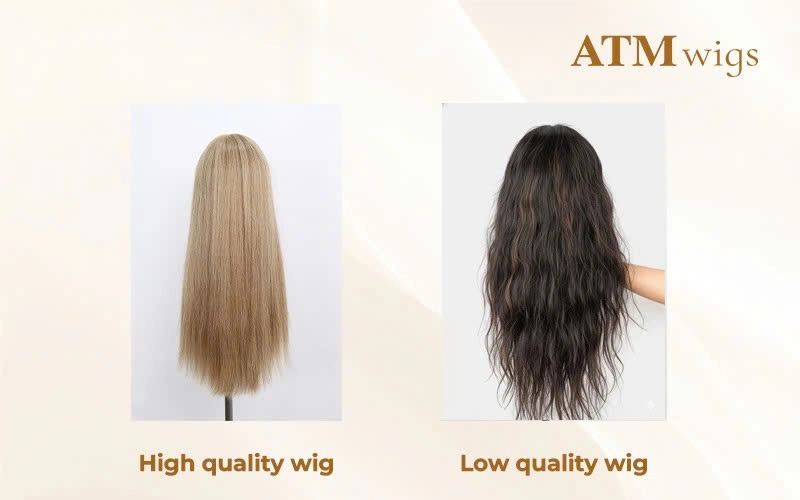
- Reality: Low-quality hair (non-Remy, poor cap construction) leads to rapid tangling and failure, forcing your salon to process returns.
- TCO Impact: Not every return is just the product cost but also the labor cost of stylist time, receptionist time, and management overhead spent resolving complaints.
Cost of Reputation:
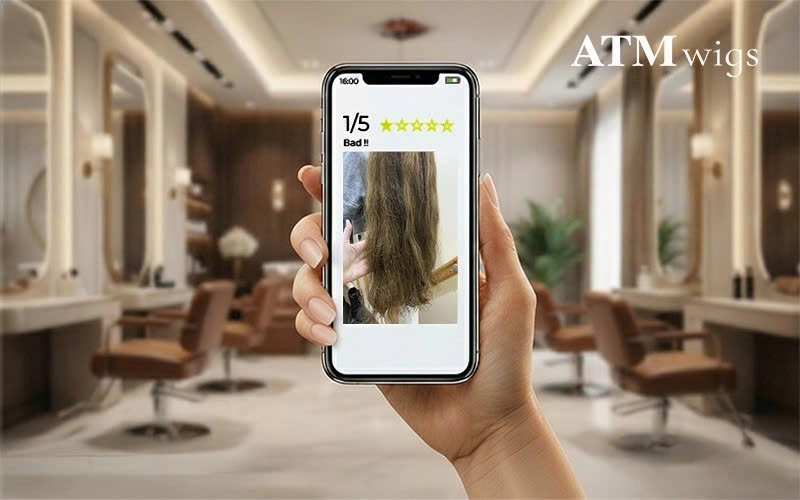
- Reality: Consistently delivering low-quality products will result in negative reviews and harm your beauty salon’s brand credibility.
- TCO Impact: Reputation is your most valuable, yet most fragile, asset. Lost trust and negative visibility are high-cost factors in your Wig Total Cost of Ownership (TCO).
TCO Factor 1: Long-Term Value and the Cost Per Wear (CPW)
The following section is a strong financial tool for your sales team to justify premium pricing.
- The Lifespan Multiplier: High-quality Remy hair, sourced like ATM Wigs, lasts 2–3 times longer than the average market hair. An example would be 2–3 years vs. 6–12 months.
- Calculating CPW (Cost Per Wear):
- B2B Formula: Teach your stylists to calculate: CPW = Retail Price/Estimated Usages.
- Justifying Value: A wig that retails at $1,000 and lasts 3 years has a lower CPW than a wig at $500 that only lasts 6 months. This is the most powerful method for your stylists to justify a slightly higher retail price to clients.
TCO Factor 2: Capital Risk and Inventory Liquidity
Analyze how supplier terms affect the operational cash flow of the salon.
- The High MOQ Risk: Most large traditional suppliers require very high MOQs, which make salons invest heavily in untested inventory. This directly touches on an element of TCO known as tied-up capital.
- The ATM Wigs Advantage: Our direct-to-partner model allows for flexible MOQs. We reduce inventory risk, freeing up your capital to invest in profit-generating services for your salon instead of having it sit in surplus stock.
Maximizing Profit by Minimizing Hidden TCO
Choosing a supplier based on TCO is an intelligent financial decision, not simply a product decision.
- The quality buffer: Investment in superior quality features-for example, guaranteed Remy hair and 100% density-offers a buffer against operational failure, saving money on support and resolution costs.
- The partner commitment: ATM Wigs commits to both product quality and flexible terms, ensuring your Wig Total Cost of Ownership (TCO) remains low, leading directly to higher gross profit margins (up to 30%).
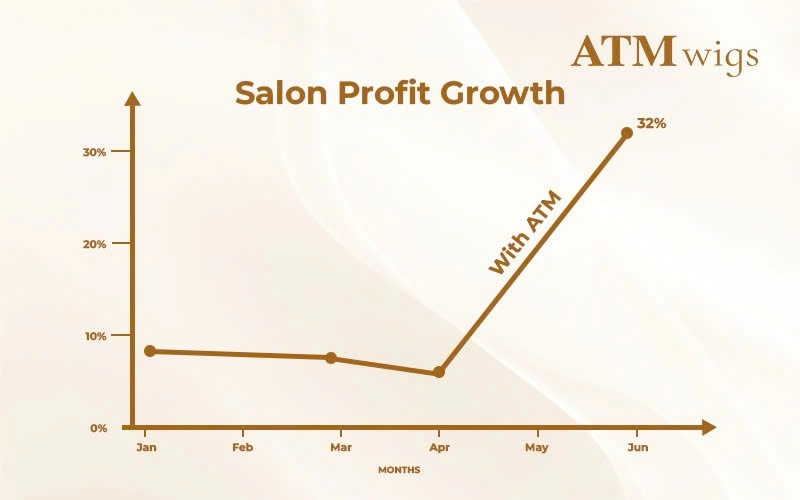
Choosing your supplier is a crucial financial decision based on Wig Total Cost of Ownership (TCO), not just the initial price tag. Partner with ATM Wigs to select quality and reduce operational costs for maximum long-term profitability within your salon.
Don’t Buy Wholesale Price-Buy Total Value!
Contact ATM Wigs today to receive our exclusive TCO Calculation Worksheet and see exactly how much you can save through quality.

